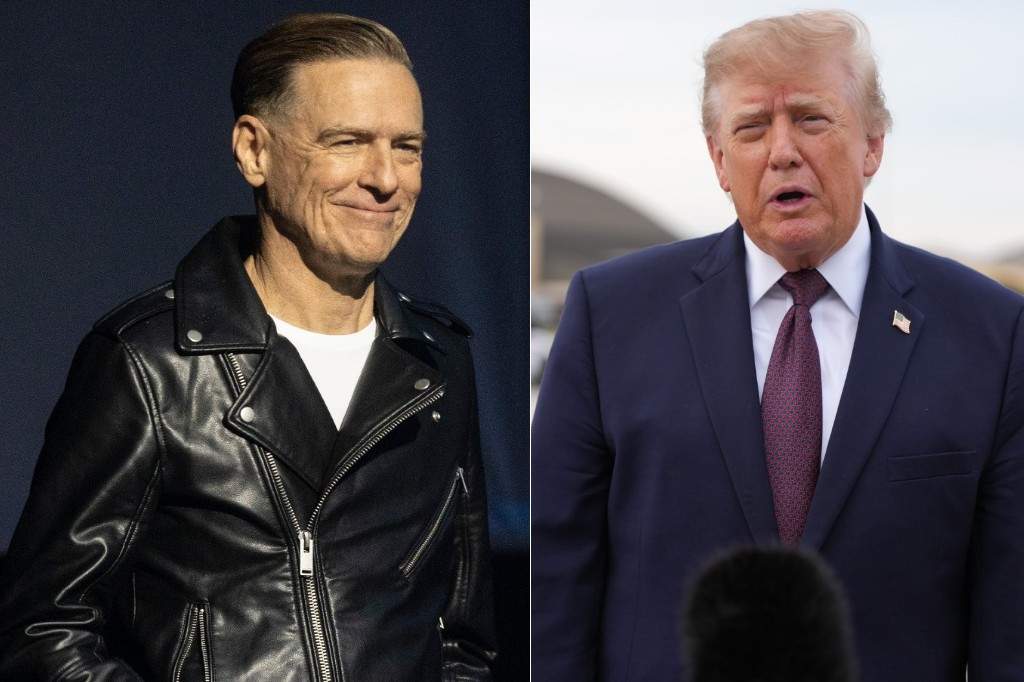
Cultural commentary by legacy musical artists functions less as spontaneous political expression and more as a calculated brand maintenance strategy designed to navigate shifting audience demographics and media distribution models. When Canadian musician Bryan Adams released "Lake Ontario"—a track addressing former U.S. President Donald Trump and the unsealing of high-profile legal files surrounding Jeffrey Epstein—the release demonstrated the strategic mechanics underlying late-stage career positioning in the modern attention economy.
Evaluating this release requires dissecting the structural drivers of celebrity political engagement: the shifting incentives of music monetization, the mechanics of outrage-driven media distribution, and the alignment of political posturing with target market retention.
The Tripartite Structural Model of Legacy Artist Mobilization
Legacy artists operating decades past their commercial peak face a systemic challenge: declining organic radio play and limited algorithm-driven discovery on streaming platforms. To maintain enterprise value, artists rely on three primary operational levers.
Re-engagement of Core Demographics
The demographic base for legacy rock acts consists primarily of listeners aged 40 to 65. Within this group, political polarization dictates media consumption habits. By targeting high-visibility political figures and public scandals, an artist activates pre-existing cognitive biases within their primary consumer base, transforming passive nostalgia into active engagement.
Modern Algorithmic Propagation
Streaming algorithms prioritize rapid spikes in user engagement over steady stream volume. A topical release referencing high-volume search terms—such as political figures or public court filings—bypasses traditional editorial playlists by leveraging real-time search trends. The topical anchor acts as a low-cost customer acquisition strategy for the artist's broader catalog.
Nuanced Reputation Calibration
Public stance selection is rarely arbitrary. For Canadian and international artists, adopting positions critical of conservative U.S. political figures carries negligible financial risk within domestic markets while reinforcing brand alignment across North American urban centers and European touring markets.
The Cost Function of Topical Songwriting
Topical songwriting operates under strict financial and operational constraints that distinguish it from standard commercial pop production.
Total Brand Yield = (Topical Relevance Velocity * Media Earned Reach) - (Audience Alienation Rate + Production Deprecation Speed)
The success of a track like "Lake Ontario" relies on maximizing earned media reach while minimizing audience alienation and production deprecation.
- Topical Relevance Velocity: The speed at which a lyric connects with news cycles. High velocity yields rapid earned coverage across entertainment and political news verticals.
- Media Earned Reach: The unpaid exposure generated through press coverage, social media debate, and commentary, effectively reducing marketing overhead to zero.
- Audience Alienation Rate: The percentage of the existing fanbase detached by the political message. Legacy artists minimize this risk because their core base generally shares geographical and ideological alignment.
- Production Deprecation Speed: The rate at which the content loses cultural relevance. Unlike evergreen romantic ballads, songs anchored to specific news events decay rapidly in economic value once the news cycle transitions.
Because topical tracks suffer from steep deprecation curves, their primary economic function is short-term catalyst generation rather than long-term royalty accumulation. The track serves as a loss-leader designed to drive ticket sales, merch conversion, and overall catalog streaming velocity.
Media Ecosystem Dynamics and Earned Reach Multiplication
The distribution architecture for political pop culture relies on mutually beneficial feedback loops between the creator and media outlets. Entertainment news organizations operate on strict click-through and impression targets. News items combining legacy celebrity status with controversial political names deliver disproportionate click-through rates relative to standard release announcements.
- Trigger Event: The artist releases a single containing explicit references to public figures or court cases.
- Aggressive Indexing: Outlets publish immediate coverage focusing on the lyrics rather than the musical composition, optimizing headlines for trending search queries.
- Polarization Cycle: Social media aggregators amplify the coverage, provoking reactive comments from opposing political factions.
- Catalog Spillovers: The heightened visibility channels casual observers toward the artist’s legacy catalog, temporarily boosting overall streaming yield across platforms like Spotify and Apple Music.
This cycle demonstrates why artistic critique of political figures rarely functions purely as artistic expression. It operates as a structured communication tactic within an attention-constrained digital environment.
Execution Risks and Structural Limitations
Executing a public-commentary release strategy contains inherent operational risks that can undermine long-term brand equity.
The primary point of failure lies in narrative authenticity. When audiences perceive political commentary as manufactured or opportunistically timed, the campaign triggers consumer fatigue. Furthermore, over-indexing on ephemeral headlines risks crowding out an artist's core value proposition: nostalgia and musical consistency.
To optimize earned reach while preserving enterprise value, legacy acts must calibrate their topical releases against clear operational benchmarks:
- Limit direct news references to broader systemic themes rather than hyper-specific policy debates to reduce content depreciation.
- Align release timing directly with pre-announced tour cycles to convert temporary streaming spikes into high-margin live event revenue.
- Maintain production overhead at a fraction of standard album costs to ensure rapid profitability before the topical relevance window closes.
Strategic positioning in the legacy music sector demands rigorous analysis of cultural leverage points. Unpacking the mechanics behind topical releases clarifies how legacy brands convert public controversy into measurable media equity.


