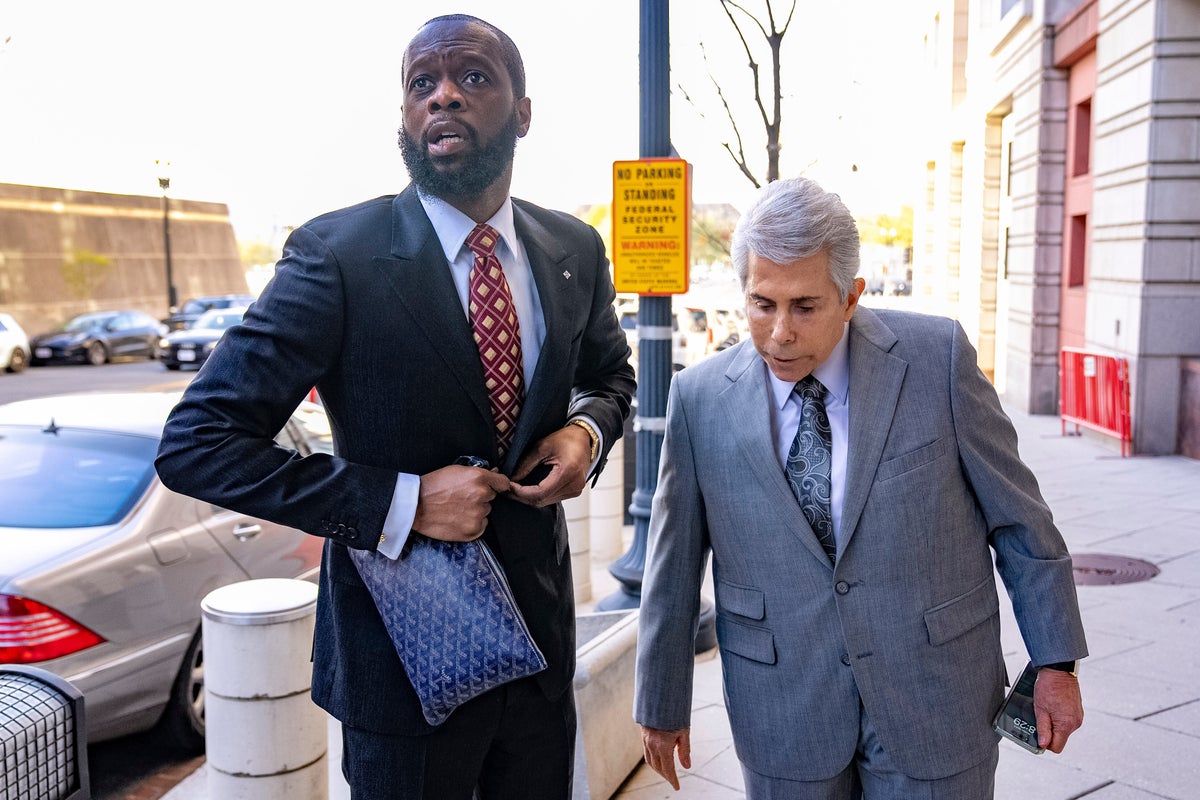
Prakash "Pras" Michel’s surrender to federal authorities to begin a 20-year prison sentence marks the culmination of a decade-long exercise in illicit geopolitical lobbying and complex financial engineering. While popular narratives focus on the downfall of a cultural icon, the structural reality of the case rests on the intersection of foreign influence operations, the violation of the Foreign Agents Registration Act (FARA), and the systematic exploitation of the United States’ campaign finance loopholes. The sentencing is not merely a punitive measure for an individual; it is a diagnostic data point for how sovereign wealth can be weaponized to bypass domestic democratic safeguards.
The Tripartite Structure of the Influence Operation
The criminal enterprise led by Michel operated through three distinct functional pillars. Each pillar served a specific tactical purpose within the broader objective of influencing U.S. policy in favor of foreign interests, specifically those of Malaysian financier Jho Low and the Chinese government.
1. The Conduit Strategy for Campaign Finance
Michel funneled approximately $20 million from Jho Low—funds primarily derived from the 1MDB sovereign wealth fund—into the 2012 U.S. presidential election. The mechanism involved "straw donors," where Michel distributed large sums to friends and associates who then made contributions in their own names. This bypassed the federal prohibition on foreign nationals contributing to U.S. elections. By masking the source of the capital, the operation achieved two goals:
- Anonymity: It shielded the foreign benefactor from public and regulatory scrutiny.
- Access: It created a facade of domestic grassroots support, providing the leverage necessary to secure high-level political audiences.
2. The FARA Bypass and Unregistered Lobbying
Under the Foreign Agents Registration Act, individuals acting as agents of foreign principals in a political or quasi-political capacity must make public disclosures. Michel’s failure to register was a strategic choice to maintain the "private citizen" veneer while actively lobbying the Trump administration. The objective was the termination of a Department of Justice investigation into Jho Low’s role in the 1MDB scandal. By operating outside the FARA framework, the group attempted to influence the executive branch through back-channel communications and informal networking rather than the established, transparent lobbying protocols.
3. Geopolitical Alignment with Chinese Interests
The third pillar involved the extra-legal attempt to facilitate the extradition of a Chinese dissident, Guo Wengui, from the United States. This phase of the operation demonstrated a transition from simple financial fraud to high-stakes international diplomacy. Michel functioned as a middleman for the Chinese Ministry of State Security, utilizing his perceived cultural status to gain proximity to administration officials. The logic was transactional: Low’s legal troubles would be resolved if Michel could deliver a political win for the Chinese government that simultaneously aligned with certain domestic policy goals of the sitting U.S. administration.
The Cost Function of Criminal Liability
Michel’s 20-year sentence (often cited as a 14-year minimum in some sentencing guidelines discussions, though the statutory maximums on his ten counts totaled significantly more) is a reflection of the cumulative weight of his convictions. The judicial system applied a heavy premium on the "conspiracy" aspect of the charges. In federal sentencing logic, the conspiracy multiplier is applied because the collective action of multiple sophisticated actors poses a greater threat to the state than isolated individual crimes.
The conviction on ten counts, including witness tampering and conspiracy to defraud the United States, indicates a complete failure of the defense’s "willful ignorance" strategy. Michel’s legal team argued that he was a victim of bad legal advice and was unaware of the registration requirements. However, the prosecution successfully demonstrated a pattern of sophisticated obfuscation, such as using encrypted messaging and offshore accounts, which established mens rea (guilty mind). The complexity of the financial transfers served as the primary evidence of intent.
The 1MDB Correlation and Capital Flows
The 1MDB (1Malaysia Development Berhad) fund serves as the capital engine for this entire case. To understand the scale of Michel’s involvement, one must look at the flow of funds as a closed-loop system:
- Extraction: Billions are siphoned from a national development fund via fraudulent bond issues and shell companies.
- Laundering: Capital moves through global financial hubs (Switzerland, Singapore, USA) to decouple the money from its criminal origin.
- Application: A portion of the laundered capital (the $20 million sent to Michel) is reinvested into the U.S. political system to "purchase" legal immunity for the architects of the extraction.
This creates a feedback loop where the proceeds of a crime are used to prevent the prosecution of that same crime. Michel acted as the domestic "on-ramp" for this capital, converting foreign criminal proceeds into American political influence.
Systematic Vulnerabilities in the Lobbying Landscape
The Michel case exposes a fundamental bottleneck in the enforcement of foreign influence laws. The Department of Justice (DOJ) has historically struggled with the "revolving door" between cultural celebrity, private business, and high-level political access.
The primary vulnerability lies in the definition of "agency" under FARA. Michel argued he was acting as a private businessman, not an agent. The prosecution’s success in this case sets a rigorous precedent: if the funding originates from a foreign principal and the actions are designed to influence U.S. policy, the label "consultant" or "entrepreneur" provides no legal shelter.
The Witness Tampering Variable
A critical factor that escalated the severity of Michel’s sentencing was the charge of witness tampering. During the investigation, Michel attempted to influence the testimony of key associates through intimidation and the dissemination of false narratives. In the federal system, witness tampering is viewed as an attack on the integrity of the court itself. This shifted the case from a "white-collar" finance dispute to a direct confrontation with the judicial process, eliminating any possibility of a lenient, non-custodial sentence.
Geopolitical Implications of the Surrender
Michel’s incarceration signals an aggressive shift in the U.S. posture toward "gray zone" influence operations. For years, the U.S. allowed for a degree of latitude in how celebrities and business moguls interacted with foreign heads of state. This case marks the end of that era of ambiguity.
The strategic message to foreign powers is clear: the use of American intermediaries to conduct unregistered diplomatic missions is now a high-risk endeavor with extreme personal consequences for the facilitators. The Chinese government’s involvement in the Michel-Low scheme demonstrates that influence operations are rarely siloed; they often piggyback on existing financial crimes to find willing domestic participants.
Structural Failures of Oversight
The fact that Michel was able to operate for years before facing indictment highlights three specific gaps in the current oversight framework:
- The Vetting Gap: Political campaigns often prioritize the volume of donations over the rigorous vetting of "bundlers" or major contributors, especially when those contributors carry high social prestige.
- The Disclosure Lag: FARA filings are often retroactive, meaning the influence has already been exerted by the time the public record catches up.
- The Cultural Shield: High-profile individuals in the entertainment industry frequently operate with a "celebrity pass" that discourages early-stage scrutiny by financial institutions and regulators who fear the optics of targeting a public figure without ironclad evidence.
The prosecution dismantled this cultural shield by focusing strictly on the financial ledger and the digital trail of communication. The evidence showed that Michel was not merely a passive recipient of Jho Low’s largesse; he was an active architect of the distribution network.
Strategic Forecast: The New Compliance Environment
The legal precedent established by the Michel conviction necessitates a complete overhaul of how public figures and their management teams handle foreign partnerships. Moving forward, any capital inflow from a foreign source intended for "public relations," "business development," or "consulting" that involves contact with government officials must be treated with the same level of compliance rigor as a regulated financial product.
Entities operating in the intersection of entertainment and politics must now adopt a "FARA-first" mentality. This involves:
- Pre-emptive Disclosure: Explicitly filing under FARA even when the agency relationship is debatable, to avoid the appearance of concealment.
- Source of Wealth (SoW) Audits: Performing deep-dive due diligence on foreign partners that goes beyond standard Know Your Customer (KYC) protocols, specifically looking for ties to sovereign wealth or state-linked enterprises.
- Encrypted Communication Policies: Recognizing that the use of Signal or Telegram, while legal, is now routinely used by prosecutors to establish "consciousness of guilt" in the context of clandestine operations.
The 20-year sentence handed to Pras Michel serves as the ultimate "stress test" for the Foreign Agents Registration Act. It proves that the statute has the teeth to take down high-net-worth individuals who believe their social capital makes them immune to the administrative requirements of the law. The era of the unregistered back-channel is effectively closed. Those who attempt to navigate the space between private enterprise and statecraft without total transparency are no longer just risking their reputations—they are risking their liberty.