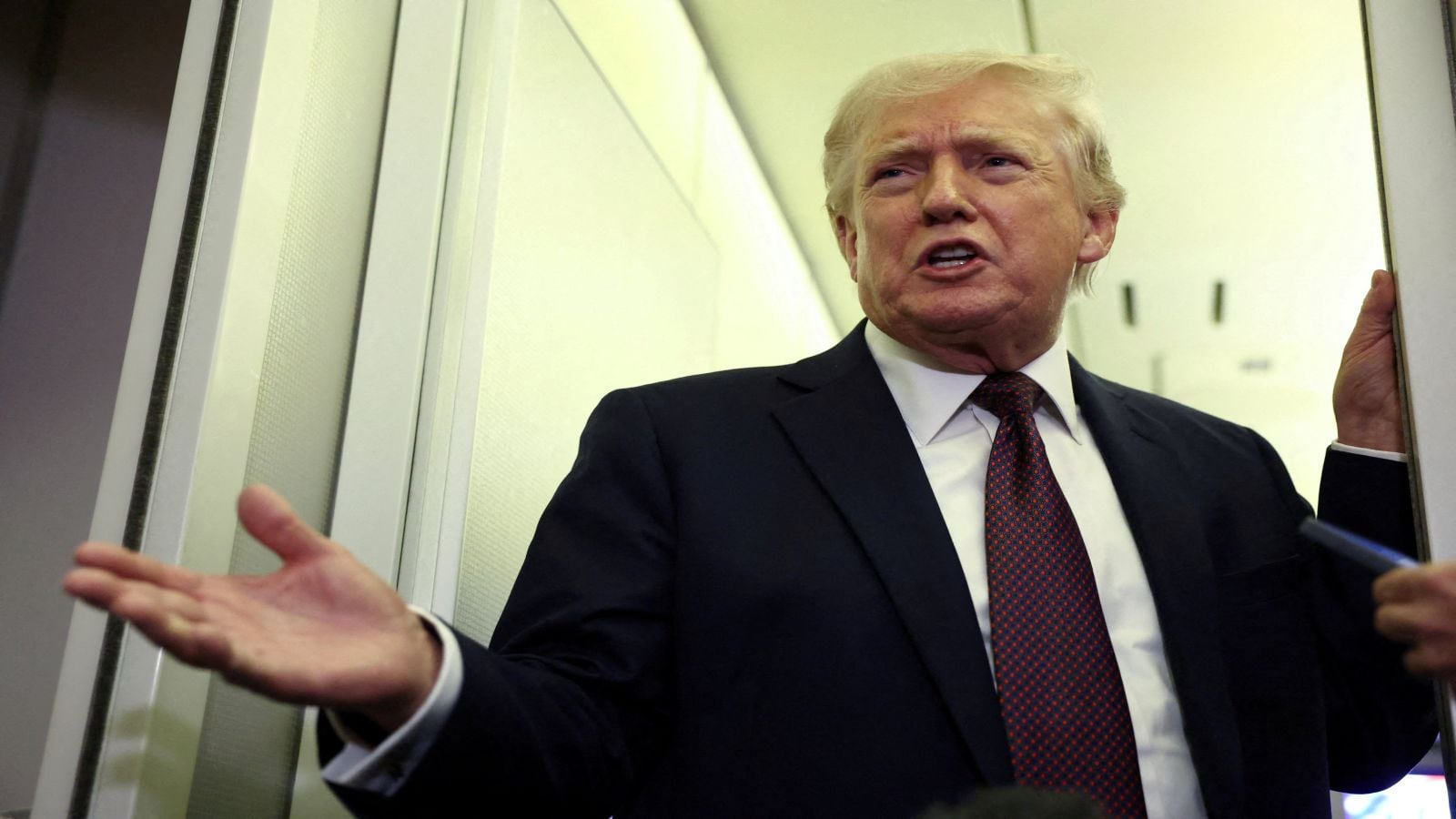
The political arithmetic of the White House has shifted. A recent Reuters/Ipsos survey places approval ratings for President Donald Trump at thirty-three percent. This number represents the lowest point of his term. It is not merely a statistical fluctuation. This descent signifies a profound erosion of the coalition that originally swept him into power. When a leader loses the baseline of their own base, the machinery of governance stalls.
Analysts often look at these polls as snapshots of public sentiment. They miss the deeper tectonic shifts occurring underneath the data. The dissatisfaction is not just about policy outcomes or legislative wins. It is about a fundamental exhaustion with the constant friction that defines this administration. People are tired of the noise. They are seeking stability, and they perceive the current environment as inherently unstable. Learn more on a related issue: this related article.
The Shrinking Base
Political movements thrive on momentum. When that momentum turns into stagnation, the internal dynamics change rapidly. A thirty-three percent approval rating suggests that even some reliable supporters are beginning to detach. In past administrations, loyalty was often a currency that could be spent on difficult policy choices. Now, that currency is devalued.
Consider the role of the independent voter. These are the individuals who decide elections by moving between parties based on immediate economic conditions and national mood. They are currently witnessing a cycle of confrontation that offers few tangible benefits for their own households. When the cost of living increases while the headlines focus on personal grievances, the average citizen prioritizes their wallet over ideological alignment. More reporting by The New York Times explores similar views on this issue.
The data reveals a widening gap between the promises made during the campaign and the reality faced by voters. Supporters originally gravitated toward a brand of disruption. They wanted someone to break the status quo. However, the definition of disruption has evolved. What was once seen as bold action is now viewed by many as unnecessary chaos. The novelty of the unconventional approach has worn thin.
The Economic Disconnect
Economic indicators are usually the primary driver of presidential approval. Low unemployment and rising markets typically protect an incumbent from political fallout. Yet, we are seeing a decoupling. The stock market may be showing signs of strength, but this does not translate into feelings of security for the working class.
This is the central irony of the current period. Financial experts point to growth statistics as evidence of success. Meanwhile, households struggle with the price of goods and the uncertainty of future employment. When there is a disconnect between the lived experience of the citizen and the macro-level reporting, voters do not blame the system. They blame the person at the top of it.
If you are a voter in a swing state, you are not checking the Dow Jones Industrial Average before you decide which candidate to support. You are looking at the price of fuel, the availability of services in your community, and the general tone of the country. This administration has focused heavily on broad economic metrics. Those metrics are failing to capture the lived anxiety of a significant portion of the electorate.
Structural Weaknesses in Messaging
Communication is the lifeblood of a presidency. President Trump has mastered the art of the direct connection, bypassing traditional media to speak to his audience. This strategy was highly effective for years. It created a direct pipeline of information that reinforced his agenda. But this same pipeline is now contributing to the decline in approval.
Saturation has led to fatigue. When every issue is framed as a battle for survival, the intensity becomes unsustainable. The electorate is losing its appetite for constant conflict. They want to hear about solutions. When the daily message is dominated by reactive rhetoric, the public stops listening to the substance.
The administration relies on an us-versus-them narrative. While this is effective at mobilizing a fervent core, it is disastrous for winning over the middle. A leader who spends more time attacking critics than explaining a vision for the future inevitably finds their audience limited to the choir. You cannot govern effectively with only your base, and you certainly cannot win a national election under these conditions.
The View from the States
Local politics often foreshadow national trends. Governors and mayors are dealing with the practical reality of national directives that frequently clash with local interests. This creates a friction that filters up to the White House. When local leadership struggles to implement policies that feel disconnected from the needs of their constituents, the frustration becomes nationalized.
There is also the matter of congressional support. Members of the President’s own party are watching these poll numbers closely. They are acutely aware that their own electoral survival is tied to the approval of the leader of their party. If the numbers remain in the low thirties, we will see a rapid distancing. Representatives will prioritize their own survival over loyalty to the administration. This will lead to a gridlock that prevents even the most basic legislative goals from being reached.
The Path Forward for Policy
If the administration intends to reverse this trend, they face a steep climb. It requires a pivot from performative politics to substantive administration. This is a tall order for a political team that has defined itself through the former.
The challenge is that the administration has built its identity on a specific type of high-stakes conflict. Abandoning this style feels like a betrayal to the voters who bought into that original promise. However, continuing on the current trajectory guarantees that the approval floor will remain low, or sink even further.
They need to address the anxieties of the suburbs. These areas have been drifting away from the party for several years. They are not asking for revolutionary change. They are asking for predictability, fiscal responsibility, and a sense that their government is focused on the core functions of statecraft rather than the daily cycle of controversy.
To achieve this, the messaging must change. Instead of responding to every news cycle, the administration needs to dominate the narrative with specific, actionable policy goals that benefit the average family. They must move beyond the personality-driven conflicts and reclaim the authority of the office.
This is not a matter of simply changing a press secretary or updating a social media strategy. It is a matter of changing the orientation of the entire executive branch. The current polling is a warning signal. It says that the public is ready for a different approach, even if they remain committed to some of the core principles that brought the administration into power.
The reality of the situation is that the political clock is ticking. Every day spent in a cycle of grievance is a day lost in the work of persuasion. The numbers will not improve on their own. They require an active effort to restore confidence. If that effort does not arrive, the current decline will solidify into a permanent state, leaving the administration to face the consequences of a disaffected electorate. History does not reward those who ignore the signal; it replaces them.