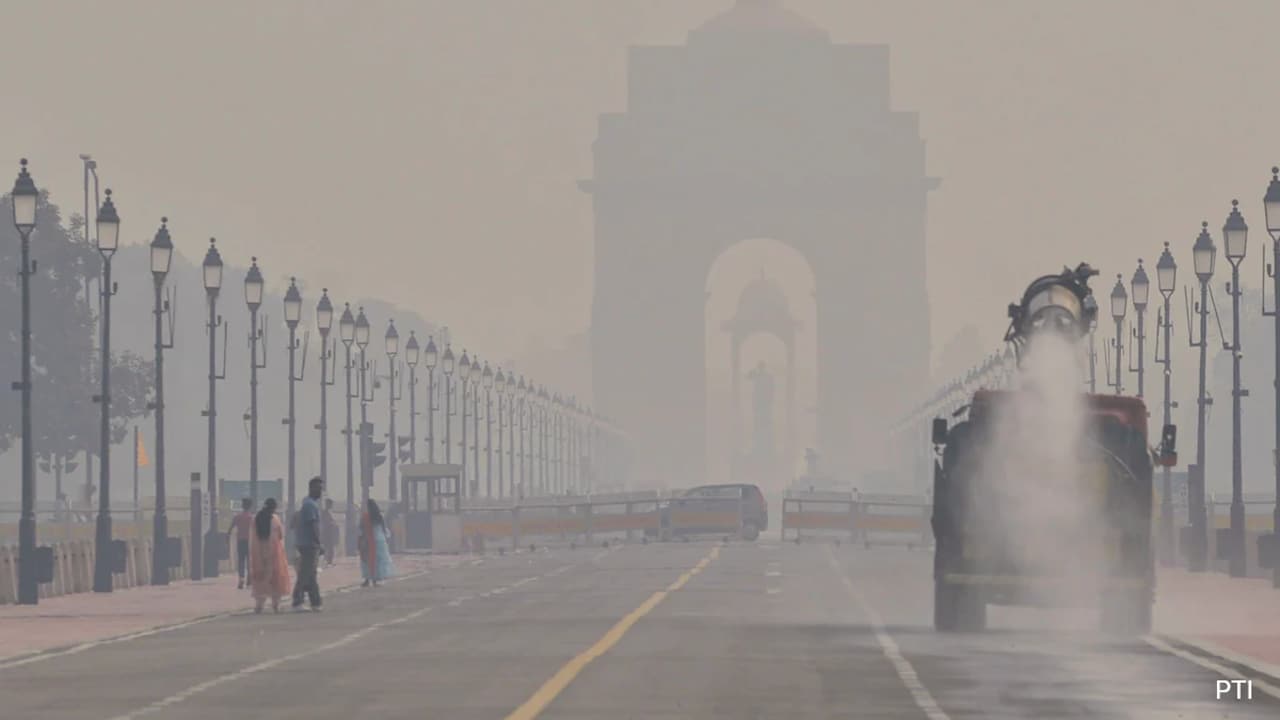
Delhi possesses one of the most comprehensive environmental regulatory frameworks on paper, yet its winter air quality consistently breaches severe hazardous thresholds. The failure is not a deficit of legislation, rules, or judicial intervention. It is a structural failure of regulatory design, misaligned economic incentives, and fragmented jurisdictional execution across the Indo-Gangetic Plain.
To understand why interventions like the Graded Response Action Plan (GRAP), odd-even vehicle rationing, smog towers, and construction bans fail to produce sustained reductions in particulate matter (PM2.5 and PM10), policy must be evaluated through three operational variables: emission source attribution, jurisdictional boundary mismatches, and enforcement elasticity. When regulatory architecture ignores the physics of an airshed and the economics of compliance, adding new rules increases administrative friction without reducing ambient pollutant concentrations.
The Physics of an Airshed Versus Political Boundaries
Air pollutants do not respect administrative borders. Delhi is a landlocked urban basin situated within the broader Indo-Gangetic Plain, a geographic trough bounded by the Himalayas to the north. During winter months, meteorological conditions trigger thermal inversion—a phenomenon where a layer of warm air traps cold, dense air near the surface, preventing vertical dispersion of pollutants. Concurrently, wind speeds drop, turning the region into a closed atmospheric chamber.
Despite this physical reality, regulatory authority is fractured across municipal corporations, the Delhi state government, neighboring state governments in Haryana, Punjab, Uttar Pradesh, and Rajasthan, and central bodies like the Commission for Air Quality Management (CAQM).
This creates a classic commons problem coupled with a principal-agent failure:
- Transboundary Externalities: A significant fraction of Delhi’s winter particulate load originates outside its political jurisdiction. Agricultural residue burning in Punjab and Haryana, alongside emissions from brick kilns, thermal power plants, and industrial clusters in the National Capital Region (NCR), migrate into the Delhi basin via northwesterly winds.
- Asymmetric Incentives: State governments bear the immediate political and economic costs of restricting local industries, farmers, or transporters, while the health and economic benefits of cleaner air diffuse across state lines. Local authorities rationally under-invest in enforcement that primarily benefits a neighboring jurisdiction.
- Fragmented Accountability: When multiple agencies share overlapping mandates—ranging from the Central Pollution Control Board (CPCB) to state pollution control boards, traffic police, and municipal bodies—accountability dilutes. Enforcement collapses into jurisdictional finger-pointing during peak pollution episodes.
The Anatomy of Reactive Policy Design
Delhi’s primary operational mechanism for air quality management is the Graded Response Action Plan (GRAP). GRAP operates as an emergency triage system, triggering escalating restrictions—such as halting construction, banning diesel generators, restricting truck entry, and closing schools—only after ambient air quality crosses predetermined severity thresholds.
From a systems engineering perspective, reactive emergency protocols suffer from three structural flaws:
- Lagging Indicators: By the time ambient monitors register "Severe" or "Severe Plus" Air Quality Index (AQI) levels, meteorological inversion has already locked pollutants into the boundary layer. Halting emissions after the atmospheric chamber is full produces minimal immediate relief, as existing particulates remain suspended for days.
- High Deadweight Loss: Sudden, intermittent shutdowns of construction and industrial activity impose severe economic friction. Supply chains stall, daily-wage laborers lose income without social safety nets, and project timelines fracture. Because these bans are temporary, economic actors treat them as short-term weather delays rather than structural market signals to adopt cleaner technologies.
- Performative Mitigation: Visible, high-cost interventions often substitute for systemic abatement. Smog towers—giant outdoor air purifiers—illustrate this flaw. Thermodynamic and fluid dynamics calculations demonstrate that filtering ambient air in an open urban environment requires orders of magnitude more energy than is feasible, affecting air quality only within a radius of a few dozen meters. Capital allocated to localized filtration yields near-zero marginal abatement compared to upstream emission capture.
The Economics of Non-Compliance and Regulatory Capture
A regulation is only as effective as the probability of detection multiplied by the severity of the penalty. In Delhi and the surrounding NCR, the expected cost of non-compliance remains consistently lower than the marginal cost of abatement for both institutional and individual actors.
Industrial and Construction Non-Compliance
Small and medium enterprises (SMEs) operating in peripheral industrial zones frequently rely on dirty fuels such as pet coke, furnace oil, or unauthorized biomass because transitioning to piped natural gas (PNG) or grid electricity requires high upfront capital expenditure and higher recurring operational costs. When environmental inspectors are understaffed—often operating with vacancy rates exceeding 30 to 40 percent in state pollution boards—the probability of inspection is low. Even when violations are documented, litigation delays and nominal fines allow operators to treat penalties as an occasional operating expense rather than an existential deterrent.
Similarly, large construction sites are mandated to install anti-smog guns, green netting, and continuous dust-monitoring sensors. In practice, operators frequently activate dust suppression systems only during scheduled inspections. Without automated, tamper-proof telemetry linked directly to financial escrow accounts, manual monitoring fails at scale.
The Agricultural Subsidy Trap
The seasonal spike in stubble burning across Punjab and Haryana is widely mischaracterized as a behavioral failure by farmers. In reality, it is the predictable output of distorted agricultural incentives and rigid crop cycles.
- The Policy Lock-In: Minimum Support Price (MSP) procurement policies and free or heavily subsidized electricity incentivize water-intensive paddy cultivation in semi-arid regions.
- The Narrow Window: State legislation designed to preserve groundwater mandates delayed paddy sowing until the monsoon arrives. This compresses the harvest window in autumn, leaving farmers roughly 10 to 15 days to clear paddy residue before sowing winter wheat.
- The Cost Function: In-situ management machinery like Happy Seeders or Super SMS attachments requires high-horsepower tractors and significant diesel consumption. Without reliable rental supply chains or timely direct-benefit transfers to offset fuel and machinery costs, burning the field remains the fastest, lowest-cost method to prepare the soil for the next crop.
Mobility Policy and the Modal Shift Deficit
Vehicular emissions represent a continuous, year-round baseline contributor to Delhi’s nitrogen oxides (NOx), volatile organic compounds (VOCs), and fine particulate load. Policy responses have focused heavily on supply-side restrictions—such as the 10-year ban on diesel vehicles, the 15-year ban on petrol vehicles, mandatory Pollution Under Control (PUC) certificates, and periodic odd-even rationing schemes.
These measures fail to address the underlying demand curve for personal mobility:
- The Last-Mile Bottleneck: While the Delhi Metro provides high-capacity rail transit, surface bus fleets have historically lagged behind population growth. Weak first- and last-mile connectivity forces commuters to rely on private two-wheelers, cars, and informal paratransit.
- Regressive Enforcement: Blanket age-based vehicle bans force the premature scrapping of mechanically sound, low-mileage private vehicles while failing to curb high-mileage commercial vehicles that lack modern catalytic converters or diesel particulate filters. Emissions are a function of vehicle-kilometers traveled and engine maintenance, not merely registration year.
- Secondary Market Leakage: Vehicles banned in Delhi are rarely destroyed; they are re-registered in neighboring districts outside the strict NCR enforcement zone, relocating the emission source within the same airshed rather than eliminating it.
Waste Management and Uncontrolled Combustion
A frequently underestimated driver of urban particulate matter is the open burning of municipal solid waste, biomass, and sanitary landfill fires. This emission stream is decentralized, nocturnal, and difficult to attribute through standard stationary monitoring networks.
When municipal waste collection fails to achieve 100 percent segregation and processing at the source, uncollected refuse accumulates in vacant lots and peri-urban fringes. Informal waste pickers burn mixed waste to recover scrap metals, while sanitation workers burn dry leaves to reduce volume. During winter nights, low-income residents and security personnel burn wood, rubber, and plastic waste for space heating. Because these fires occur at ground level during peak atmospheric inversion hours, their localized exposure impact on human health is disproportionately high relative to their total tonnage.
Limitations of Technological and Market-Based Interventions
Transitioning from command-and-control bans to market-based mechanisms—such as Emissions Trading Schemes (ETS) for particulate matter, congestion pricing, and green bonds—offers theoretical efficiency gains. However, these instruments face severe operational constraints in the Indian regulatory context:
- Monitoring Infrastructure Integrity: An emissions trading market requires real-time, calibrated Continuous Emission Monitoring Systems (CEMS) across all participating industrial stacks. If sensors are poorly maintained, uncalibrated, or manipulated, the market trades phantom reductions.
- Informal Sector Blind Spots: Market mechanisms regulate formal, registered entities. A massive share of NCR’s industrial, construction, and transport activity operates within the informal economy, outside tax and regulatory registries. Tightening compliance costs exclusively on the formal sector risks driving production further underground, worsening net emissions.
- Social Equity Constraints: Aggressive congestion pricing or steep fuel taxes without viable, affordable public transit alternatives impose regressive burdens on lower-middle-income commuters, triggering political backlash that forces policy reversals.
Restructuring the Regulatory Operating System
Fixing Delhi’s air quality requires dismantling the emergency-response mindset and rebuilding governance around continuous, year-round airshed management. Execution must follow four structural shifts:
- Establish a Statutory Airshed Authority with Fiscal Teeth: The Commission for Air Quality Management must transition from a coordinating committee into a unified operational regulator covering the entire Indo-Gangetic airshed. It requires direct control over central environmental grants, with the authority to withhold fiscal transfers from state governments and municipal corporations that miss verified quarterly emission reduction targets.
- Replace Blanket Bans with Continuous Telemetry and Automated Escrow Penalties: Scrap manual site inspections for large construction projects and industrial clusters. Mandate tamper-proof, internet-connected CEMS and dust sensors calibrated by accredited third parties. Require regulated entities to post upfront environmental performance bonds; when telemetry detects threshold breaches, fines must be deducted automatically from escrow without judicial stays.
- Re-engineer Agricultural Subsidies Around Crop Diversification: Redirect a portion of existing fertilizer, power, and MSP subsidies in Punjab and Haryana into direct per-acre cash transfers tied to verified diversification away from water-intensive paddy toward pulses, oilseeds, and millets. For remaining paddy acreage, fund decentralized, village-level supply chains for ex-situ biomass pelletization, guaranteeing an off-take market where power plants and industrial boilers are legally mandated to co-fire agricultural pellets.
- Shift Transport Policy from Vehicle Age to Fleet Electrification and Bus Expansion: Abandon arbitrary vehicle age bans in favor of mandatory emission testing via remote sensing devices deployed along arterial roads to flag gross polluters in real time. Simultaneously, double the dedicated capital allocation for zero-emission electric buses and integrated micro-mobility feeder networks, making public transit faster and cheaper than private two-wheeler ownership.


