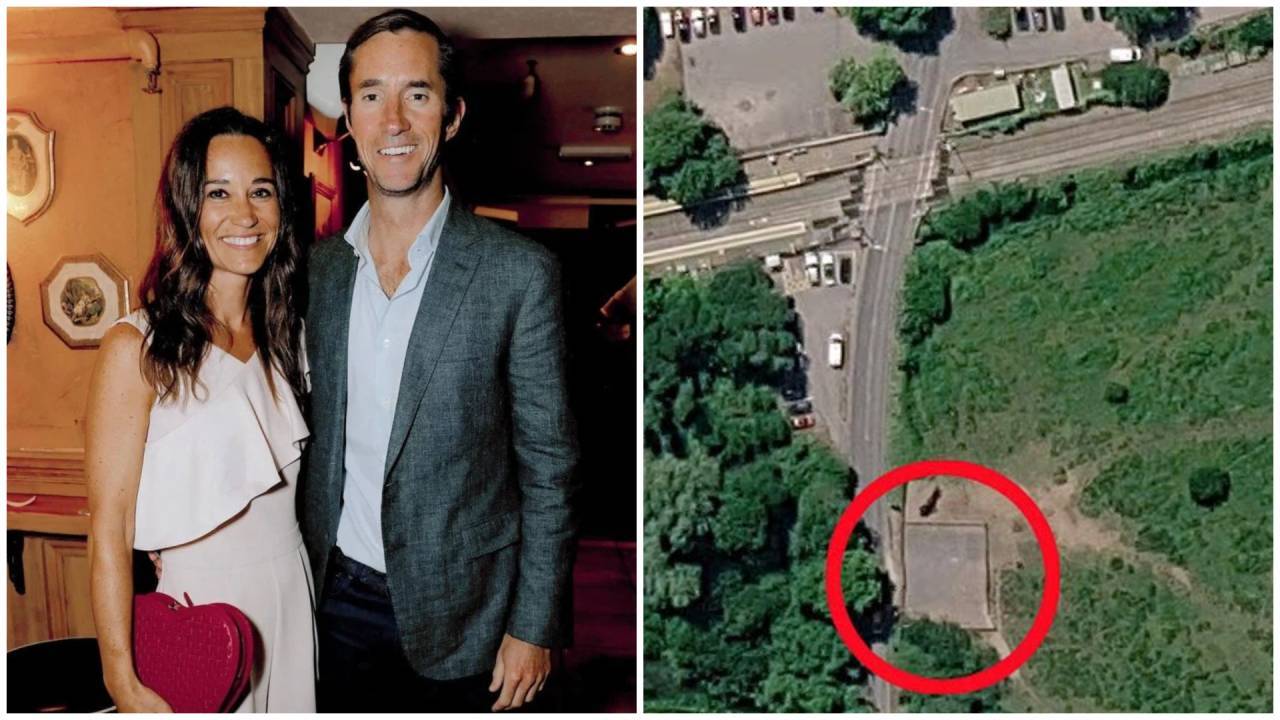
The tabloid press loves a simple villain. Give them a royal-adjacent couple, a £15.5 million Berkshire estate, and an enforcement notice from the local council, and the headline practically writes itself. Pippa Middleton and James Matthews built an unauthorised car park at Barton Court, got caught by West Berkshire Council, and were ordered to rip it up. Cue the collective jeering about out-of-touch elites ignoring the rules that bind the rest of us.
That narrative is lazy, comforting, and entirely backwards.
If you look past the celebrity schadenfreude and actually examine the mechanics of British land-use regulation, the Barton Court saga is not a story about rich people behaving badly. It is a textbook case of how the UK’s Town and Country Planning Act has devolved into a punitive, economically illiterate bureaucratic trap—one that weaponises minor technicalities against property owners regardless of whether any actual environmental or community harm occurred.
I have spent over a decade watching high-net-worth estates, commercial developers, and ordinary homeowners alike get ground down by local planning authorities (LPAs) over infractions that would be laughably trivial in almost any other developed nation. The press treats every enforcement notice as a moral triumph for the little guy. In reality, it is a symptom of a system so choked by procedural dogma that it cannot distinguish between genuine ecological vandalism and laying down gravel on private acreage hidden behind mature woodland.
The Myth of the "Entitled Rule-Breaker"
The mainstream coverage of Pippa Middleton and James Matthews rests on an unspoken assumption: that planning laws exist strictly to protect the public good, and therefore anyone who bypasses them is stealing from the community.
Let’s test that premise against reality.
Under the Town and Country Planning Act 1990, almost any "operational development" on land requires express permission from the local council unless it falls under narrow Permitted Development Rights (PDR). On a standard suburban semi-detached house, paving over a front garden is often permitted without asking anyone, provided you use permeable materials to manage surface water runoff. Yet the moment a property sits within a designated area—such as the North Wessex Downs National Landscape (formerly an Area of Outstanding Natural Beauty), where Barton Court is located—those automatic rights evaporate under Article 4 directions and heightened statutory protections.
Suddenly, creating a hardstanding area to park vehicles on your own 145-acre private estate becomes a regulatory crime requiring months of ecological surveys, arboricultural impact assessments, heritage statements, and highways consultations.
Imagine a scenario where you buy a £15.5 million historic manor house with extensive grounds, and you need a practical, out-of-sight area for staff, deliveries, or guests to park without churning up historic pastureland every time it rains in Berkshire. If you apply for permission upfront, you enter a labyrinth that routinely takes six to twelve months to navigate, costs tens of thousands of pounds in consultant fees, and invites objections from parish councillors who simply dislike change. So, like thousands of landowners across Britain every year, you build it first and rely on retrospective planning permission—a completely legal mechanism built directly into Section 73A of the 1990 Act.
The tabloids frame retrospective applications as sneaky. They aren't. Parliament explicitly designed Section 73A because the UK planning system is so slow and unpredictable that regularising minor works after the fact is often the only rational way to manage an estate or a business.
Why Councils Love Enforcement Theatre
When West Berkshire Council refused the retrospective application and issued an enforcement notice ordering the car park’s removal and the land’s restoration, commentators applauded the authority for "standing up" to wealth and privilege.
Here is the insider truth nobody in local government will admit on the record: high-profile enforcement notices are pure political theatre.
Local planning departments across England are chronically underfunded, drowning in backlogs, and failing to meet statutory determination deadlines on major housing and infrastructure projects. According to data from the Royal Town Planning Institute (RTPI) and the Department for Levelling Up, Housing and Communities, planning officer turnover has hit crisis levels, leaving departments stretched thin. Yet when a celebrity name hits the docket, resources magically materialise to police a patch of hardstanding invisible from the public highway.
Why? Because targeting a famous landowner generates effortless positive PR for a council while masking its broader administrative paralysis.
To be clear, local authorities have a statutory duty to enforce planning control. Under the National Planning Policy Framework (NPPF), great weight must be given to conserving and enhancing landscape and scenic beauty in National Landscapes. If the car park genuinely damaged protected tree roots, disrupted local drainage, or scarred a public vantage point, enforcement is warranted.
However, in the vast majority of rural estate disputes I have reviewed, the "harm" cited by officers is entirely abstract. Planners rely on subjective aesthetic concepts like "urbanising effect on the rural character" or "visual intrusion"—phrases that require zero empirical proof and are virtually impossible to defeat on appeal unless you hire a King’s Counsel at £500 an hour.
The Real Cost of Britain's Permission Culture
People often ask: "Shouldn't celebrities have to follow the exact same planning rules as everyone else?"
That question misses the point entirely. The issue isn't whether Pippa Middleton should get special treatment; it is that nobody should be subjected to a system where moving earth or laying gravel on private, screened land triggers a multi-year legal war.
Look at how the UK compares to its peers:
- Discretionary vs. Zoning Systems: Most of Europe, North America, and Japan operate on rules-based zoning. If your project meets clear, pre-published technical criteria regarding drainage, setbacks, and environmental impact, you have a legal right to build it. Britain operates a discretionary system where every single project is negotiated from scratch based on the subjective opinions of planning officers and local committees.
- The "Zero-Risk" Bureaucracy: Because councils fear judicial reviews from anti-development NIMBY groups, officers default to refusal whenever an application sits in a grey area. Passing the buck to the Planning Inspectorate in Bristol is safer for a civil servant's career than saying yes.
- Asymmetric Financial Punishment: Fighting an enforcement notice requires lodging an appeal under Section 174 of the 1990 Act. Even when landowners win, costs are rarely awarded against the council unless the authority behaved with "unreasonable" malice—a bar set absurdly high.
I have seen mid-sized agricultural businesses go bankrupt fighting enforcement notices over farm tracks and storage barns that had zero impact on neighbours. When you cheer the council for forcing Pippa Middleton to dig up a car park, you are cheering the exact same bureaucratic machinery that stops farmers from diversifying, prevents families from extending their homes, and keeps British infrastructure costs the highest in the developed world.
What the Critics Get Right (And Where the Contrarian View Has Limits)
Intellectual honesty demands admitting the flaws in my own argument. A pure free-for-all on rural estates would be disastrous.
If wealthy landowners were given carte blanche to pave over acres of the North Wessex Downs without oversight, cumulative harm would quickly follow. Unchecked hardstanding increases surface water runoff, exacerbating flood risks downstream in the Thames Valley. Historic parkland like Barton Court contains archaeological layers and veteran trees whose root systems can be suffocated by compacted stone sub-bases long before the canopy shows signs of stress.
Furthermore, James Matthews is a seasoned financier and real estate operator—the founder of Eden Rock Capital Management and someone intimately familiar with property acquisition and regulatory risk. He was not some naive first-time buyer unaware that a £15.5 million historic estate comes with strict covenants and statutory designations. Taking the gamble of building without consent in a protected landscape is a calculated risk, and when you roll the dice with a local planning authority, you accept the possibility of losing.
The failure here isn't that rules exist. The failure is that the rules are disproportionate, sluggish, and obsessed with process over measurable ecological outcomes.
How Smart Landowners Actually Navigate Broken Planning Systems
If you own rural land, heritage property, or commercial acreage in the UK, relying on common sense will cost you a fortune. The planning system does not reward common sense; it rewards procedural precision.
- Never assume invisibility equals immunity. Councils routinely use high-resolution aerial photography and satellite imagery—often updated annually—to spot unauthorised engineering works on private estates. Even if not a single neighbour can see your driveway or car park, the GIS mapping software at the council offices will flag it.
- Use Certificates of Lawfulness before touching a shovel. If you believe work falls under Permitted Development Rights (such as agricultural tracks under Part 6 of the General Permitted Development Order), apply for a Lawful Development Certificate (LDC) first. It forces the council to make a purely legal determination rather than a subjective aesthetic one.
- Weaponise ecological net gain. Modern UK planning law is obsessed with Biodiversity Net Gain (BNG). If you want permission for functional hardstanding on a country estate, wrap it inside a broader landscape management plan that creates wildflower meadows, restores hedgerows, or installs sustainable drainage systems (SuDS). Give the planning officer a green headline to put in their committee report.
- Separate operational works from temporary uses. Under the 28-day rule (Class B, Part 4 of the GPDO), land can be used for temporary purposes—including parking—for up to 28 days in a calendar year without planning permission, provided no permanent operational engineering (like excavating topsoil and laying hardcore) takes place. Once you bring in an excavator, you cross the Rubicon into permanent development.
Stop Cheering the Cage
The public obsession with Pippa Middleton’s car park reveals a deeply ingrained British reflex: we would rather watch a wealthy neighbour get dragged down by red tape than ask why the red tape exists in such a suffocating form in the first place.
Ripping up an already-built car park does not restore pristine wilderness. It burns diesel in excavators, generates tonnes of construction waste to be hauled away in lorries, and wastes thousands of pounds of public money on legal administration—all to return a patch of private ground to grass so a planning officer can tick a compliance box.
That isn't environmentalism, and it certainly isn't justice. It is pure, unadulterated bureaucratic vandalism—and until Britain stops applauding it, nothing in this country will ever get built on time or on budget.