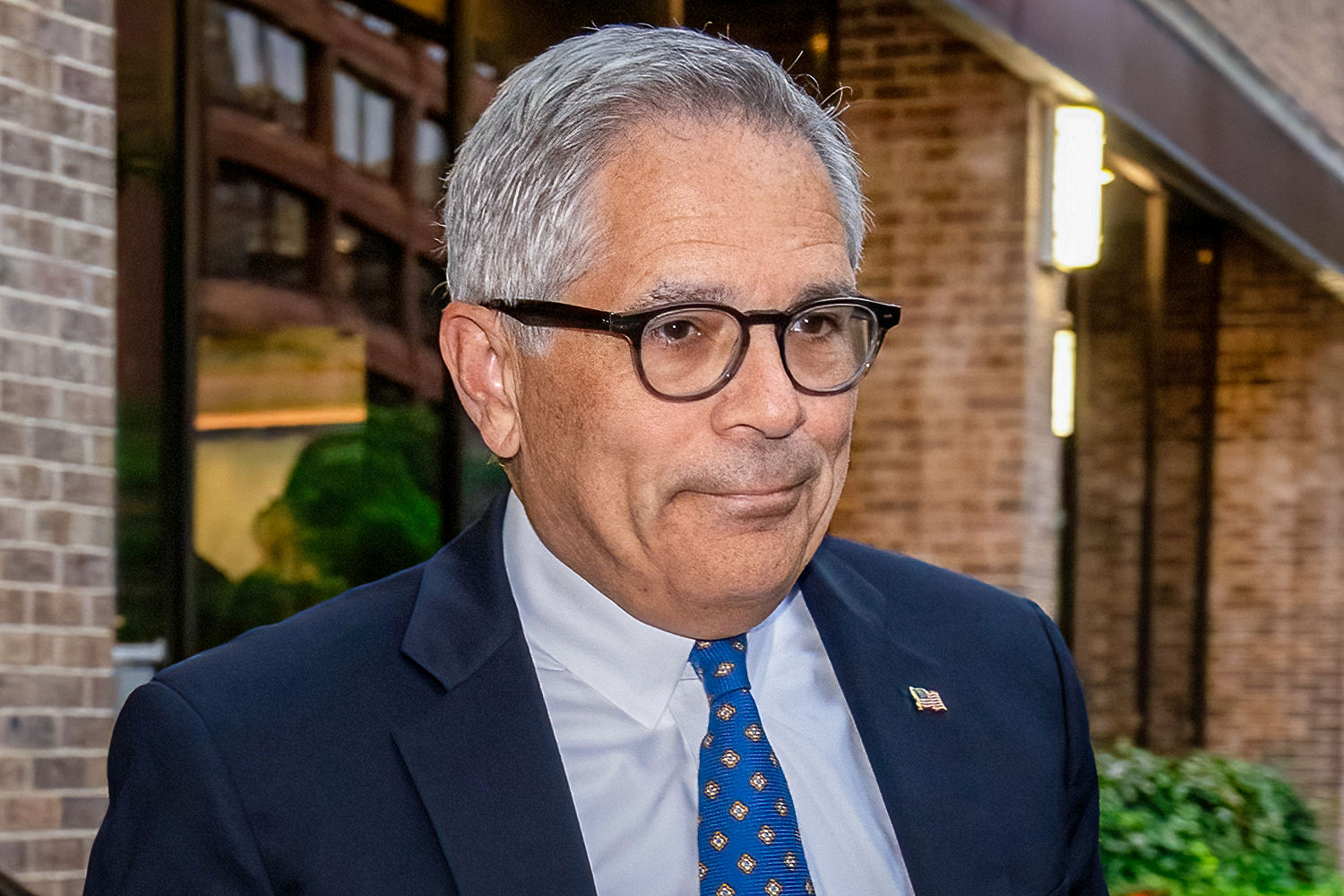
The headlines about a judge requesting a federal probe into Philadelphia District Attorney Larry Krasner are breathlessly framed as a constitutional cliffhanger. Mainstream commentators treat the move as an explosive reckoning, a high-stakes collision between local governance and federal oversight. They want you to see a dramatic duel of legal titans, pitting an embattled progressive reformer against an outraged judiciary.
It is none of those things. It is a predictable tantrum thrown by an institutional apparatus that lost its monopoly on criminal policy and refuses to accept the consequences of democratic elections.
When you strip away the procedural theater, the push for a federal investigation into Krasner exposes a deeper, darker truth about the American criminal justice system: the establishment can tolerate almost any form of government inefficiency, corruption, or failure, but it cannot tolerate a local prosecutor who decides to stop feeding the mass incarceration machine. Krasner won election in 2017 and re-election in 2021 on an explicit platform of reducing prison populations, shifting resources away from low-level drug enforcement, and challenging police impunity. He did not sneak into office through a clerical error. He ran on these exact ideas, debated them publicly, and won clear mandates from voters tired of the failed war on drugs.
For decades, district attorneys operated as quiet cogs in a bipartisan assembly line of punishment. They took plea deals, inflated conviction rates, and let police departments write their own operational rules without public friction. When Krasner broke that script, he did not just change local policy; he broke the unspoken contract of the legal establishment.
When the Ballot Box Fails, Change the Venue
The traditional playbook for dealing with an elected official you dislike is simple: beat them at the ballot box. Philadelphia’s conservative and moderate factions tried that, and they failed. Twice. When voters repeatedly reject your preferred candidates and endorse a reform agenda, you face a stark choice: adapt your platform to win over the electorate, or find an extralegal mechanism to nullify the election results.
The latest push for a federal probe is the manifestation of that second choice. It is an administrative coup attempt dressed up as constitutional oversight.
Critics love to frame this as an issue of accountability. They argue that a prosecutor who exercises discretion differently from their predecessors must be hiding something corrupt. But let us be radically honest about what is happening. Nobody demanding a federal investigation is alleging personal enrichment, bribery, kickbacks, or illicit financial gain. They are furious about policy. They are angry that certain low-level retail thefts are deprioritized, that cash bail reforms have altered pretrial detention rates, and that police misconduct is actually scrutinized.
Disagreeing with a prosecutor's charging priorities is an electoral dispute, not a federal case. When judges or legislators try to weaponize the Department of Justice to override local prosecutorial discretion, they are attempting to criminalize policy disagreements. If a federal probe can be triggered simply because a prosecutor declines to pursue certain classes of offenses, then local democracy in America is a dead letter. Every DA in the country becomes a federal employee-in-waiting, subject to audit and intimidation whenever their priorities offend judicial sensibilities.
The Judicial Overreach Paradox
Judges are supposed to be neutral arbiters of the law, standing as impartial referees between the state and the accused. When a member of the bench steps out of that role to lobby for a federal criminal investigation into an executive official of a coordinate branch, they commit a fundamental breach of the separation of powers.
Think about the sheer audacity of this posture. A judge’s job is to manage the courtroom docket impartially, rule on evidentiary motions, and apply statutory law. When a judge takes on the mantle of a political complainant, demanding that federal law enforcement audit an elected prosecutor's office, that judge abandons judicial neutrality. They enter the political arena as a combatant.
This creates a staggering conflict of interest within the court system itself. How can a defendant expect a fair trial before a judge who has publicly signaled alignment with federal prosecutors gunning for the elected District Attorney's office? The judiciary risks shredding its own institutional legitimacy when it trades the gavel for a megaphone. Courts derive their power entirely from public trust in their impartiality. Once judges start acting like partisan political operators, that trust evaporates.
The Real Flaw in the Reformer Playbook
To dismantle the lazy consensus of Krasner’s critics, we must also discard the lazy mythology of his defenders. Progressive prosecution is not a silver bullet, and Philadelphia's experiment has encountered severe, undeniable operational turbulence.
I have spoken with defense attorneys, court administrators, and line prosecutors in Philadelphia who paint a picture of administrative strain. Docket backlogs are staggering. Communication breakdowns between police departments and the DA's office have created friction on the ground. Staff turnover has been high, leaving inexperienced attorneys handling complex violent crime cases. Reform without institutional capacity is a recipe for operational gridlock.
When you slash reliance on low-level prosecutions but fail to simultaneously build robust, functional diversion programs, social service networks, and rapid-response mental health infrastructure, you create a vacuum. In a vacuum, disorder fills the space. The mistake of the early progressive prosecution movement was believing that simply not prosecuting people was enough to fix a broken system. Stopping bad behavior is not the same as building good outcomes.
Yet, acknowledging these operational failures is miles away from endorsing the federal probe narrative. Conflating bureaucratic dysfunction or staffing shortages with federal criminal corruption is a deliberate sleight of hand. Every major metropolitan prosecutor's office in America struggles with backlogs and retention issues. None of them face calls for federal investigations unless their politics threaten the status quo.
Weaponizing Federal Machinery Against Local Democracy
The Department of Justice has a very specific, historically grounded mandate when it investigates local criminal justice systems. Federal civil rights investigations target systemic, unconstitutional patterns and practices by police departments or prison systems—agencies that violate individual civil rights through brutal force or unconstitutional conditions of confinement.
Historically, prosecutors are the actors meant to check those abuses, not the targets of federal takeover simply for exercising prosecutorial discretion. Turning the machinery of federal law enforcement into a tool to police elected officials' policy choices opens a Pandora's box from which the legal system may never recover.
Imagine the precedent. If a progressive DA can be targeted with federal inquiries for being too lenient, what stops a future administration from targeting a conservative DA who refuses to enforce environmental regulations or labor laws? Once you establish the principle that federal prosecutors can audit local electoral mandates through criminal probes, you nationalize every local election in America. You strip cities of their right to self-determination.
The End of the Old Guard
The establishment is fighting so viciously because they realize the old consensus is dead. The tough-on-crime narrative of the 1990s—mass incarceration, zero-tolerance policing, and mandatory minimums—did not build safe communities; it built bloated budgets, broken families, and institutional cynicism.
Krasner represents the visible, abrasive tip of a generational shift. Even if every critic gets their wish and he is somehow removed or hobbled, the underlying conditions that brought him to power will remain. The public is no longer willing to accept the false choice between total lawlessness and totalitarian policing.
Trying to use the weight of the federal government to roll back the clock on local criminal justice reform is a fool's errand. It will not restore public trust in the courts, it will not fix staffing shortages, and it will not erase the deep-seated demand for accountability within the justice system. It will only accelerate the collapse of whatever institutional legitimacy the old guard has left.
The establishment can demand federal probes, draft threatening letters, and posture for the cameras. They can scream into the void about declining standards. But they cannot legislate away the reality that the public voted for change.
Stop pretending this is about the rule of law. It is about a dying machine trying to reclaim its steering wheel.