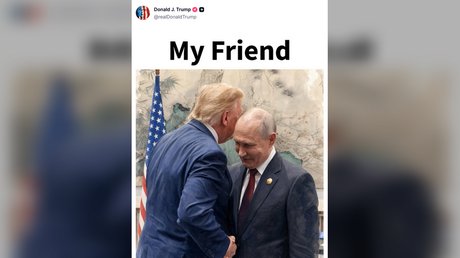
Publicly characterizing Vladimir Putin and Xi Jinping as "friends" is not an emotional lapse or a casual diplomatic pleasantry; it is a deliberate signaling mechanism rooted in personalist statecraft. Standard political journalism treats this rhetoric as a binary moral failure or a puzzling contradiction alongside simultaneous tariffs and sanctions. That framing misses the operational utility of the language. In international relations, labeling an adversary a friend serves three distinct functions: it decouples executive-level negotiation channels from institutional friction, creates strategic ambiguity to destabilize alliance expectations, and establishes a domestic narrative of singular dealmaking capacity.
To understand why this rhetoric persists across administrations and election cycles, analysts must separate theatrical surface commentary from the underlying bargaining architecture. When an American leader extends personal warmth to authoritarian counterparts while maintaining punitive economic or military postures, the apparent contradiction is the point. It shifts the locus of bilateral tension from structural geopolitical competition—which is slow and expensive to resolve—to interpersonal rapport, which a leader can claim to manage unilaterally.
The Architecture of Personalist Signaling
Traditional diplomacy relies on institutional guardrails, interagency consensus, and predictable signaling protocols. Personalist diplomacy bypasses these structures by elevating the individual leader as the sole clearinghouse for national interest. In game-theoretic terms, calling an adversary a friend alters the perceived payoff matrix of bilateral engagement without requiring any immediate policy concession.
Decoupling the Leader from the State Apparatus
The primary operational mechanism of personal warmth is institutional decoupling. By praising Xi Jinping or Vladimir Putin directly, an executive draws a sharp boundary between the foreign leader and the broader bureaucratic or military apparatus of that nation.
- Preserving Backchannel Liquidity: When bilateral relations deteriorate over trade deficits, territorial disputes, or cyber operations, formal diplomatic channels often freeze. Maintaining a reservoir of personal goodwill ensures that leader-to-leader communication remains viable during acute crises.
- Shifting Blame to Subordinates: If negotiations stall, personalist framing allows both leaders to attribute the failure to hardline advisors, rogue ministries, or domestic political constraints rather than a breakdown in executive trust.
- Lowering Reputational Exit Costs: Autocratic leaders face severe domestic audience costs if they appear to capitulate to foreign pressure. Framing a concession as an accommodation made for a "friend" rather than a retreat before a hostile state reduces the internal political risk for Beijing or Moscow.
Strategic Ambiguity and Alliance Discipline
Beyond bilateral utility, public affinity toward rival powers acts as a pressure valve on traditional allies. Alliances such as NATO or bilateral defense treaties in the Indo-Pacific operate on assumptions of predictable American commitment.
When Washington signals warmth toward Moscow or Beijing, allied capitals must recalculate the reliability of the American security umbrella. This uncertainty is frequently used to extract burden-sharing concessions, such as increased defense spending or more favorable trade terms, from allies who fear abandonment. The rhetoric forces allies to compete for American attention rather than taking security guarantees for granted.
The Three Pillars of Transactional Rhetoric
Evaluating statements of friendship toward rival heads of state requires categorizing the specific tactical objectives they serve. Rather than indicating ideological alignment, this language operates across three distinct dimensions of statecraft.
- Pre-Negotiation Anchoring: In high-stakes bargaining, establishing a positive interpersonal baseline before introducing punitive demands anchors the interaction. By opening with praise, a negotiator signals that hostility is conditional, not permanent, and that the counterparty can restore normal relations through specific behavioral adjustments.
- Domestic Audience Framing: Within domestic politics, portraying foreign autocrats as strong, intelligent, and friendly elevates the speaker's own stature. Overcoming or managing a formidable peer projects greater competence than dealing with weak or compliant counterparts. This framing also insulates the leader from criticism by portraying ongoing geopolitical friction as a manageable personal relationship rather than an intractable systemic crisis.
- Asymmetric Deterrence: Combining personal praise with unpredictable policy shifts creates a dual-track deterrence model. The adversary receives continuous reassurance that no personal animus drives American policy, while simultaneously facing the credible threat of sudden tariffs, sanctions, or military deployments if red lines are crossed.
Misinterpreting the Signal in Media Coverage
Conventional coverage of these remarks typically focuses on surface-level visual cues—handshakes, photo opportunities, and verbatim transcripts—while ignoring the structural constraints governing the actual relationship. This creates a persistent analytical blind spot.
Media narratives often equate rhetorical warmth with policy appeasement. In practice, rhetoric and policy frequently move in opposite directions. An administration can maintain aggressive export controls on advanced semiconductors, expand naval patrols in contested waters, and arm regional partners while the chief executive continues to describe the Chinese president in glowing personal terms. Treating the speech act as the totality of the foreign policy confuses communication strategy with resource allocation.
A second error lies in assuming that authoritarian counterparts interpret this language at face value. Both the Kremlin and Zhongnanhai operate sophisticated intelligence and diplomatic analysis apparatuses. Russian and Chinese strategists view American personalist rhetoric through a realist lens: they recognize it as a domestic political tool and a bargaining tactic, not an ideological conversion. Beijing and Moscow pocket the rhetorical validation—using the footage for domestic propaganda to demonstrate international respect—without altering their core strategic objectives regarding Taiwan, Ukraine, or the dismantling of Western-led financial architecture.
Structural Limits of Interpersonal Leverage
While personalist diplomacy generates short-term tactical flexibility, it encounters hard structural limits when applied to systemic great power competition. Relying on interpersonal rapport to resolve deep-seated geopolitical conflicts introduces specific operational vulnerabilities.
The Mismatch of Time Horizons
American executives operate on four-year electoral cycles, incentivizing rapid, visible wins that can be communicated to voters before the next election. Conversely, leaders like Xi Jinping and Vladimir Putin operate on multi-decade horizons, prioritizing regime survival, territorial consolidation, and long-term shifts in the global balance of power.
Personal warmth cannot bridge a fundamental divergence in time horizons. An American leader may offer tariff relief or diplomatic prestige in exchange for immediate agricultural purchases or a temporary ceasefire, whereas Moscow and Beijing view such agreements as tactical pauses in a protracted struggle. When the underlying structural incentives remain misaligned, personal rapport degrades rapidly once the immediate transaction concludes.
Institutional Erosion and Policy Whiplash
Centralizing foreign policy around personal relationships degrades the institutional memory and interagency coordination required to execute long-term strategy.
- Intelligence and Diplomatic Marginalization: When leaders prioritize personal intuition over structured intelligence assessments, career diplomats and analysts are sidelined, reducing the state's ability to detect deception or subtle shifts in adversary posture.
- Credibility Deficits: If policy shifts dramatically based on the personal mood or perceived slights of a single leader, both allies and adversaries discount the durability of American commitments. Future administrations struggle to negotiate binding agreements when counterparties expect total reversal upon a change in leadership.
- Asymmetric Vulnerability to Flattery: Autocratic regimes specialize in state-orchestrated hospitality and targeted flattery. When foreign policy depends heavily on interpersonal dynamics, the state becomes vulnerable to manipulation by counterparties who can manufacture elaborate displays of personal respect at zero material cost.
The Inability to Resolve Zero-Sum Disputes
Transactional dealmaking works best in positive-sum or divisible-sum scenarios, such as tariff schedules, market access, or bilateral investment treaties. It fails in indivisible, zero-sum disputes involving sovereignty and core security architecture.
No amount of personal friendship can resolve the status of Taiwan, the sovereignty of Ukraine, or the expansion of NATO. These issues touch on the existential legitimacy of the regimes involved. Attempting to apply personalist dealmaking to zero-sum territorial conflicts inevitably leads to stalemate, forcing the initiator either to accept cosmetic concessions that leave the core dispute intact or to pivot abruptly from praise to coercion.
Operationalizing Great Power Signaling
To evaluate and execute diplomacy in an era of renewed great power competition, strategists must separate theatrical rhetoric from material statecraft. Effective analysis requires tracking concrete indicators rather than reacting to public statements of affinity.
- Audit Material Allocations Over Verbiage: Measure bilateral posture strictly through defense budgets, force posture deployments, export control enforcement, and sanction regimes. If personal praise coincides with tightening technological blockades or expanded allied basing agreements, the praise functions strictly as diplomatic cover.
- Isolate Audience Costs: Determine the primary target of any public statement. Remarks delivered at domestic rallies or press briefings serve internal political coalition-building, whereas communiques issued through formal diplomatic channels reflect actual bargaining positions.
- Institutionalize Dual-Track Engagement: Maintain high-level leader-to-leader communication channels to prevent accidental escalation, while insulating technical working groups, trade representatives, and military-to-military hotlines from the volatility of executive rhetoric.
- Anchor Negotiations in Verifiable Benchmarks: Never trade permanent structural concessions—such as lifting sanctions or halting military exercises—for intangible improvements in interpersonal tone. Require phased, verifiable compliance mechanisms before releasing leverage.
The strategic reality of great power politics is governed by capability, geography, and institutional resilience, not personal affection. Treat expressions of friendship between rival heads of state as low-cost signaling instruments designed to manage domestic expectations and maintain tactical maneuverability, while anchoring long-term policy exclusively in verifiable shifts in material power.