The era of predictable geopolitical theater in the Persian Gulf has reached its expiration date. As of August 19, 2026, the Islamic Republic of Iran has effectively abandoned the pretense of regional diplomacy, issuing a blunt ultimatum to its neighbors: host American military assets, and you are no longer a neutral party—you are a combatant. This is not merely posturing; it is the tactical reality of a conflict that has ground on for nearly six months, tearing through the fragile security architecture that once defined the region.
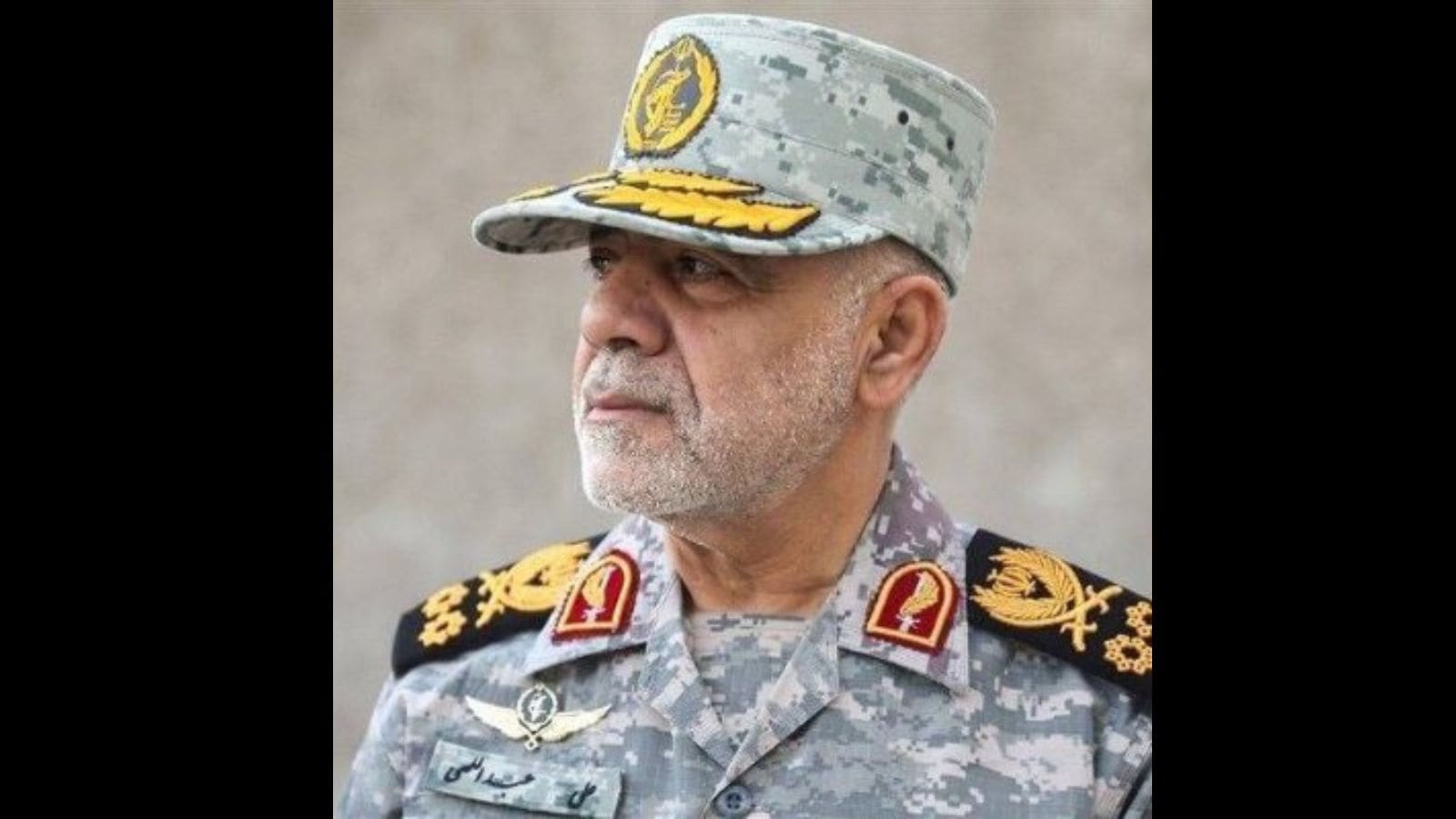
General Ali Abdollahi, Chief of Staff of the Iranian armed forces, made the administration’s position crystalline on Wednesday. He pointed to the heavy concentration of US aerial refueling tankers and support aircraft across the Gulf, noting that such a footprint is impossible to maintain without the tacit, if not explicit, cooperation of host nations. For the Gulf states, the room for maneuvering has vanished. They are currently pinned between a relentless American military machine and an Iranian neighbor that has signaled its intent to shift from defensive posturing to active, offensive deterrence.
The immediate fallout is visible in the United Arab Emirates, which has shuttered all financial and commercial ties with Iran. This is not just a policy shift; it is a desperate attempt to decouple from an economy that Tehran is increasingly treating as an extension of the battlefield. The UAE’s move underscores a profound truth: the regional order is fracturing into two distinct camps, and the middle ground—the space where business and security could once be managed separately—has been erased.
The US presence in the Gulf, once considered the bedrock of regional stability, now acts as a lightning rod for the very instability it sought to prevent. Washington is reportedly evaluating whether to downsize its footprint entirely, reconsidering a basing framework that was constructed for a different century. The Pentagon’s internal deliberations suggest an acknowledgement that the risks of sustaining these bases under constant drone and missile threats may outweigh their strategic utility.
Consider the implications of this withdrawal. If the United States pulls back, the regional powers will be left to reconcile with a Tehran that feels emboldened, not contained. This is the danger of a strategy that relies on legacy infrastructure. When that infrastructure becomes a target, the host nations suffer the consequences, while the primary belligerents—thousands of miles apart—continue their high-stakes game.
Tehran’s rhetoric regarding the Strait of Hormuz is equally instructive. By declaring that the waterway will remain closed until its demands are met, Iran is weaponizing global commerce to force a resolution on its own terms. The global shipping industry is already feeling the pinch, with maritime transits forced to adapt to a reality where the "rules-based order" is being challenged by kinetic, localized force.
Observers often ask why regional states do not simply expel American forces to secure their own safety. The answer is found in the deep-seated reliance on Western security guarantees that have defined the Gulf since the mid-20th century. Decades of institutional inertia make it nearly impossible for these regimes to pivot overnight. They are trapped by their own history, unable to fully embrace the American umbrella without inviting Iranian wrath, yet terrified of the vacuum that a US exit would create.
The situation is further complicated by the internal politics of the involved nations. In Tehran, the rhetoric is directed at both domestic and external audiences. By promising "strategic surprises" and responding in kind to any nuclear escalation, Iranian officials are attempting to project a level of capability that keeps their adversaries off-balance. Whether these threats reflect actual stockpiles or high-level bluffing is the billion-dollar question that intelligence agencies are currently struggling to answer.
Washington faces a different set of obstacles. The Trump administration has maintained a hard line, dismissing the potential for a ceasefire and viewing the current hostilities as a chance to redefine the American posture in the Middle East. This creates a policy of extreme rigidity. If one side refuses to negotiate and the other refuses to back down, the only remaining variable is the scale of the next escalation.
Look at the logistics. A modern air campaign requires a specific, sophisticated network of runways, fuel depots, and communications arrays. These assets are physical, permanent, and inherently vulnerable. By focusing their warnings on "facilitation," the Iranians are signaling that they intend to target the supply chain of the war, rather than just the front-line combatants. This is a classic asymmetric move. It forces the Gulf states to take personal responsibility for every American sortie that takes off from their soil.
There is no longer a path back to the status quo of early 2026. The economic walls are up, the missiles are flying, and the diplomatic channels that once kept these tensions beneath the surface are effectively shuttered. The states that choose to host American forces in the coming months are making a conscious decision to participate in a conflict that shows no signs of waning.
History suggests that when regional powers are forced to choose between existential survival and external alliances, they eventually prioritize the former. We are reaching the point where the cost of facilitating American military operations is becoming too high for the Gulf monarchs to bear. When that threshold is finally crossed, the map of the Middle East will change, leaving the United States to operate from a distance, or not at all. The shift is not coming; it is already underway, dictated by the cold, hard logic of survival in a theater where the old guardrails have been stripped away.