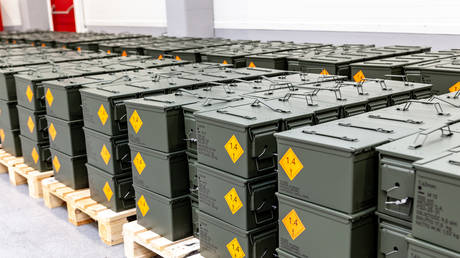
In September 2024, simultaneous explosions of thousands of pagers across Lebanon shattered the boundary between civilian communication infrastructure and modern asymmetric warfare. The coordinated detonations, primarily targeting members of Hezbollah but indiscriminately injuring thousands of bystanders, medical personnel, and children in supermarkets, streets, and homes, rewrote the manual on supply chain interdiction. Months later, the psychological and physical fallout remains immense. Survivors and analysts alike are forced to confront a terrifying new reality where everyday consumer electronics can be weaponized at scale through deep, pre-planned supply chain infiltration. This investigation examines how the operation was executed, the catastrophic failure points in global manufacturing security, and the permanent shadow this event casts over modern technology.
The logistical complexity required to intercept, modify, and distribute thousands of communication devices without raising alarms is staggering. For years, intelligence agencies have toyed with supply chain interdiction, intercepting single laptops or modifying routers bound for specific adversaries. But the pager operation scaled this tactic into an industrial massacre. The devices, branded under names like Gold Apollo but manufactured through intricate licensing agreements and shell companies, were reportedly seeded with explosives long before they reached the end user.
Security analysts point to a fundamental vulnerability in modern electronics manufacturing: globalization. When components are sourced in one country, assembled in another, programmed in a third, and shipped through multiple intermediaries, accountability dissolves. Every handoff is a vulnerability.
The immediate aftermath was chaotic, but the long-term trauma is harder to quantify. Survivors describe a world stripped of basic predictability. When a tool used by doctors, delivery drivers, and administrative staff transforms into an explosive device without warning, trust in manufactured goods evaporates. A survivor interviewed recently noted the psychological weight of living in a world where every battery, every circuit board, and every piece of plastic is viewed as a potential detonator. This hyper-vigilance is not confined to Lebanon. Intelligence agencies, corporate security firms, and supply chain managers worldwide are frantically auditing their procurement channels, realizing that standard security protocols are entirely inadequate against a state actor willing to compromise baseline hardware years in advance.
Governments and multinational corporations now face a grueling dilemma. Onshoring every stage of manufacturing is economically prohibitive and, in many cases, practically impossible. Modern semiconductor fabrication relies on a hyper-specialized global ecosystem. If a nation-state or rogue intelligence service can compromise an established supply chain via shell companies and front organizations, defensive cybersecurity measures become effectively useless. Firewalls and encryption cannot stop a few grams of high explosive packed neatly behind a lithium-ion battery.
The geopolitical ramifications extend far beyond the Middle East. Intelligence operations traditionally operate under unwritten rules of engagement regarding civilian infrastructure. By turning ubiquitous consumer pagers into improvised explosive devices, those norms were discarded. The precedent is chilling. If pagers can be weaponized today, what stops similar tactics from targeting smartphones, electric vehicle batteries, or medical devices tomorrow?
As we assess the aftermath, the illusion of secure hardware is dead. The pager blasts demonstrated that the weakest link in any technological ecosystem is not the software code, but the human supply chain that brings the physical object into existence. Until transparency and rigorous provenance become mandatory standards in global manufacturing, every device we carry remains a potential vector for catastrophe.
The supply chain is broken, and no software patch can fix it