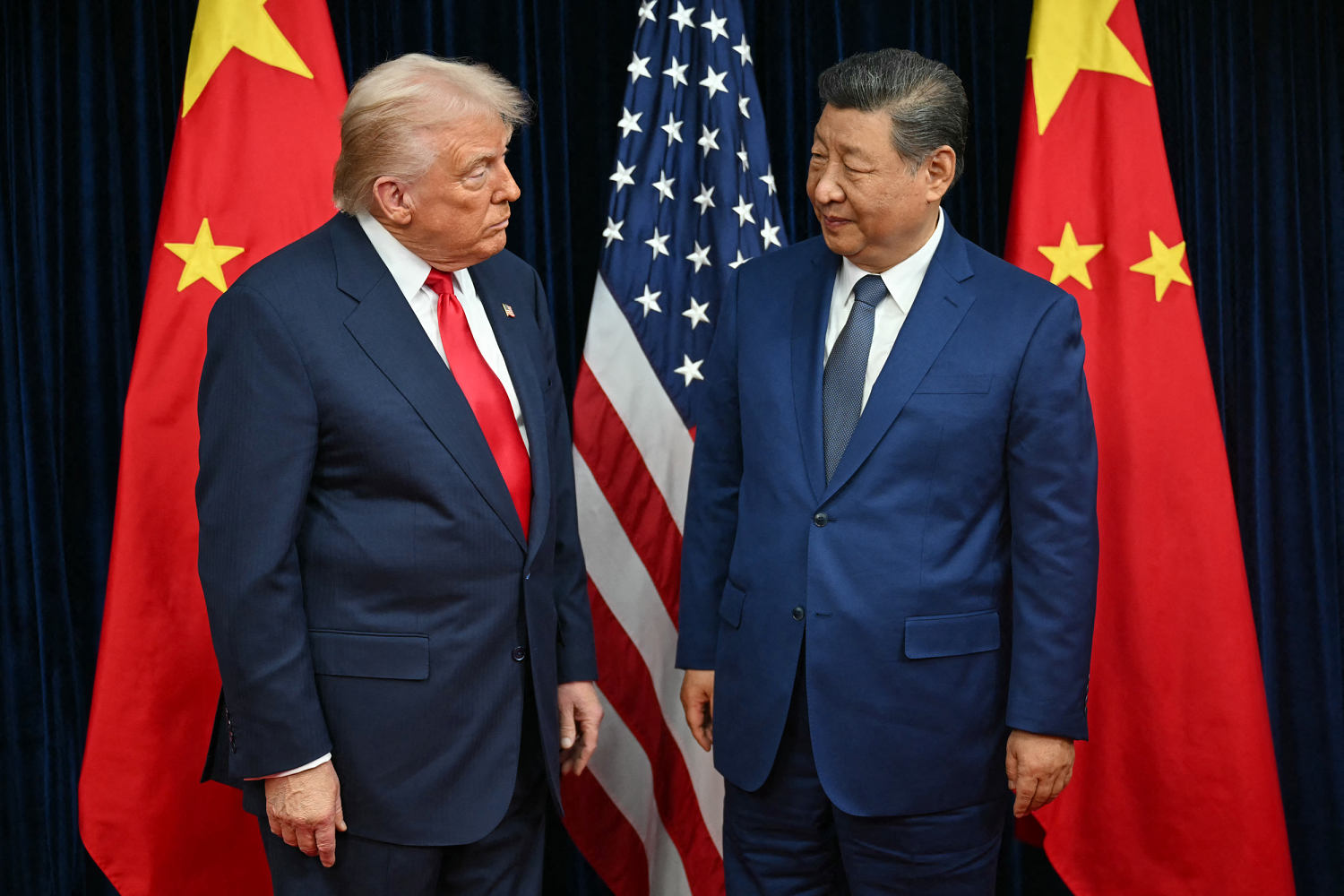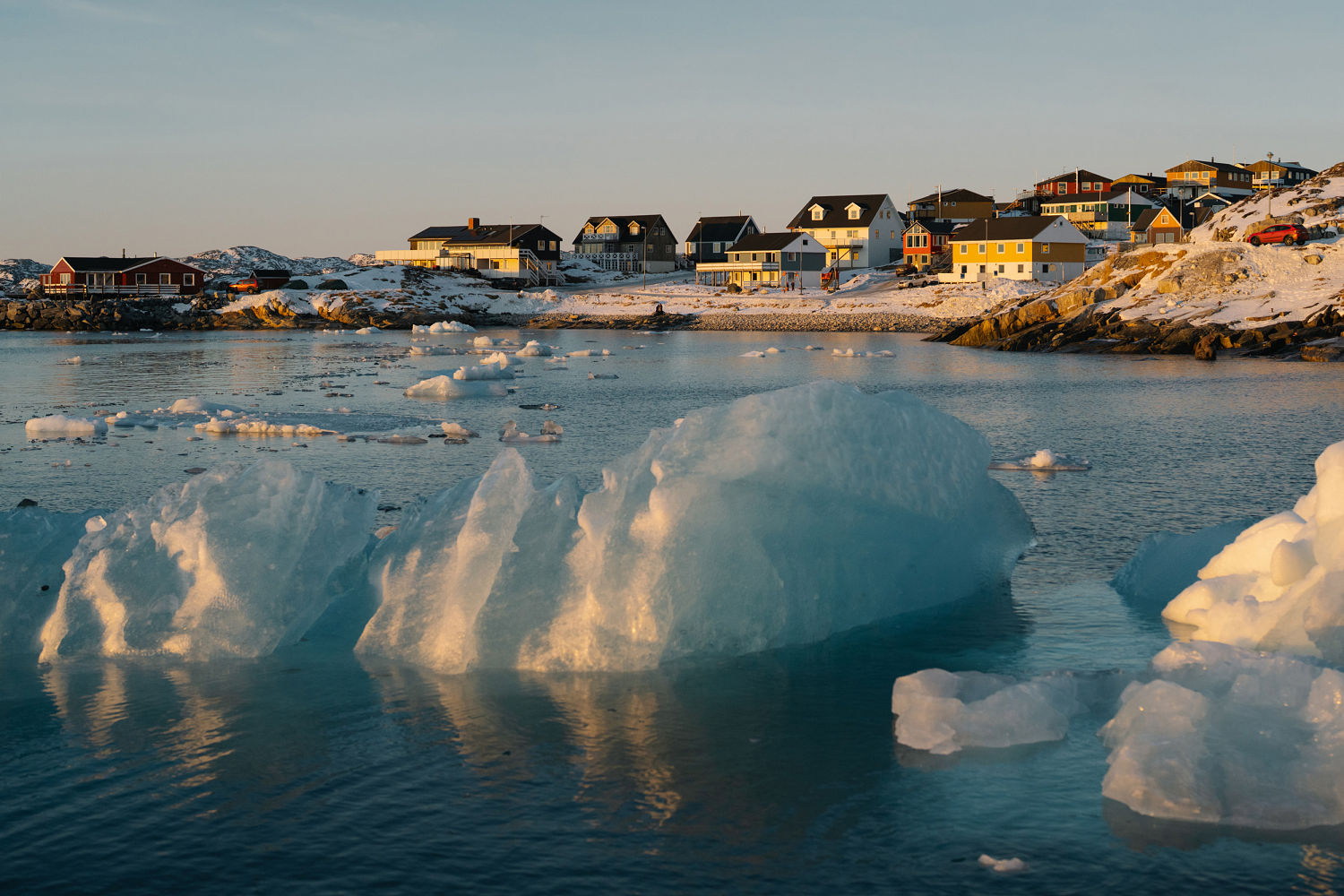
Media coverage of Washington's foreign policy maneuvering in the Arctic routinely misses the mark. When headlines blurt out claims about "permanent security control" or sudden diplomatic breakthroughs regarding Greenland, standard media outlets rush to print breathless commentary about territorial expansion or neo-imperial overreach.
They are reacting to a phantom narrative.
The mainstream press treats Arctic diplomacy like a game of Risk, assuming treaties and public statements dictate spatial dominance. Anyone who has spent time analyzing defense procurement contracts or international maritime logistics knows that sovereignty in the Far North is not dictated by press briefings. It is governed by physical infrastructure, underwater acoustics, deep-water port access, and harsh economic realities that political commentators conveniently ignore.
The lazy consensus asserts that Washington just secured a historic, permanent grip on Greenland’s defense perimeter, effectively boxing out global rivals. That assessment is fundamentally flawed.
Here is what is actually happening beneath the noise.
Paper Treaties Do Not Melt Ice Sheets
Diplomatic announcements make for striking news cycles, but real-world control in the High North requires hard operational capability. You cannot project power across thousands of miles of frozen coastline with signed declarations alone.
When analysts talk about "securing permanent control" over Greenland's security, they gloss over a glaring operational bottleneck: Greenland’s physical infrastructure is severely limited.
Consider the logistical baseline:
- Harbor Infrastructure: Greenland lacks deep-water ports capable of docking heavy naval cruisers year-round without continuous icebreaker support.
- Air Base Capacity: Thule Air Base (now Pituffik Space Base) remains a critical radar outpost, but extending tactical air operations across the island demands massive fuel storage expansion and extreme weather hardened hangars that simply do not exist today.
- Sovereignty Realities: The Home Rule government in Nuuk retains strict control over domestic policy and environmental regulations. Any long-term defense infrastructure expansion requires navigating complex local legislative approvals and environmental assessments that can stall construction for years.
To assume a diplomatic framework translates to instant strategic dominance reveals a deep misunderstanding of Arctic warfare mechanics. Russia maintains over forty icebreakers, including nuclear-powered vessels capable of smashing through multi-year sea ice. The United States Coast Guard relies on a handful of aging heavy polar icebreakers, with replacement programs notoriously bogged down by design revisions and shipyard delays.
Signing an agreement does not magically build heavy icebreakers. It does not lay subsea fiber-optic cables through frozen fjords overnight. Without those physical assets, declaring "permanent security control" is operational wishful thinking.
Nuuk Hold the Real Cards, Not Copenhagen or Washington
Commentators constantly treat Greenland as a passive observer—a tile on a board moved around by external powers. This paternalistic framing ignores the shifting political dynamics within Nuuk.
Greenland’s political leadership has spent decades systematically pulling authority away from Copenhagen. Under the 2009 Act on Greenland Self-Government, Nuuk recognized its right to declare full independence whenever its people choose to do so. The primary obstacle to immediate independence has never been a lack of political will; it has been fiscal independence. Greenland relies heavily on an annual block grant from Denmark to fund its social services.
Here is the counter-intuitive reality: defense alliances do not weaken Greenland’s march toward independence—they accelerate it.
By encouraging foreign military investment and dual-use infrastructure development (such as airport expansions that serve both civilian transports and military logistics), Greenland builds out its national infrastructure on foreign dollars.
Imagine a scenario where Nuuk leverages its geographic indispensability to secure direct economic guarantees, bypass Copenhagen's administrative oversight, and fund its own sovereign wealth reserve through critical mineral leases. That is not a territory submitting to external control; that is a nation using foreign strategic desperation to underwrite its statehood.
The mainstream narrative frames defense arrangements as a loss of autonomy. In practice, Nuuk uses global security interest as leverage against Denmark. Every time Washington or European allies talk up Greenland’s importance, the price tag for operating in the Arctic goes up, and Nuuk holds the invoice.
The Critical Minerals Distraction
A recurring trope in Arctic commentary is the immediate rush for Greenland’s untapped critical minerals—rare earth elements, titanium, neodymium, and lithium hidden beneath the ice sheet. Critics claim security pacts are merely thin disguises for resource extraction grabs.
That premise fails simple supply-chain economics.
Extracting minerals in sub-zero environments with zero road connectivity is an economic nightmare. Mining projects require massive capital expenditure, steady energy grids, and specialized processing facilities.
| Operational Metric | Standard Temperate Mining | Greenlandic Arctic Mining |
|---|---|---|
| Transport Access | Established rail & paved road networks | Coastal shipping only; ice-locked 6-8 months per year |
| Power Infrastructure | Direct grid integration | On-site micro-grids or specialized power generation |
| CapEx Multiplier | 1.0x baseline | 3.5x to 5.0x baseline due to weather hardening |
| Permitting Timeline | 5 to 7 years | 10 to 15 years through local & environmental boards |
Even if a foreign conglomerate secures a lease for a rare earth deposit in southern Greenland, refining those elements requires chemical processing infrastructure that does not exist on the island. The raw material would still need to be shipped to processing hubs elsewhere.
Securing a military footprint does not solve the underlying supply chain bottleneck. Foreign policy experts who view defense pacts through a pure resource-extraction lens are confusing geological presence with commercial viability. The security presence is about maritime choke points and radar surveillance across the GIUK (Greenland-Iceland-UK) gap—not mining rare earths next week.
The Flawed Assumptions About Arctic Dominance
Standard analysis rests on three fundamentally flawed assumptions that need to be systematically discarded.
Assumption 1: "Formal security agreements prevent adversary influence."
False. Influence in the 21st century is rarely about occupying terrain with troops. It is about subsea cable routing, commercial shipping stakes, dual-use research initiatives, and satellite tracking stations. A military defense agreement does not prevent third-party state-backed entities from buying stakes in local shipping lines, funding academic research stations, or offering commercial construction bids for municipal infrastructure through shell corporations. Countering influence requires constant regulatory vigilance, not just military staging rights.
Assumption 2: "The GIUK Gap functions the same as it did during the Cold War."
Cold War strategies focused on detecting Soviet submarines surging into the North Atlantic through deep-water passages between Greenland, Iceland, and the United Kingdom. Modern subsea warfare is far more complex. Hypersonic glide vehicles, long-range sea-launched cruise missiles, and unmanned underwater vehicles (UUVs) have completely altered detection parameters. Staging acoustic arrays off Greenland's coast is valuable, but assuming it creates an impenetrable barrier ignores modern standoff weaponry capable of striking targets thousands of nautical miles away without passing through traditional ocean choke points.
Assumption 3: "Denmark speaks unilaterally for Greenland’s defense trajectory."
While Denmark officially retains control over Greenland’s foreign affairs and defense policy under the Danish Constitution, the political reality is far more delicate. Any defense strategy executed over the head of Nuuk risks triggering a constitutional backlash that could accelerate a vote for independence. Once independent, Greenland could renegotiate every defense lease on its own terms—or void them entirely. Any long-term defense strategy built on the assumption that Copenhagen holds absolute veto power is built on sand.
Navigating the Real Arctic Landscape
If political leaders and defense strategists want to secure actual stability in the High North rather than just winning a news cycle, they need to stop relying on diplomatic symbolism and focus on operational realities.
First, invest in hard operational assets rather than public declarations. A diplomatic announcement without icebreaking capability, deep-water port funding, and resilient satellite communication networks is pure theater. Real power projection requires building physical, cold-weather-tested assets that can operate in conditions that destroy standard military hardware.
Second, deal directly with Nuuk as an equal economic partner. Treating Greenland as a territory to be managed rather than a sovereign nation-in-waiting is a recipe for strategic failure. External powers must structure infrastructure investments so they directly benefit local Greenlandic communities—building dual-use ports, expanding commercial airports, and establishing local technical training programs.
Third, prepare for the realities of asymmetric legal strategies. Adversaries will not challenge Arctic security by sailing a fleet into Baffin Bay; they will do it by purchasing local infrastructure, funding local political campaigns, offering low-interest municipal loans, and filing international claims under the United Nations Convention on the Law of the Sea (UNCLOS) to contest continental shelf boundaries. Countering that strategy requires legal and financial acumen, not just fighter jets on a runway.
The strategic reality of the Arctic is not defined by grand declarations signed in European or American capitals. It is defined by the unforgiving physics of the polar environment and the evolving political self-determination of the people who actually live there. Anyone telling you that security control over Greenland has been permanently wrapped up in a neat diplomatic package has no idea how the High North actually works.