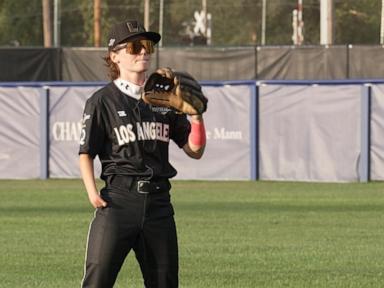
Biomechanical Efficiency Under Structural Constraints
Elite competition demands optimization across a finite set of physiological variables. When an anatomical asymmetry alters the baseline kinetic chain, athletic longevity requires structural redesign rather than simple compensation. In professional baseball, every millisecond of pitch recognition, bat speed generation, and defensive transition dictates success. An athlete competing without a right hand must solve complex physics problems using non-standard biomechanical pathways.
The absence of a distal upper extremity segment forces a complete reconfiguration of the rotational axis. In standard batting mechanics, the trail hand acts as the primary power steering mechanism during the final phase of the swing path, modulating barrel angle and applying torque through the handle. Without this anatomical lever, the kinetic output shifts entirely toward thoracic rotation, core stability, and the lead arm trajectory.
The Kinetic Chain Redirection
To maintain elite exit velocities, the body must generate equivalent rotational force through alternative kinetic pathways.
- Thoracic torque replaces bilateral hand manipulation.
- Lead shoulder depression establishes the swing plane angle.
- Ground reaction forces through the lower extremities are amplified to compensate for reduced upper body leverage.
This redirection transforms the swing into a whole-body rotational engine. Instead of relying on hand-wrist articulation to adjust to off-speed pitches, the hitter utilizes hip acceleration and spine rotation to control the barrel. The absence of the right hand eliminates micro-adjustments at the point of contact, requiring superior predictive modeling during the pitch recognition window.
Sensory Integration And Neurological Adaptation
Processing velocity requires exceptional visual acuity and rapid neural transmission. For an athlete operating with unilateral upper-limb absence, proprioceptive feedback loops operate differently from the neurological norm.
The central nervous system maps the body schema based on available sensory receptors. Without the mechanoreceptors of a right hand, spatial awareness of the bat's terminal end relies entirely on visual tracking, auditory cues from contact, and kinesthetic feedback transmitted through the forearm stump and torso.
Neural Plasticity In Motor Learning
Neuroplastic reorganization allows the somatosensory cortex to redistribute cortical real estate, heightening sensitivity in adjacent areas.
- Visual processing speeds adapt to compensate for reduced tactile feedback at the point of contact.
- Proprioceptive awareness concentrates in the residual limb and core stabilizers.
- Reaction time thresholds narrow to match the demands of professional velocity.
This neural restructuring enables elite performance under high-stress conditions. The brain stops treating the missing limb as a deficit and instead hardwires a novel movement vocabulary that prioritizes whole-arm stability.
Defensive Execution And Transition Mechanics
Batting represents only half of the competitive equation. In professional baseball, defensive proficiency dictates roster survival. Fielding ground balls, securing catches, and executing rapid throws to targeted bases require precise object manipulation.
A player without a right hand must master the art of the glove-to-hand transition with a single upper extremity. This operational challenge requires a synchronized sequence of movements that defies standard instructional coaching.
The Single-Limb Transfer Protocol
- Securing the batted ball within the web of the defensive glove.
- Utilizing the armpit, chest, or residual limb to anchor the glove while extracting the ball.
- Transitioning the ball to the throwing hand in a single fluid motion.
Every fraction of a second spent securing the transfer reduces the range an infielder can cover. Elite efficiency in this domain requires minimizing dead time between the catch and the throw. By anchoring the glove against the torso, the player creates a mechanical vise, allowing the single hand to strip the ball and transition directly into the throwing grip.
Training Load Management And Durability
Professional schedules impose severe physical taxation. Athletes navigating structural asymmetries face unique wear-and-tear vulnerabilities due to asymmetrical loading patterns.
Over time, favoring one side of the body increases the incidence of overuse injuries in the lumbar spine, obliques, and throwing shoulder. High-performance staffs must implement rigorous monitoring protocols to preserve tissue health.
Asymmetrical Stress Mitigation
- Targeted unilateral strengthening to balance core musculature.
- Scapular stability protocols for the operating shoulder.
- Kinetic chain screening to identify early signs of compensatory strain.
Sustaining a professional career requires managing these mechanical imbalances through targeted interventions. Without proactive load management, the cumulative torque generated by full-body rotational compensation leads to structural degradation.
Strategic Operational Execution
Implementing an adaptive training model at the professional level requires total alignment between coaching staff and athlete. The focus must remain strictly on objective output metrics rather than stylistic conformity.
Organizations evaluating or developing adaptive athletes must discard traditional mechanical templates. The evaluation matrix should measure functional production metrics—such as exit velocity, defensive range factor, and on-base efficiency—rather than subjective aesthetic standards. Prioritize mechanical autonomy over conventional form, ensuring the athlete's unique kinetic signature is optimized for maximum competitive output.