Saying "sorrow" isn't the same thing as saying "sorry."
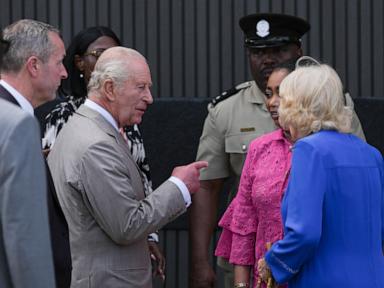
That distinction sat right at the center of the room when King Charles III stood before world leaders in Antigua and Barbuda to address Britain's historical role in the transatlantic slave trade. If you only skimmed the headlines, you probably thought the British monarchy finally crossed the Rubicon on colonial accountability. It didn't. Not really. For another look, check out: this related article.
During the Commonwealth Heads of Government Meeting (CHOGM) hosted in St. John's, Antigua and Barbuda, King Charles acknowledged the painful history of slavery and spoke of his personal sorrow over the suffering inflicted on millions of people. World leaders, Caribbean prime ministers, and reparations advocates listened closely to every syllable. They weren't looking for poetry. They were listening for legal and financial signals.
Why Antigua Was Such a Loaded Backdrop
Context changes everything here. Antigua and Barbuda isn't just another scenic stop on a royal itinerary. Similar reporting on the subject has been published by The New York Times.
For centuries, the islands operated as a brutal engine of Britain's sugar economy. Enslaved Africans worked the plantations under unimaginable conditions while British families and institutions extracted massive wealth that funded estates, banks, and universities back in the United Kingdom. Codrington's plantations on Barbuda alone generated fortunes that directly enriched British establishments for generations.
When King Charles arrived in Antigua to speak to leaders from across the 56-nation Commonwealth, he stepped onto ground where the legacy of that extraction isn't ancient history. It shows up in modern economic vulnerability, climate fragility, and systemic underdevelopment.
Prime Minister Gaston Browne of Antigua and Barbuda has been one of the most vocal leaders in the Caribbean pushing for reparatory justice. He hasn't minced words about Britain's moral obligation to repair the damage caused by centuries of chattel slavery. So when the King took the podium in Browne's backyard, the tension wasn't theoretical. Everyone knew what the host nation wanted to hear.
The Careful Choreography of Royal Language
If you've followed British royal communications over the last decade, you know that palace speechwriters treat every word like a landmine. They have to.
In international law and diplomacy, an explicit, formal apology from a head of state carries legal weight. Caribbean leaders, working through the CARICOM Reparations Commission, have spent years building a structured, ten-point plan demanding formal apologies, debt cancellation, public health investments, and educational programs from former European colonial powers. An official apology from King Charles could open the floodgates for formal reparations claims and strengthen legal arguments in international courts.
That's why the King used words like "sorrow" and "regret" rather than issuing an unreserved formal apology on behalf of the British Crown.
Honestly, it's a tightrope act that satisfies almost nobody. To critics in the UK press, even mentioning slavery in a contrite tone feels like capitulation to modern political pressure. To activists and leaders across the Caribbean, expressing sorrow without backing it up with tangible restitution feels like empty theater.
Consider how this compares to King Charles's earlier remarks in Kigali, Rwanda, back in 2022, when he was still Prince of Wales. Back then, he said he could not describe the depths of his personal sorrow at the suffering of so many, and he acknowledged that the Commonwealth's roots run deep into the most painful period of history. In 2023, he also signaled support for independent research into the British monarchy's historical ties to transatlantic slavery, granting researchers access to the Royal Archives and the Royal Collection.
Look at the pattern. Charles is willing to go further than Queen Elizabeth II ever did in acknowledging the stain of slavery. He's comfortable expressing personal grief and encouraging historical transparency. Where he stops cold—and where the British government forces him to stop—is at committing the state to financial reparations or formal legal liability.
What the British Government Actually Controls
Here is a misconception that trips up casual observers every single time this topic hits the news. People talk as if King Charles can just wake up one morning, pull out a royal checkbook, and settle historical debts.
He can't. Under the UK's constitutional monarchy, the King doesn't make foreign policy. He doesn't set budgets, negotiate international treaties, or commit taxpayer money to foreign aid or reparations programs. His speeches at major international summits like CHOGM are written in close consultation with 10 Downing Street and the Foreign, Commonwealth and Development Office.
When UK Prime Minister Keir Starmer and his administration made it clear heading into the summit that reparations were not on the agenda, they boxed the King in before his plane even touched down in the Caribbean. Downing Street's position has remained remarkably consistent across both Conservative and Labour governments. British officials argue that the UK shouldn't pay financial reparations for historical wrongs, preferring instead to talk about future-facing partnerships, climate finance, and trade cooperation.
Basically, King Charles was delivering a message shaped by diplomatic guardrails. His expression of sorrow was real enough on a personal level—Charles has spent decades cultivating relationships across the Commonwealth and genuinely cares about keeping the institution intact—but politically, his hands were tied.
How Caribbean Leaders Are Changing the Strategy
If you think Caribbean nations are simply going to pack up and go home because the British government said no, you haven't been paying attention to how the reparations movement has matured.
Ten years ago, critics dismissed reparations as a fringe talking point. Today, it's an organized diplomatic campaign backed by economists, historians, and regional governments. CARICOM isn't just asking for cash payouts to individuals. Their framework focuses on structural repair—things like addressing the chronic public health crises (such as high rates of hypertension and diabetes linked to historical dietary deprivation), illiteracy, and the crushing debt burdens that hold Caribbean economies back.
Even more interesting is how these nations are bypassing Westminster to target private institutions directly.
Look at what's already happened across Britain. The Church of England acknowledged its historical links to slavery through Queen Anne's Bounty and pledged a £100 million fund (later pushed toward an even higher target by an independent oversight panel) to invest in communities affected by slavery. Universities like Glasgow have established formal reparative justice programs with the University of the West Indies. Prominent British families whose ancestors profited from plantations—like the Trevelyan family, who owned estates in Grenada—have traveled to the Caribbean to apologize publicly and contribute funds toward local education and development.
Caribbean leaders watched those breakthroughs happen without a single dime from the British Treasury. When Prime Minister Gaston Browne and his peers press King Charles in Antigua, they're keeping the issue on the global front page so that pressure continues to build on universities, banks, insurance firms, and royal institutions alike.
The Crown's Own Financial Ties to Slavery
Why does the spotlight keep swinging back to the British monarchy specifically? Because the Crown wasn't a passive bystander.
Historical records show that English monarchs actively backed and profited from the transatlantic slave trade for over two centuries. In 1660, King Charles II helped establish the Royal African Company, which held a monopoly over English trade along the West African coast and shipped tens of thousands of enslaved Africans across the Atlantic—many of them branded with the initials "DY" for the Duke of York, who later became King James II.
Even after Britain abolished the slave trade in 1807 and slavery itself in 1833, the financial mechanics of abolition favored the enslavers, not the enslaved. The British government borrowed £20 million—an astronomical sum representing roughly 40 percent of the nation's annual budget at the time—to compensate former slave owners for their "loss of property." British taxpayers didn't finish paying off that debt until 2015. Enslaved people received nothing.
When researchers began combing through the Royal Archives following King Charles's 2023 pledge of transparency, historians pointed out that the monarchy's wealth and estates didn't grow in a vacuum. Understanding that history makes it obvious why a simple expression of sorrow in Antigua feels incomplete to descendants of enslaved people. You can't separate the grandeur of the institution from the capital that helped sustain it.
What Happens to the Commonwealth Now
The Commonwealth is facing an identity crisis, and Antigua put it under a microscope.
For decades, the organization survived on soft power, shared language, and personal loyalty to Queen Elizabeth II. That personal loyalty doesn't automatically transfer to King Charles. Several Caribbean nations have already signaled their intention to remove the British monarch as their head of state, following the path Barbados took in 2021 when it became a republic. Jamaica, Belize, and Antigua and Barbuda have all discussed holding referendums or advancing constitutional reforms to sever ties with the Crown.
Becoming a republic doesn't mean leaving the Commonwealth—Barbados stayed in, just as India, Kenya, and dozens of other republics have for decades. Still, it fundamentally changes the dynamic. Commonwealth leaders no longer feel obligated to defer to British sensitivities just to keep the peace at summit dinners.
If the UK wants the Commonwealth to remain a relevant diplomatic bloc in an era where countries in the Global South have plenty of other economic partners to choose from, ignoring their primary moral and economic grievance is a losing play. You can't lecture nations about rules-based international order and human rights while refusing to reckon seriously with one of the largest forced migrations and systems of exploitation in human history.
How to Follow This Story Without Falling for Spin
Whenever royal speeches or Commonwealth summits dominate the news cycle, coverage tends to split into loud, predictable extremes. If you want to track where this actually goes over the next few years, ignore the outrage merchants and watch three specific indicators instead.
First, look at the output from the independent researchers examining the Royal Archives. Their findings on the monarchy's historical links to slavery are scheduled to be published, and the specific financial records they uncover will dictate how much pressure lands on Buckingham Palace next.
Second, track institutional commitments rather than government statements. Watch how major British banks, insurance companies, and universities respond to CARICOM's framework. Real money and structural partnerships are moving through private and academic channels even while Downing Street stalls.
Third, pay attention to constitutional votes across the Caribbean. As nations like Antigua and Barbuda move forward with plans to transition away from the British monarchy, their leverage in demanding reparative dialogue only grows stronger. King Charles's words in Antigua weren't the end of this conversation—they were just another marker showing how hard it has become for Britain to look away.