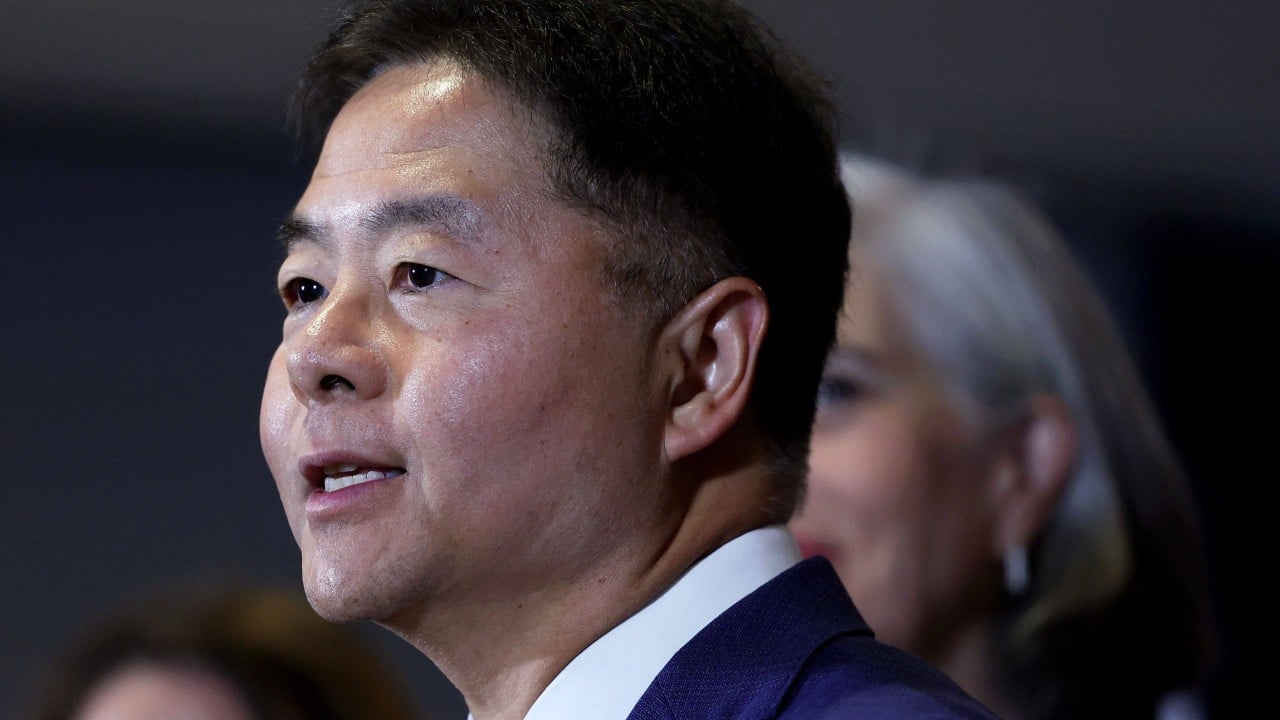
Most political coverage reduces Capitol Hill leadership races to a simple checklist of identity milestones. When California Representative Ted Lieu launched his campaign for House Democratic Caucus leadership, headlines immediately focused on the prospect of him becoming the highest-ranking Asian American in congressional history. That matters. Representation in the upper echelons of the U.S. House of Representatives isn't just symbolic, especially when Asian American, Native Hawaiian, and Pacific Islander communities remain underrepresented in top legislative posts.
Focusing solely on the historic first misses the real story on Capitol Hill. Lieu didn't build a viable path to the leadership table because of demographics alone. He got there because he mastered the modern mechanics of Democratic politics, from prolific fundraising and relentless media appearances to surviving the brutal internal math of caucus whip counts. If you want to understand how power actually shifts inside Congress, look past the press releases and examine the machinery behind Lieu's rise. Meanwhile, you can read related developments here: Anatomy of a Lethal Injection Failure in the Christa Pike Case.
Why Ted Lieu's Leadership Bid Signals a Generational Shift
For nearly two decades, House Democratic leadership operated under a remarkably stable troika of Nancy Pelosi, Steny Hoyer, and Jim Clyburn. When that trio stepped aside from top leadership roles ahead of the 118th Congress in 2023, it opened the floodgates for a younger generation of lawmakers led by Hakeem Jeffries, Katherine Clark, and Pete Aguilar. Lieu's push into the upper ranks, starting with his election as Caucus Vice Chair and extending into higher leadership ambitions, is the logical next phase of that transition.
Caucus leadership elections aren't public primaries. They're closed-door, secret-ballot affairs where roughly 200 colleagues decide who gets a seat at the table where legislative strategy, committee assignments, and messaging priorities are hammered out. To see the complete picture, check out the recent report by NPR.
You don't win those votes with viral tweets alone. You win them by helping vulnerable colleagues keep their seats.
Lieu understood this assignment early. Representing California's 36th Congressional District—a wealthy, coastal stretch of Los Angeles County encompassing Santa Monica, Beverly Hills, and Torrance—gives him access to one of the deepest donor pools in the country. Unlike members in swing districts who have to hoard every dollar for their own survival, Lieu sits in a safe blue seat. He has consistently used that security to raise millions of dollars for the Democratic Congressional Campaign Committee and transfer funds directly to frontline incumbents in battleground districts.
On Capitol Hill, that's the ultimate currency. When a member from Pennsylvania or Nevada remembers who helped fund their fall television ads, they remember it when the secret ballot boxes come out in the caucus room.
Breaking the Glass Ceiling for Asian Americans in Congress
To appreciate why Lieu's trajectory carries weight beyond standard partisan jockeying, look at the historical baseline. Until recently, Asian Americans were virtually absent from the inner circle of House and Senate leadership, even as the AANHPI population became the fastest-growing demographic group in the United States.
Lieu's own biography reads like a classic American political narrative, though he rarely leans on sentimentality when discussing it. Born in Taipei, Taiwan, he immigrated to the United States with his family as a young child, growing up in Ohio where his parents worked selling gifts at flea markets before opening their own stores. He went on to earn degrees from Stanford University and Georgetown University Law Center, served on active duty in the U.S. Air Force Judge Advocate General's Corps, and spent years in the California State Assembly and State Senate before winning Henry Waxman's former House seat in 2014.
Breaking a glass ceiling in Congress isn't just about hanging a new portrait in the Capitol. Leadership positions determine which bills get floor time and which issues get buried in committee.
During the surge in anti-Asian hate crimes during the COVID-19 pandemic, having lawmakers like Lieu, Grace Meng, and Judy Chu in positions of institutional influence directly shaped the legislative response, culminating in the passage of the COVID-19 Hate Crimes Act in 2021. When an Asian American lawmaker sits in the daily leadership meetings with the Speaker or Minority Leader, concerns affecting AANHPI communities aren't an afterthought tacked onto the end of a press conference. They're baked into the caucus agenda from the start.
How Caucus Leadership Elections Actually Work
If you've never watched an internal House leadership race up close, the process can seem bizarre. There are no televised debates. There's no polling. Instead, candidates run whisper campaigns that can stretch over months or even years.
Here's what actually moves the needle inside the Democratic Caucus:
- ideological bridge-building: The House Democratic Caucus stretches from democratic socialists in urban cores to moderate Blue Dog Democrats in rural districts. A leadership candidate who alienates either wing is dead on arrival. Lieu belongs to the Congressional Progressive Caucus, yet he maintains strong working relationships with the center-left New Democrat Coalition and national security hawks, largely thanks to his military background.
- media discipline: Modern House leadership is essentially a full-time communications operation. Lieu is a fixture on cable news, Sunday morning shows, and digital platforms, known for sharp, punchy soundbites that cut through the noise without accidentally creating headaches for swing-district colleagues.
- colleague maintenance: It sounds mundane, but showing up matters. Candidates track birthdays, visit colleagues' districts for local fundraisers, and whip votes on obscure procedural motions just to prove they can deliver numbers when it counts.
When Lieu initially ran for Caucus Vice Chair against candidates like Madeleine Dean and Joyce Beatty, his team treated the race like a presidential primary in miniature. He didn't just ask for votes; he recruited regional whips across different state delegations to lock down commitments and identify soft support before rivals could poach it.
The Ideological Tightrope Ted Lieu Has to Walk
Climbing higher in House leadership brings a distinct set of hazards. As a rank-and-file member from Los Angeles, Lieu could freely stake out aggressive positions—whether pushing for strict artificial intelligence regulations, advocating for campaign finance reform, or vocalizing sharp critiques during impeachment proceedings—without worrying about how those stances played in suburban Omaha or rural Maine.
Leadership changes that calculus instantly.
Once you hold a leadership title, your job isn't to represent coastal Los Angeles. Your job is to protect the caucus majority or win it back. That means occasionally swallowing your own ideological preferences to shield moderate members from tough votes, or enforcing party unity when progressives want to blow up a compromise bill.
Lieu has also faced scrutiny from different corners of his own party over the years. Some progressive activists have occasionally pushed him to take harder lines on foreign policy or corporate regulation, while conservative media outlets routinely target him as a symbol of California liberalism. Navigating those crosswinds requires a thick skin and a willingness to absorb political heat so vulnerable members don't have to.
What Lieu's Rise Means for California's Clout on Capitol Hill
For decades, California was the undisputed powerhouse of House Democratic politics. With Nancy Pelosi holding the gavel and veteran Californians chairing major committees like Intelligence, Financial Services, and Energy and Commerce, the Golden State dictated the national legislative agenda.
That dominance has eroded slightly over the past few election cycles. Redistricting cost California a congressional seat after the 2020 census, several longtime committee chairs retired, and the top three House Democratic spots shifted to New York, Massachusetts, and California's Inland Empire via Pete Aguilar.
Lieu's presence in the leadership ranks—alongside Aguilar—keeps Los Angeles and coastal California wired directly into the party's central nervous system. Given California's outsized role in tech policy, entertainment, climate regulation, and immigration, maintaining a high-ranking voice from Los Angeles isn't just a regional vanity project. It directly affects how Congress approaches everything from AI copyright rules to federal disaster relief.
Tracking Influence Beyond the Title
If you're following congressional leadership battles to see who actually holds sway in Washington, stop watching the cable news chyrons and start tracking three concrete indicators over the next legislative session:
- dccc fundraising transfers: Check the quarterly Federal Election Commission filings to see how much money leadership contenders are moving to battleground candidates. Influence follows the checkbook.
- bill cosponsorship coalitions: Watch whether a lawmaker's legislative proposals attract both Progressive Caucus and New Democrat members, which signals real cross-caucus trust.
- caucus task force assignments: Pay attention to who gets tapped to lead high-stakes working groups on contentious issues like border policy, tech regulation, or government funding deadlines.
Titles on Capitol Hill only matter if the person holding them can actually herd 200 independent-minded politicians in the same direction. Ted Lieu's push to break another barrier in House leadership shows how far Asian American representation has come in Congress, but his real test isn't winning the vote behind closed doors—it's proving he can hold a fractured caucus together when the floor votes get ugly.