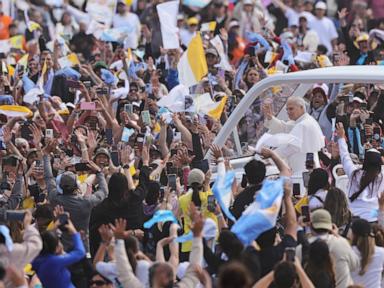
Most headlines treat papal speeches as polite diplomatic wallpaper. You've probably seen the news clip—the Pope addressing Argentines, calling their homeland a "land of saints," and urging them to follow those historical examples. People read it, nod, and scroll past.
That's a mistake. When the head of the Catholic Church uses that specific phrase for Argentina, it isn't just spiritual poetry or nostalgic hometown pride. It's a pointed challenge aimed directly at a nation wrestling with deep social fractures, economic exhaustion, and an identity crisis.
I've spent years analyzing Vatican communications and Latin American church history, and there is a clear pattern here. Papal rhetoric rarely relies on accidental phrasing. Calling Argentina a "land of saints" and telling citizens to imitate them is a deliberate redirection away from political savior complexes and toward grassroots, everyday grit.
Why the "Land of Saints" Label Actually Matters
Let's be honest about Argentina's recent canonization history. For decades, Argentina had surprisingly few officially recognized Catholic saints compared to European nations or even neighbors like Peru and Mexico. That changed dramatically during the pontificate of Pope Francis, the first Argentine pope, who canonized figures like José Gabriel del Rosario Brochero (the "Gaucho Priest") in 2016, Artémides Zatti in 2022, and María Antonia de Paz y Figueroa ("Mama Antula") in 2024.
When the Pope tells Argentines to look at their own saints during Mass, he isn't asking them to stare at stained-glass windows. He's pointing to specific, historically documented models of civic and spiritual endurance who lived through epidemics, political repression, and extreme poverty on Argentine soil.
Think about who these figures actually were:
- Mama Antula walked thousands of miles barefoot across colonial Argentina in the late 1700s to keep spiritual retreats alive after the Jesuits were expelled by the Spanish crown. She didn't wait for institutional permission or government funding.
- Cura Brochero rode a mule across the rugged Sierras Grandes of Córdoba in the late 19th century, building roads, aqueducts, and schools alongside poor farmers, eventually contracting leprosy from sharing mate with the sick.
- Artémides Zatti, an Italian immigrant who settled in Patagonia, dedicated his life to running a hospital in Viedma, biking through freezing winds to care for patients who couldn't pay a peso.
None of these people were passive mystics locked in monasteries. They were stubborn problem-solvers who built community infrastructure when official systems failed. That's the exact nerve the Pope is touching when he tells modern Argentines to follow their model.
The Misconception About Catholic Sainthood in Latin America
Here's where most casual observers—and plenty of secular journalists—get the story wrong. They assume "following the model of saints" means retreating into private piety, praying more, and ignoring real-world economic or political crises.
In Latin American Catholic social teaching, the exact opposite is true.
I've watched countless commentators misread Vatican homilies because they view holiness through a purely individual lens. In the Argentine context, invoking local saints is a critique of caudillismo—the habit of waiting for a single charismatic politician or sweeping economic miracle to rescue the country. By calling Argentina a "land of saints," the message shifts responsibility back onto ordinary citizens. You don't wait for Buenos Aires or Rome to fix your neighborhood. You become the person who shows up.
There's also a subtle theological correction happening here. Argentina has a massive tradition of folk devotion—figures like Gauchito Gil or Difunta Correa—that exist outside official Church recognition. While the Vatican generally respects popular piety, elevating official figures like Brochero, Zatti, and Mama Antula anchors Argentine faith in historical figures whose lives are verified by strict biographical records and documented service to the poor.
What the Pope's Mass Message Demands From Ordinary Citizens
If you strip away the liturgical language, urging Argentines to follow the model of their saints boils down to three concrete behaviors that clash directly with modern polarization.
First, it demands proximity to the marginalized. You can't imitate Cura Brochero or Artémides Zatti from behind a gated community wall or a social media feed. Both men physically lived among the poorest populations of their regions. During a Mass focused on this theme, the call to "follow the saints" is an explicit push to cross socioeconomic boundaries that have hardened across Argentine cities over the past decade.
Second, it requires institutional patience without apathy. Mama Antula spent years navigating bureaucratic hostility from both colonial authorities and hesitant church officials before her spiritual exercise house in Buenos Aires became a cornerstone of society. She didn't burn down the system, and she didn't quit. She worked around obstacles until the results couldn't be ignored.
Third, it rejects ideological tribalism. Saints in the Catholic tradition are deliberately held up as figures who belong to the entire nation rather than a single political party. In a country where nearly every public institution gets sorted into rival political camps, pointing to historical saints is an attempt to establish common moral ground that neither the political left nor the political right can fully monopolize.
Why Argentina's Cultural Moment Makes This Urgent
Timing explains why this message resonates—and why it stings. Argentina has spent years cycling through punishing inflation, austerity debates, and deep social fatigue. When economic survival dominates every dinner table conversation, civic solidarity is usually the first casualty. People hoard trust. They retreat into survival mode.
Calling a struggling nation a "land of saints" sounds almost ironic on the surface. It's not. In Catholic tradition, saints rarely emerge during eras of comfortable prosperity; they emerge during plagues, wars, and economic collapses.
By framing Argentina through its saints rather than its economic indicators or political scandals, the papal message challenges the narrative of national decline. It argues that the country's deepest cultural resource isn't lithium reserves, agricultural exports, or political doctrines, but a documented history of ordinary people refusing to abandon their neighbors when institutions broke down.
How to Actually Apply This Beyond the Headlines
Whether you're a practicing Catholic, an observer of Latin American affairs, or someone trying to make sense of why papal speeches still move needles in South America, reading these moments accurately changes what you pay attention to.
Stop reading Vatican speeches for hidden political endorsements—you won't find clean partisan alignment there, and you'll miss the actual point. Instead, look at the specific historical figures being named. Read a straightforward biography of José Gabriel Brochero or Mama Antula to understand the exact civic virtues being promoted. Look at how local parishes, Caritas networks, and neighborhood soup kitchens in Argentina operate on the ground, because that is where this rhetoric translates into tangible food, medicine, and shelter. Watch how Argentine civic leaders respond over the coming months—not in their press releases, but in whether they actually bridge divides or keep weaponizing religion for partisan points.