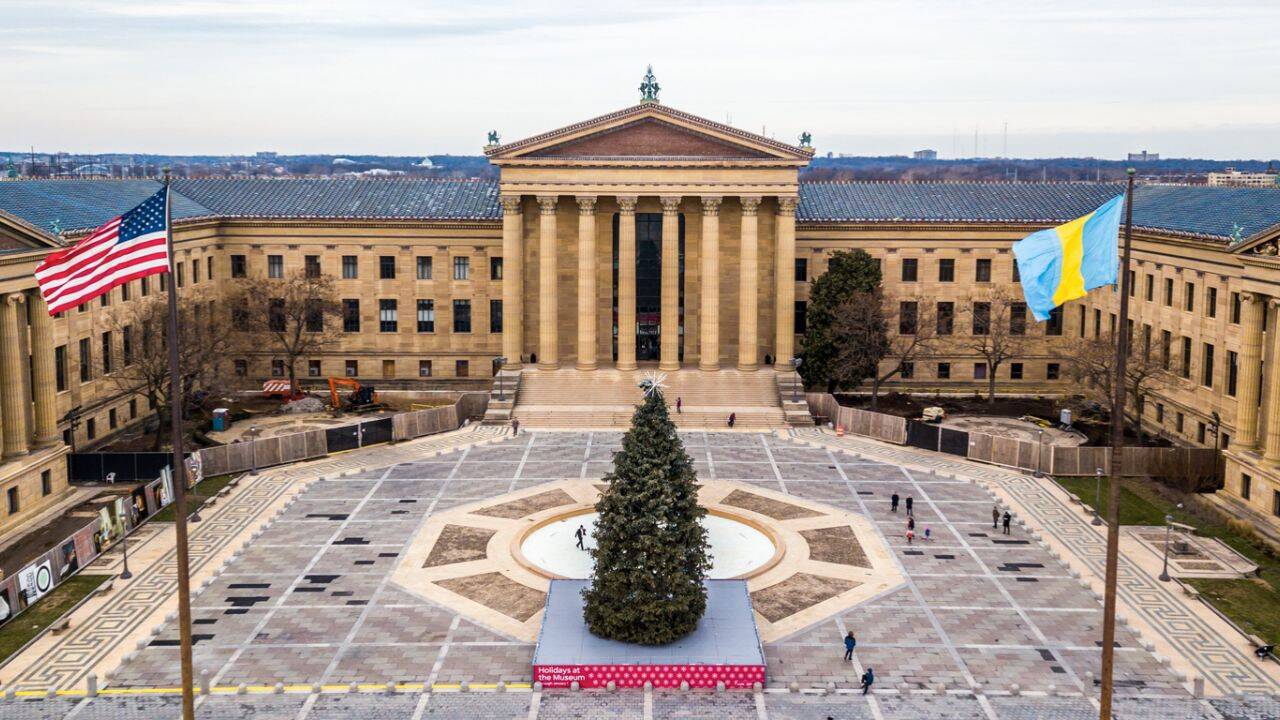
Twenty million dollars buys a lot of marble, yet the Philadelphia Museum of Art isn't spending a dime of its latest mega-gift on another wing of gilded frames. Instead, the institution is pouring that money straight into its learning center expansion, betting that physical classrooms and hands-on studios matter more to its survival than another blockbuster retrospective.
Most headlines treat a donation like this as standard civic philanthropy. Rich donors write big checks, museums slap a name on a wall, and everyone applauds at a gala. Honestly, that's a lazy way to read what's happening in Philadelphia right now.
If you've ever worked inside a major cultural institution or tracked museum endowments over the last decade, you know the real battle isn't acquiring art anymore. It's proving to the surrounding neighborhood—and the local school district—that the building on the hill actually belongs to them.
Why a $20 Million Learning Center Expansion Changes the Math
Major art museums have a reputation problem. To a tourist, the Philadelphia Museum of Art is the place with the Rocky steps and a world-class collection of Duchamp and Van Gogh. To a public school teacher three miles away in North or West Philadelphia, it can sometimes feel like an impenetrable fortress with steep ticket prices and limited bus parking.
You don't fix that gap with a splashy marketing campaign. You fix it by building infrastructure that brings kids, families, and local educators inside every single week.
When a museum commits $20 million to expanding its learning center, it's making a structural shift in how it allocates square footage. Gallery space generates prestige. Education space generates community buy-in, steady foot traffic, and long-term relevance.
Here is what actually happens when an institution expands its educational footprint at this scale:
- Classroom capacity stops bottlenecking school trips. Before expansions like this, museums routinely turn away Title I schools simply because they don't have enough studio rooms or lunch areas to host multiple classes at once.
- Teaching artists get real tools. Trying to run a printmaking or ceramics workshop out of a converted storage closet is a nightmare. Purpose-built studios mean students work with actual materials rather than construction paper and glue sticks.
- Adult and community programming stops fighting for scraps. Without dedicated learning wings, evening workshops and family weekends get pushed into temporary corners whenever a major traveling exhibition arrives.
It's unglamorous work. Nobody flies in from Paris to photograph a new coatroom or a properly ventilated art studio. Yet those exact rooms determine whether a fourth-grader falls in love with visual art or walks out bored after forty-five minutes.
The History Behind Philadelphia's Push for Museum Access
Philadelphia didn't stumble into this philosophy overnight. The city has a long, complicated history with how its cultural institutions interact with working-class residents.
For decades, the Philadelphia Museum of Art operated inside its iconic Benjamin Franklin Parkway building—a massive Greek Revival structure that literally looks down on the city from Fairmount. While the architecture is breathtaking, the layout was designed in the early twentieth century with traditional gallery viewing in mind, not modern interactive education.
In recent years, the museum underwent a massive interior overhaul led by architect Frank Gehry. That project opened up vast underground concourses, new public spaces, and better circulation. Still, physical renovations alone don't automatically translate into deeper educational reach. You need dedicated funding to staff those spaces, develop curricula, and keep programs free or heavily subsidized for Philadelphia families.
Look at peer institutions across the country to see why this specific gift matters so much. When the Art Institute of Chicago or the Metropolitan Museum of Art invests in education centers, they're responding to the exact same demographic pressure. Museum audiences are aging. Traditional subscription and membership models are flattening out.
If an institution waits until kids are twenty-five to introduce them to fine art, it's already too late.
What Competitors Get Wrong About Museum Philanthropy
Read standard press coverage of a $20 million gift and you'll walk away thinking the money sits in a vault waiting to be spent on drywall and paint. That's rarely how major cultural gifts work.
In institutional fundraising, a gift of this size usually splits across physical construction, program endowments, and operational staffing. Why does that distinction matter? Because a shiny new building without an endowment to pay the instructors is a financial trap.
I've seen mid-sized museums raise millions for brand-new education wings, cut the ribbon to huge fanfare, and then slash programming three years later because they didn't fund the salaries of the museum educators. Teaching artists need living wages. Bus subsidies for underfunded public schools require recurring cash flow, not one-time capital grants.
When evaluating any museum expansion, pay attention to three specific details:
- Endowment vs. Capital Split. How much of the $20 million goes toward bricks and mortar versus permanent funding for free admission and teaching staff?
- School District Integration. Does the museum build its curriculum alongside Philadelphia public school teachers, or does it hand down top-down lectures that ignore state educational standards?
- Sensory and Accessibility Design. Modern learning centers aren't just about desks and easels anymore. They require quiet zones for neurodivergent visitors, tactile stations for visually impaired guests, and multilingual signage.
Without those three pillars, an expansion is just real estate development dressed up as charity.
The Real Friction Inside Modern Art Museums
Let's be honest about something the art world hates discussing publicly. Curators and museum educators don't always want the same things.
Curators are trained to protect objects, advance art-historical scholarship, and mount pristine exhibitions. Educators are trained to invite noisy, curious, messy human beings into the building to touch things, ask weird questions, and make their own art. Sometimes those two missions clash directly.
A $20 million investment in the learning center shifts internal power inside the museum. It signals to every department—from conservation to security to curatorial—that education isn't an afterthought tucked into the basement. It's a core pillar of the institution's identity.
There's also a blunt financial reality driving this. Corporate sponsors and municipal governments are increasingly reluctant to fund pure vanity projects. When museum directors pitch city officials or major foundations in 2026, the first question they hear isn't about their latest European acquisition. They're asked how many local students they served last year and what they're doing for public education.
By anchoring its growth in a massive learning center expansion, the Philadelphia Museum of Art is future-proofing its standing with both private donors and public stakeholders.
How Philadelphia Residents and Educators Can Actually Use This
Big institutional announcements often feel distant from daily life, especially when construction timelines stretch over months or years. You don't have to wait until every square foot of the expanded center opens to take advantage of what the museum already offers.
If you're a parent, teacher, or resident in the Philadelphia area, skip the standard tourist route and tap directly into the museum's existing educational pipeline right now.
For K–12 Teachers in the Region
Don't just book a generic self-guided tour. Reach out directly to the museum's school and teacher programs office early in the semester to request guided thematic tours or studio workshops. Many programs offer free admission and transportation subsidies specifically for Title I schools in Philadelphia, so ask explicitly about grant-funded bus vouchers before assuming your school budget can't cover the trip.
For Parents and Caregivers
Check the museum's monthly calendar for Pay-What-You-Wish admission days—traditionally held on the first Sunday of the month and Friday evenings—and pair your visit with their drop-in family studio sessions. Kids under eighteen already receive free admission every day at the Philadelphia Museum of Art, meaning a family visit costs far less than most people assume.
For Local Artists and Community Organizers
Keep an eye on job postings and fellowship announcements tied to the expansion. Large learning center upgrades inevitably trigger hiring waves for part-time teaching artists, curriculum consultants, and community outreach coordinators.
Visit the museum's official website this week, pull up their current school and family program schedules, and book a spot before seasonal slots fill up.


