Seven hundred and forty thousand dollars sounds like a massive political payoff until you look at the quarterly breakdown. That figure isn't a single wire transfer or a backroom deal. It's the cumulative sum of six quarterly payments Anthropic made to Continental Strategy between April 2025 and September 2026.
If you've been following the headlines about Anthropic paying $740,000 to a lobbying firm linked to Marco Rubio's former aide, you've probably seen the wildest interpretations. Some critics call it a direct attempt to buy influence at the State Department. Others point to friction with the Pentagon or fights over semiconductor export controls. When you pull the actual Lobbying Disclosure Act filings from the federal database, the real picture looks much more methodical—and a lot more revealing about how AI companies survive Washington. Meanwhile, you can read other developments here: The Quiet Rebellion in the Mud of Bavaria (And Why a California Drone Just Changed Everything).
Inside the Continental Strategy Filings
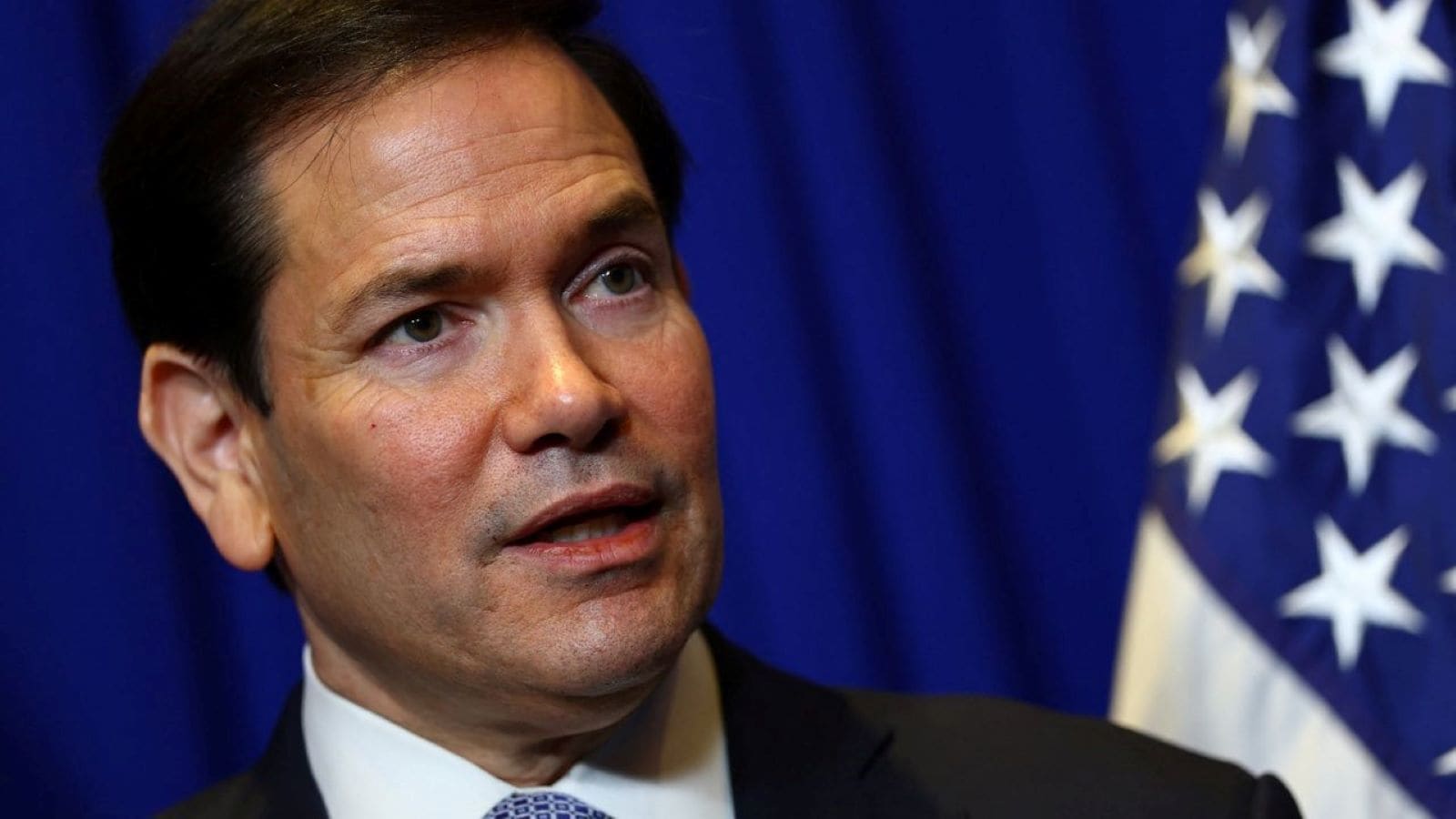
Anthropic didn't just hire random K Street generalists. In April 2025, the company registered Continental Strategy, a firm whose Washington office is led by Alberto Martinez. Before joining Continental, Martinez spent a decade working for Marco Rubio, serving as his Senate chief of staff before moving into public affairs.
The timing matters here. Rubio holds dual influence in the administration as both Secretary of State and interim National Security Advisor, putting him squarely at the intersection of foreign policy, tech diplomacy, and national security. Having Martinez on the account gave Anthropic an operator who knows exactly how Rubio's inner circle thinks and processes policy briefs. To explore the full picture, check out the excellent article by MIT Technology Review.
Look at how the spending ramped up across six consecutive quarters:
- Q2 2025: $90,000
- Q3 2025: $90,000
- Q4 2025: $110,000
- Q1 2026: $150,000
- Q2 2026: $150,000
- Q3 2026: $150,000
That's a 66.7% jump in quarterly fees between the start of the contract and 2026. Companies don't hike a retainer from $90,000 to $150,000 a quarter unless the workload—or the stakes—just escalated dramatically.
The Bigger $1.63 Million Footprint
Focusing solely on Continental Strategy misses half the story. When you look at Anthropic's broader outside lobbying roster from early 2025 through the third quarter of 2026, eight external firms reported receiving $3.01 million combined.
Two firms swallowed 54.2% of that entire budget. Alongside Continental Strategy's $740,000, Anthropic brought on Ballard Partners in spring 2026, paying them $890,000 through the third quarter. Ballard Partners is the former firm of White House Chief of Staff Susie Wiles—and notably, Wiles' daughter also serves as a partner over at Continental Strategy.
Together, those two Trump-connected firms collected $1.63 million.
I've watched tech companies try to navigate political transitions for years, and the biggest mistake Silicon Valley labs make is assuming their technical reputation protects them in D.C. It doesn't. Early on, Anthropic was widely viewed in Washington as leaning heavily toward Democratic policy circles, having brought in former Biden administration national security and AI safety officials like Tarun Chhabra and Elizabeth Kelly. When the political winds shifted, Anthropic didn't rely on white papers to bridge the gap. They bought top-tier Republican access.
What Anthropic Was Actually Lobbying For
Federal LD-2 disclosure forms don't give you a transcript of phone calls. They won't tell you whether Alberto Martinez sat down with Rubio personally or simply emailed a mid-level staffer. What they do show are the specific federal offices contacted and the policy issues on the agenda.
By the third quarter of 2026, Continental Strategy's filings listed contacts across the State Department, the National Security Council, the Executive Office of the President, the Commerce Department, and the Treasury. Ballard Partners was knocking on many of the exact same doors, adding the National Security Council to its roster in the April-to-June 2026 filing window.
Why were they targeting national security and economic agencies instead of just traditional tech committees? Three concrete pressure points explain the surge.
Resolving the Pentagon Supply-Chain Friction
Unlike rivals who were mostly lobbying to shape theoretical future regulations, Anthropic had an active fire to put out. Friction had flared between the AI lab and defense officials—including Defense Secretary Pete Hegseth—over acceptable use boundaries for Claude in military and surveillance operations, alongside threats to designate Anthropic as a supply-chain risk. Hiring Ballard Partners right as those defense disputes heated up wasn't a coincidence. It was crisis management.
Export Controls and Chip Policy
Anthropic has been vocal about keeping advanced AI compute out of China and tightening enforcement against chip smuggling. That puts them directly in the policy lane of the Commerce Department, Treasury, and the National Security Council. Lobbying these specific offices ensures Anthropic's leadership has a voice when export rules and semiconductor restrictions get drafted.
Federal AI Procurement
Government contracts are massive, sticky, and lucrative. As federal agencies decide which frontier models meet security standards for classified and unclassified deployment, losing ground at the White House or Defense Department means handing billions in long-term enterprise value to OpenAI, Google, or xAI.
The Numbers Behind Anthropic's Washington Surge
To understand how fast Anthropic grew up politically, look at their total federal lobbying expenditures—which combine in-house government affairs spending with outside retainers:
- 2024: $720,000
- 2025: Over $3.1 million
- 2026 (through Q3): $8.11 million
They went from spending less than a million dollars a year to more than $8 million in nine months. That puts them right in the heavyweight division alongside legacy tech giants like Meta, which spent roughly $5.9 million in a single quarter.
At the same time, Anthropic has tried to maintain a carefully curated public posture around political spending. The company's governance structure includes strict pledges regarding equity and political neutrality, yet its operational lobbying budget tells a very pragmatic story. When your business model depends on frontier compute access and defense clearance, staying out of Washington isn't an option.
What Disclosure Filings Can and Cannot Prove
Whenever a headline drops about an AI lab paying six figures to a well-connected firm, social media immediately jumps to conspiracy theories. Some commentators tried to link Anthropic's lobbying directly to internal Washington drama surrounding Nvidia and semiconductor export memos.
Here is where you have to separate verified public records from speculation.
Federal lobbying disclosures confirm who was hired, how much they were paid, which agencies were listed, and broad issue areas like "AI development and national security". They do not prove that a specific meeting happened with a cabinet secretary, nor do they prove that a lobbyist caused a specific policy shift. Adding Anthropic's total corporate lobbying spend to the individual firm payouts is another common reporting error—Congressional disclosure rules already bake outside firm retainers into the parent company's total expense line, so adding them together double-counts the money.
What the filings undeniably prove is intent. Anthropic recognized that having the best safety research or the cleanest coding model wouldn't save them if national security officials viewed them as an uncooperative vendor.
How to Track What Happens Next
If you're watching AI policy, defense tech procurement, or semiconductor rules, don't just wait for viral headlines. You can verify these movements yourself directly from primary sources:
- Pull the Q4 2026 LD-2 filings on January 20, 2027. Every registered lobbying firm must file fourth-quarter disclosures by the 20th of January. Check whether Continental Strategy and Ballard Partners remain at the $150,000-plus quarterly run rate and whether the National Security Council stays on their contact lists.
- Watch Pentagon procurement and supply-chain designations. The real return on investment for Anthropic's $1.63 million spend isn't a press release—it's whether Defense Department guidance softens on AI vendor restrictions and acceptable-use clauses.
- Cross-reference personnel additions on quarterly reports. Firms routinely add former agency officials mid-year—just as Ballard Partners added former intelligence officials in Q3 2026. Watching who gets added to a client's roster tells you which federal department is about to become the next regulatory battleground.
Washington doesn't reward the smartest engineers in the room. It rewards the companies that show up early, hire people who know the building, and stay on retainer until the rules are written.