Donald Trump just told the world that America is winning big in Iran. During a primetime address from Washington, he looked straight into the camera and insisted the ongoing military campaign is going beautifully, promising that everyone will see the fruits of this labor very shortly.
If you glance at the headlines or follow the chatter on trading forums like Forex Factory, you might think a clean diplomatic or military victory is right around the corner.
That is a dangerous misreading of the situation.
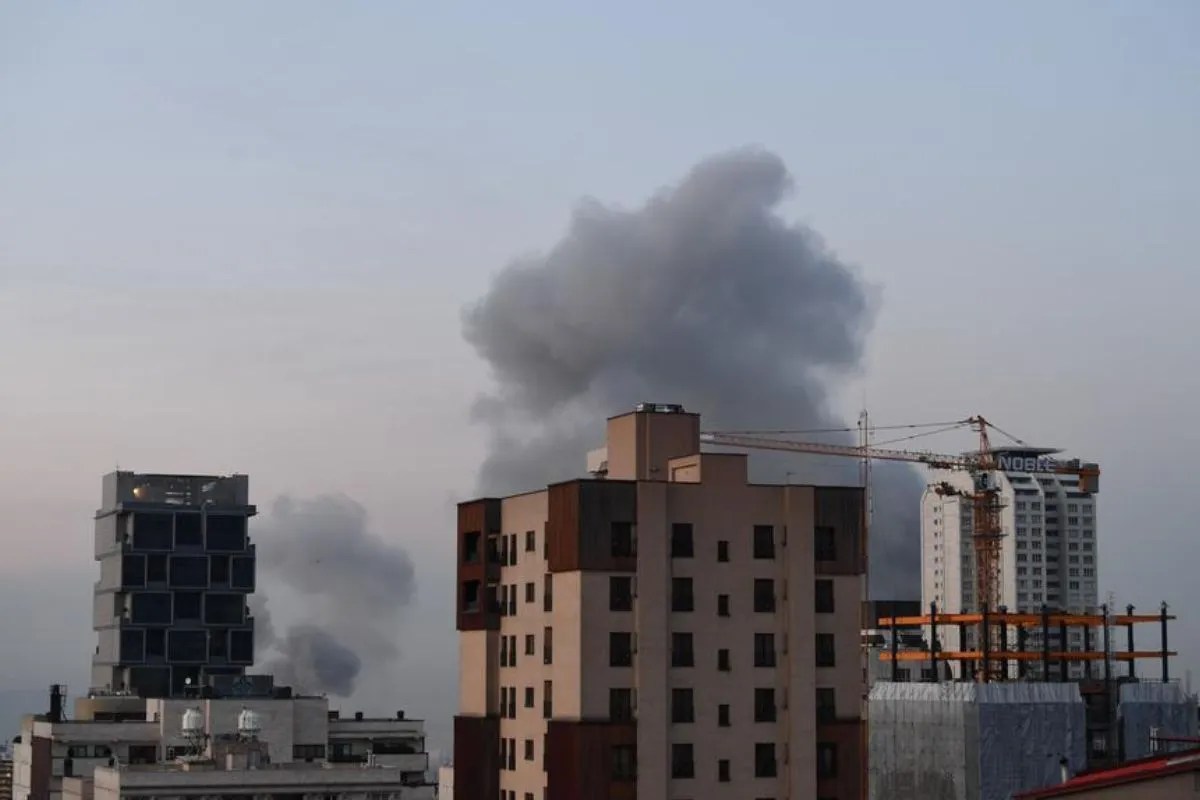
Washington has expanded its airstrike campaign, hitting critical bridges, energy infrastructure, and knocking down a commercial monitoring tower at the strategic Chabahar port. The reality on the ground looks less like a quick win and more like a messy, grinding conflict that threatens to lock the global economy into a prolonged era of high energy prices and supply chain chaos. Trump faces massive political pressure to wrap this up before the upcoming midterm elections, yet his administration keeps escalating the military stakes.
When a political leader says an entire war is going very well, you need to look at what they are actually trying to hide. Here is the real breakdown of what is happening behind the scenes, why the markets are reacting with extreme anxiety, and what the administration's bold claims tell us about the next few months of global conflict.
The Massive Disconnect Between Rhetoric and Reality
Politicians use words to build a specific perception, but military logicians look at raw targets and numbers. Trump's declaration that the U.S. is winning by a lot came right as U.S. Central Command confirmed a massive sixth consecutive night of precision precision strikes inside Iran. Navy fighter jets, armed drones, and warships hammered dozens of targets.
Think about that. If you are truly winning big and the opposition is making massive concessions, you usually do not need to keep flattening their highway networks and electricity grids night after night.
The newest round of strikes targeted southern Hormozgan province, specifically hitting infrastructure near Bandar Khamir. The objective here is obvious to anyone tracking military movements. Washington wants to isolate Bandar Abbas, which serves as Iran's primary commercial maritime hub. By blowing up the regional highway and railway bridges, U.S. forces are trying to slice off the coast from the central heartland and the capital of Tehran.
Iranian authorities have already started calling on citizens in southern provinces to ration electricity due to severe damage to the local power infrastructure. Over 38 people have died and hundreds more are wounded according to local health officials. This is an all-out economic strangulation campaign, not a simple diplomatic chess match where one side has already thrown in the towel.
The Oil Market Panic and the Strait of Hormuz Chokehold
Traders on international financial platforms are not buying the administration's easy victory narrative. The reason is simple. Iran still holds a massive wildcard, the ability to completely choke off the Strait of Hormuz.
While Trump claims Tehran is ready to make massive concessions, Iranian lawmakers and military figures are publicly saying the exact opposite. They view the current negotiation framework not as diplomacy, but as an illegal imposition under the threat of violence. They are explicitly warning that Tehran will not bargain away its sovereign rights or its physical control over the waterway.
This specific geographical bottleneck controls a massive chunk of global petroleum shipments. Even with narrow licensing structures managed by the U.S. Treasury's Office of Personal Assets Control to regulate oil trade, the fear of an absolute shutdown keeps crude prices incredibly volatile.
The administration wants you to think the hard part is over. Yet, every single bridge destroyed and every port tower collapsed increases the likelihood of a desperate asymmetrical retaliation from Tehran. If Iranian forces decide to plant naval mines or utilize anti-ship missiles along the strait, global energy supply chains will suffer a shock that no amount of political spin can fix.
The Collapse at Chabahar Port and Global Collateral Damage
Let us look at a specific example of how this conflict is spilling over into broader international relations. During the early Friday morning raids, a U.S. strike collapsed a commercial traffic tower at Chabahar port on the Gulf of Oman.
This was not just an attack on an Iranian asset. Chabahar port has historically been operated with heavy financial and logistical support from India. It serves as a vital trade gateway for landlocked nations like Afghanistan to access global markets without relying on Pakistani transit routes.
By flattening infrastructure at this specific port, the U.S. is directly harming the economic interests of its strategic partners in New Delhi. It shows how narrow Washington's current focus has become. The administration is willing to risk diplomatic friction with democratic allies just to maximize immediate physical pressure on the Revolutionary Guard.
When you damage global commercial hubs, you generate long-term resentment. This contradicts the narrative of a clean, controlled international coalition succeeding under American guidance. Instead, it highlights a go-it-alone strategy that leaves regional neutrals picking up the pieces.
Why the Domestic Political Calendar Explains the Sudden Escalation
To understand why Trump chose this exact moment to declare victory, you have to look at the domestic calendar. The primetime address was ostensibly focused on election security and federal voting rules ahead of the November midterm elections. He used the platform to lobby for strict voter ID bills and to attack his domestic political opponents.
Plugging a foreign policy win into a speech about domestic voting laws is an old political play. Trump is facing immense pressure from voters who are weary of endless commitments in the Middle East. He originally campaigned on pulling America out of foreign entanglements. Now, he finds himself deeply involved in an escalating infrastructure war.
By telling the public that the war is practically won and that results will appear shortly, he attempts to neutralize a major political vulnerability before voters head to the ballot box. He needs the public to believe that the current economic pain and the deployment of military assets are temporary sacrifices that have already achieved their goals.
Prominent legislative opposition figures have already labeled the address a distraction. They argue that the administration is inflating foreign successes to gloss over complex economic realities at home, including sticky inflation numbers and choppy financial markets driven by the war itself.
Reading Between the Lines of the Negotiation Stalled Games
There is also a bizarre contradiction regarding international oversight. Trump recently claimed that Western inspectors would soon join the International Atomic Energy Agency to review damaged nuclear sites, stating that Tehran had already signed off on the access.
Almost immediately, Iran's Foreign Ministry fired back, stating that no such inspections are scheduled and that no formal procedure exists for this kind of access. Trump countered by accusing Iran of writing down agreements and then immediately lying about them to the public.
This public back-and-forth proves that the baseline diplomatic framework is completely broken. There is zero trust between the entities. Washington is treating nuclear site access as a done deal to show leverage, while Tehran is digging in its heels to avoid looking weak to its domestic population.
If you are trying to map out what happens next, do not get caught up in the daily rhetorical swings. Focus instead on physical realities. Watch whether commercial vessels continue to pay new Iranian transit fees in the shipping lanes. Track whether the U.S. military begins targeting water desalination plants or wider industrial zones. Monitor whether regional intermediaries like Qatar can keep technical-level discussions alive in neutral venues like Bürgenstock.
Step away from the political theater. Pay attention to the physical flow of goods and the concrete targets of the nightly bombing runs. That is where the real truth of this conflict hides.
Prepare for a volatile season in global energy markets. Diversify your risk away from assets that rely heavily on stable Middle Eastern transit. Keep a close eye on the weekly domestic fuel storage reports. The administration wants everyone to think the finish line is a few days away, but the structural damage to regional stability will take years to fix. Protect your capital by assuming this friction will last much longer than the political talking points suggest.