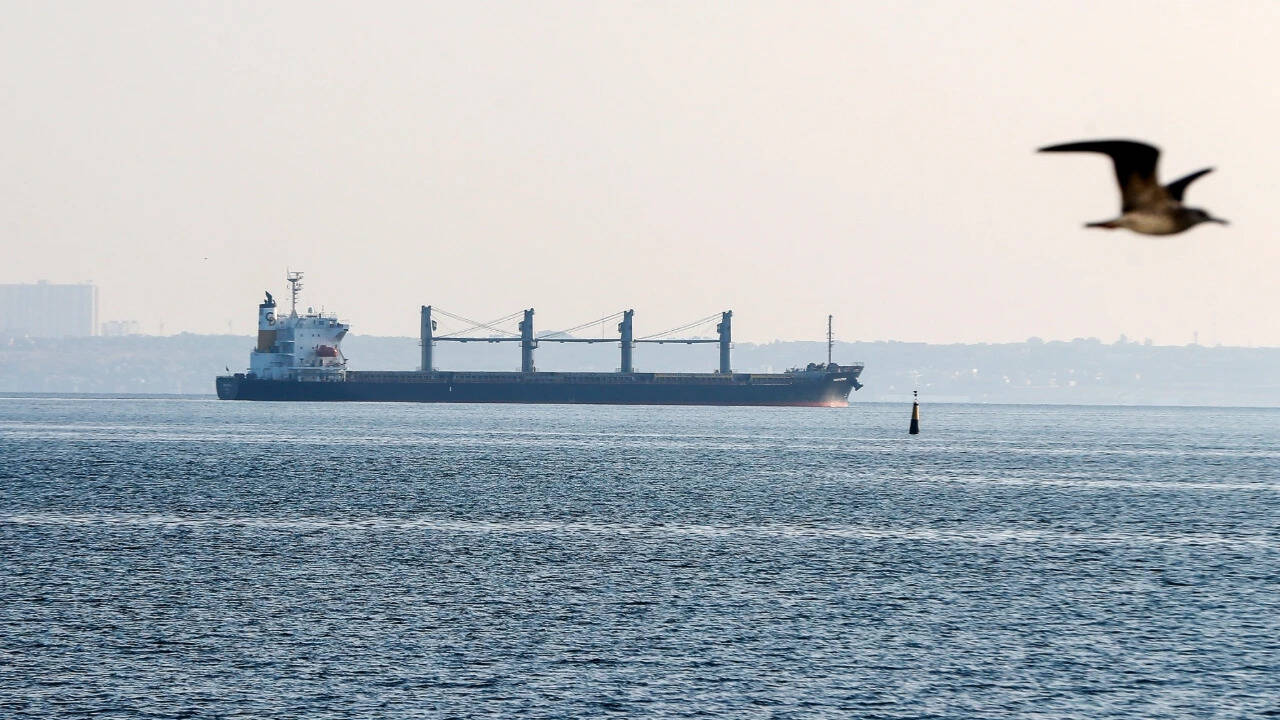
Headline writers love a good panic. When news broke that a cargo ship traveling from China to Bangladesh had been intercepted with enough chemicals onboard to build roughly 100 missiles, social media immediately lit up with fears of secret weapons pipelines and imminent regional conflict.
Hold on. Take a breath.
If you've spent any time tracking maritime interdictions in the Bay of Bengal or the Indian Ocean, you know these stories rarely work like a Hollywood thriller. Most people read "missile chemicals" and picture finished warheads stacked inside a shipping container. That's almost never what's actually sitting in the hold. What customs officials and naval intelligence usually find are dual-use precursor chemicals—substances that legitimately power fertilizer plants, textile mills, and pharmaceutical factories one day, and solidify into rocket fuel the next.
That distinction changes everything about how we understand the China-to-Bangladesh cargo ship seizure, why these shipments keep happening, and what port authorities actually do when a manifest looks suspicious.
The Reality Behind Dual-Use Precursors
Let's get the terminology straight. When defense analysts estimate that a seized cargo hold contains enough material to produce "100 missiles," they're running back-of-the-envelope math based on standard propellant weight. They aren't saying the ship was carrying guidance systems, airframes, or warheads.
Take a substance like ammonium perchlorate or hydroxyl-terminated polybutadiene (HTPB). In the defense sector, those two compounds are the bread and butter of solid-fuel rocket motors. Mix them in precise ratios, cure them properly, and you have the propellant core for a short-range ballistic missile or a heavy artillery rocket.
Now look at the civilian side of the exact same supply chain. Industrial manufacturers use similar oxidizers and binders in commercial blasting agents for mining, specialized adhesives, and high-grade industrial polymers. Bangladesh happens to have one of the fastest-growing manufacturing and infrastructure sectors in South Asia. It imports massive volumes of raw industrial chemicals from China every single week.
That's the core problem for port inspectors. You can't just ban every bulk chemical vessel leaving Ningbo or Shanghai for Chittagong without shutting down legitimate factories. Instead, intelligence agencies rely on subtle anomalies:
- Shell company routing where the listed buyer is a newly registered trading firm with no physical warehouse.
- Misdeclared Harmonized System (HS) codes that label a high-purity oxidizer as a generic agricultural grade salt.
- Unusual purity levels that exceed what any local textile or paint factory would ever pay for.
Honestly, the purity level is usually the dead giveaway. A civilian buyer won't pay triple the market rate for 99.8% aerospace-grade purity when 95% industrial grade gets the job done. When an inspector sees aerospace-grade specifications on a manifest headed to an unverified importer, red flags go up fast.
Why the Bay of Bengal Route Draws Heavy Scrutiny
Geography dictates enforcement. Any cargo ship moving between eastern Chinese ports and Bangladesh has to thread a narrow maritime needle through the South China Sea, the Strait of Malacca, and across the Bay of Bengal.
This corridor is one of the most heavily monitored stretches of water on the planet. Between the Indian Navy's coastal radar networks, automated identification system (AIS) tracking, and multinational maritime intelligence sharing, dark shipping is getting harder to pull off.
Historically, this specific corridor has seen several high-profile interdictions involving undeclared military hardware and dual-use materials. In past years, Indian port authorities at hubs like Mundra, Nhava Sheva, and Kandla have stopped vessels carrying everything from autoclave chambers used in missile manufacturing to mislabeled chemical precursors bound for South Asian ports. Even when a ship isn't making a scheduled port call in India, bad weather, mechanical delays, or routine transshipment stops can bring a vessel directly into an inspection zone.
Transshipment is where smugglers get tripped up. Very few container ships run a direct, point-to-point route from a mid-sized Chinese port straight to Chattogram without offloading containers at a major hub like Singapore, Colombo, or Port Klang. Every time a container touches a crane at a transshipment hub, its manifest data gets fed into automated risk-scoring algorithms.
If the declared weight doesn't match the chemical density, or if the shipping route takes a bizarre detour that burns extra fuel for no commercial reason, port state control officers get a warrant to crack the seal.
How Maritime Intelligence Actually Flags a Suspect Vessel
People assume customs agents randomly open containers until they get lucky. They don't. Modern ports handle tens of thousands of TEUs (twenty-foot equivalent units) a day; physical inspections happen on less than two percent of cargo.
When a China-to-Bangladesh cargo ship gets pulled aside for suspected missile-grade chemicals, it's usually the end result of weeks of quiet data analysis. Watch how the targeting pipeline works in practice:
- Financial and corporate cross-checks: Trade compliance software flags if the exporter in China has previously been linked to sanctioned entities or defense conglomerates, even through three layers of subsidiaries.
- AIS behavioral anomalies: Maritime analysts look at whether the vessel turned off its transponder near known transfer zones or loitered outside territorial waters before entering port.
- Manifest mismatching: Chemical shipments require Material Safety Data Sheets (MSDS) and specific hazard placards. If a container is billed as "general construction material" or "water treatment additives" yet requires specialized ventilation or temperature control, customs flags it immediately.
- Physical sampling and spectroscopy: Once boarded, hazardous materials teams don't guess what's inside the drums. They use handheld Raman spectrometers to scan through the container walls or take micro-samples to identify the exact molecular signature on the spot.
Once the spectrometer confirms a controlled precursor, the legal machinery locks down the vessel. The ship's master is issued a detention order, the local embassy is notified, and the cargo is impounded under national export control laws and United Nations Security Council frameworks governing non-proliferation.
What the "100 Missiles" Math Actually Means
Let's unpack that headline figure because it trips up almost everyone who reads it.
When officials state a seized batch of chemicals could make 100 missiles, they're measuring total mass against a baseline tactical rocket—something like a 122mm artillery rocket or a basic short-range surface-to-surface missile, which typically requires anywhere from 20 to 200 kilograms of solid propellant depending on range and payload.
If a vessel is carrying 15 to 20 metric tons of a primary oxidizer in a single 20-foot shipping container, the raw math easily hits the "100 missiles" threshold.
Does that mean someone in Bangladesh was sitting on 100 empty missile casings waiting for that exact ship to dock? Almost certainly not.
First, turning raw chemical precursors into stable, functional solid rocket propellant isn't something you do in a backyard garage. It requires industrial-scale vertical planetary mixers, vacuum casting chambers to eliminate air bubbles (an air bubble in solid fuel causes the missile to explode on the launchpad), and strict temperature-controlled curing ovens.
Second, Bangladesh's own military procurement is transparent and well-documented through official defense treaties. When Dhaka buys defense hardware from Beijing—which it has done openly for decades, acquiring everything from frigates to surface-to-air missile batteries—those transfers move on dedicated military charters or clearly declared government-to-government bills of lading. Nobody smuggles official state defense purchases hidden inside bags of mislabeled industrial salts.
So if the cargo wasn't an official Bangladeshi military order, where was it going?
In most Bay of Bengal seizures, there are three realistic possibilities:
- End-user diversion: A broker in Bangladesh was acting as a front to re-export the chemicals overland or via smaller coastal vessels to an insurgent group or a third country under heavy international sanctions.
- Commercial tax and tariff evasion: Importers frequently lie about chemical classifications to dodge high import duties or bypass strict environmental safety licensing in Chittagong, inadvertently tripping anti-proliferation alarms in the process.
- Shadow supply networks: A rogue procurement agent was stockpiling dual-use materials across multiple shipments, hoping to slip small batches past understaffed port authorities one container at a time.
The Bigger Supply Chain Problem Nobody Wants to Admit
Here's the uncomfortable truth about global maritime trade: export controls are always playing catch-up with chemical engineering.
International frameworks like the Missile Technology Control Regime (MTCR) maintain strict lists of controlled chemicals, production equipment, and technical data. If you try to ship pure ammonium perchlorate across international borders without an end-user certificate, every alarm bell in global shipping goes off.
To get around this, illicit procurement networks have shifted toward buying pre-precursors—basic chemical feedstocks that sit one or two synthesis steps away from the restricted list. These base chemicals aren't banned. They're traded in massive quantities every day across Asia. By shipping the unregulated feedstocks separately to a facility with basic chemical synthesis equipment, buyers can manufacture the restricted propellant ingredients locally without ever triggering an MTCR alert at the port of departure.
China's massive chemical manufacturing sector sits right at the center of this challenge. With tens of thousands of registered chemical producers and trading companies operating across provinces like Zhejiang, Jiangsu, and Shandong, central regulators in Beijing struggle to police every mid-level broker selling dual-use compounds abroad. Even when export laws exist on paper, enforcement at local ports often depends on how aggressively customs officers verify the end-user certificates provided by foreign buyers.
For neighboring countries and maritime security partners, this creates a constant game of whack-a-mole. Every time customs updates its risk profiles to catch one specific chemical compound, brokers tweak the manifest codes or switch to a slightly different chemical precursor.
How to Read Future Maritime Seizure Reports Without Falling for Clickbait
Next time you see a breaking news alert about a cargo ship intercepted with "enough chemicals for 100 missiles" or "nuclear-grade materials," run through a quick mental checklist before sharing it:
- Look for the exact chemical name. Reputable defense and maritime outlets will name the specific compound (like ammonium perchlorate, sodium chlorate, or nitric acid). If the report only says "deadly missile chemicals," the writer is hiding a lack of technical detail behind sensational phrasing.
- Check where the ship was actually stopped. Was it seized at its destination port by local authorities, or intercepted mid-route at a transshipment hub like India or Singapore? Mid-route seizures usually point to international intelligence tip-offs rather than routine local customs checks.
- Verify the consignee details. When port authorities release the name of the importing company, look up whether it's an established industrial manufacturer or a shell entity registered months earlier.
- Separate raw precursors from finished components. Chemicals in drums are a regulatory and proliferation concern, not an immediate tactical threat on the water. Unless inspectors also found guidance electronics, rocket nozzles, or airframe tubes, the shipment represents an early-stage supply chain disruption rather than a ready-to-fire arsenal.
Pay close attention to official maritime ministry statements and follow-up court filings over the 30 days following a seizure—that's where the real manifest details, chemical lab results, and actual end-user destinations finally surface once the initial headline panic dies down.