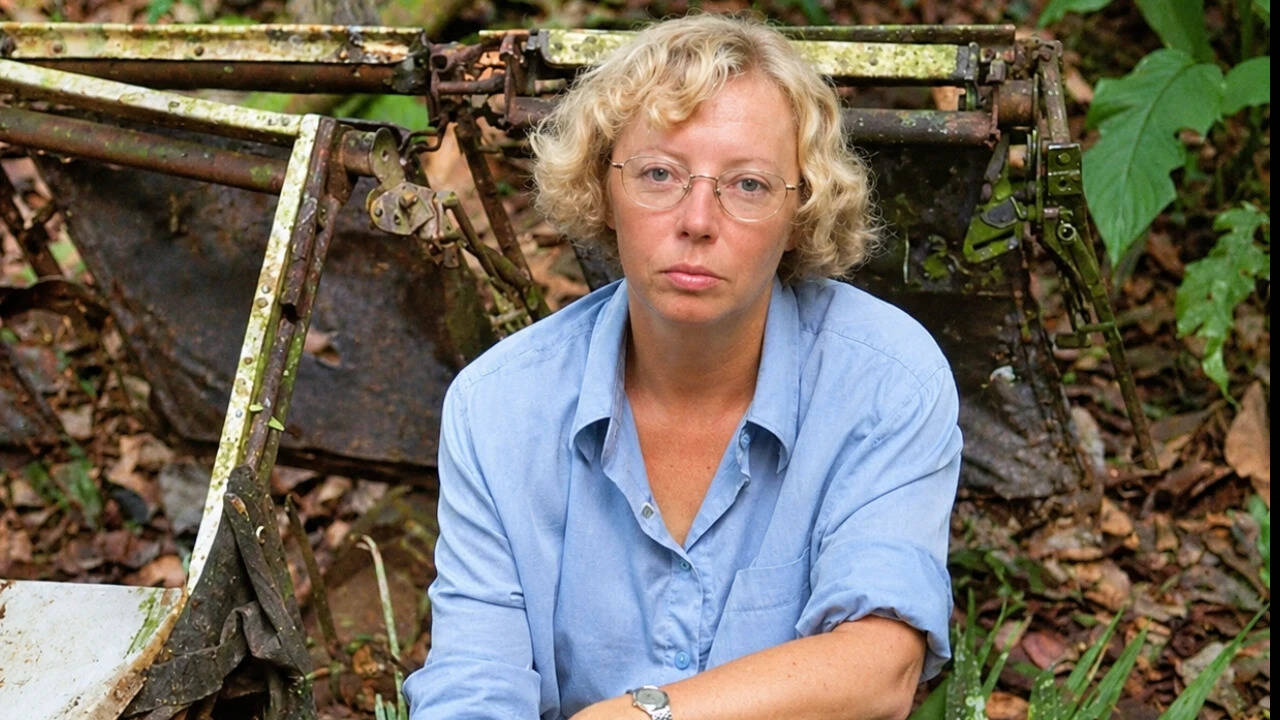
Hollywood loves a lone-wolf survival hero who builds a roaring fire out of damp twigs, spears giant fish, and wrestles apex predators before walking out of the wilderness without a scratch. Real wilderness survival looks nothing like that. When 17-year-old Juliane Koepcke fell two miles out of the sky into the Peruvian rainforest on Christmas Eve in 1971 and walked out alive 11 days later, she didn't conquer the jungle. She barely survived it, and she only made it because she ignored almost every piece of conventional survival wisdom people repeat today.
If you've ever searched for how a 17-year-old survived a plane crash and 11 days in the jungle, you've probably seen the sensationalized versions of her story. They frame her as an accidental action hero. That's completely backwards. Juliane Koepcke survived LANSA Flight 508 because she was a quiet, observant teenager raised by two field biologists who taught her to treat the Amazon not as an enemy to fight, but as a wet, indifferent system to navigate.
The Two-Mile Fall Nobody Can Fully Explain
On December 24, 1971, Juliane boarded LANSA Flight 508 in Lima with her mother, Maria Koepcke, to meet her father in Pucallpa for Christmas. LANSA already had a terrible safety record, and the Lockheed L-188A Electra flew straight into a severe thunderstorm over the Peruvian Andes. Lightning struck the right wing. The aircraft violently broke apart at roughly 10,000 feet.
Juliane was still strapped into her three-seat bench, sitting in the window seat next to her mother and another passenger, when the cabin tore open. She blacked out from the sheer force and lack of oxygen. When she woke up the next morning on the jungle floor, she was alone, still buckled into the row of seats, wearing a sleeveless minidress and a single white sandal. Her glasses were gone, and one eye was swollen completely shut.
She had a broken collarbone, a torn ligament in her knee, and deep gashes on her arm and leg. Yet she lived.
Aerospace engineers and crash investigators have debated the exact physics of her fall for decades. The most plausible explanation involves a combination of three freak factors:
- The three-seat bench acted like a crude aerodynamic brake, spinning and catching air resistance rather than letting her fall like a stone.
- Powerful thunderstorm updrafts inside the storm cell likely slowed her terminal velocity during the descent.
- The dense, multi-layered canopy of the Amazon rainforest and thick vines broke her final impact, cushioning the blow enough to keep her internal organs intact.
Out of 92 people on board Flight 508, 91 died. Juliane was the sole survivor.
Why Her Upbringing Mattered More Than Raw Strength
Most people dropped into the middle of the Peruvian Amazon with a broken collarbone and zero gear would panic within hours. Panic kills faster than starvation. Juliane didn't panic because she wasn't a typical city teenager. Her father, Hans-Wilhelm Koepcke, was a prominent German zoologist, and her mother was a renowned ornithologist. They had spent years running Panguana, a remote biological research station deep in the Peruvian jungle.
Juliane had lived at that station since she was 14. She knew the sounds of the rainforest. More importantly, she understood what actually poses a threat in the Amazon and what doesn't.
People always assume jaguars, anacondas, or tarantulas are the primary dangers in a tropical rainforest. That's pure movie nonsense. Big predators want nothing to do with humans, and snakes generally strike only when stepped on. The real killers in the Amazon are infection, dehydration, disorientation, and tiny insects.
She didn't waste precious calories trying to build shelters out of palm fronds or hunting animals she couldn't catch. She knew she didn't have a knife, matches, or dry wood. Attempting to start a friction fire in a humid rainforest with a broken collarbone would have been a suicidal waste of energy. Instead, she immediately focused on the single rule her father had drilled into her head for years: if you get lost in the jungle, find water and follow it downstream.
The Brutal Reality of Following the Water
In the Amazon basin, human settlements don't exist in the middle of dense forest. People live along rivers. A tiny trickle leads to a stream, a stream feeds into a larger creek, and a creek eventually empties into a major river where boats and timber camps operate.
After searching the immediate crash area for her mother and finding only a bag of Christmas sweets—which became her only food for the entire ordeal—Juliane found a small spring. She stepped into the water and started walking.
Walking in the water wasn't easy, and it certainly wasn't comfortable. By day four, she stumbled across a grim reminder of the crash: a row of seats driven upside down into the mud with three dead passengers still strapped in. She kept moving. Because she had lost her glasses and had severe myopia, she couldn't see clearly at a distance. She used a long stick to poke the riverbed ahead of her, checking for hidden drop-offs and stingrays buried in the sand.
Stingrays are a massive hazard in shallow Amazonian tributaries. If one stings your foot miles away from antibiotics, the resulting infection and tissue necrosis can easily turn fatal. By wading carefully and probing the mud with a stick, she avoided the exact injury that takes down careless travelers.
The Maggot Infestation Most Articles Gloss Over
If you want to understand how grim those 11 days really were, look at what happened to her right arm. One of the deep cuts she sustained in the crash became infested with botfly larvae. Dozens of maggots were burrowing into her flesh, swelling her arm and causing throbbing, relentless pain.
She didn't have bandages, antiseptics, or tweezers. When she finally stumbled upon a small shelter belonging to local lumberjacks on the tenth day, she found a boat engine and a container of gasoline. Remembering how she had once watched her father treat a dog with a similar parasitic infection back at Panguana, she poured gasoline directly into the open wound on her arm.
It burned like fire, and she manually pulled around 35 maggots out of her flesh as they tried to escape the fumes. That single act of practical, unsentimental field knowledge probably saved her arm from lethal sepsis.
What Modern Survivalists Get Wrong About Her Story
I've read countless breakdowns of Juliane Koepcke's survival, and almost all of them try to turn her ordeal into a checklist of outdoor "hacks." That completely misses the point. If you analyze her 11 days through the lens of actual wilderness medicine and search-and-rescue protocols, three hard truths stand out.
First, staying put is sometimes dead wrong. Standard search-and-rescue advice tells lost hikers to stay near the crash site or trail so searchers can find them. Juliane could hear rescue planes flying overhead during the first few days, but the triple-canopy jungle was so thick that pilots couldn't see anything beneath the leaves. Had she stayed near the wreckage waiting for a helicopter, she would have died of infection or starvation before anyone penetrated the forest floor. Moving downstream was the only viable play.
Second, hydration beats food every single time. Juliane ate almost nothing for 11 days except a few soggy sweets she found on day one. She skipped unfamiliar jungle fruits because she knew many vibrant rainforest plants are toxic, and she wasn't willing to risk vomiting or diarrhea when she had no way to replace lost electrolytes. Because she walked in fresh running water, she stayed hydrated, and a hydrated human body can easily survive two weeks without solid food.
Third, mental composure is a learned skill, not a personality trait. Juliane didn't survive because she had superhuman grit. She survived because familiarity breeds calm. When you understand the environment you're in, your brain doesn't burn glucose on blind panic. You make clean, logical decisions even when your collarbone is snapped and your vision is blurry.
How to Apply These Lessons Before You Ever Enter the Backcountry
You're probably not going to survive a mid-air plane breakup over Peru, and you shouldn't base your weekend hiking prep on one-in-a-million aviation miracles. Still, the core principles that kept Juliane Koepcke alive apply directly to anyone who hikes, camps, or flies over remote terrain.
- Learn basic terrain hydrology before you go. Before stepping onto any remote trail, look at a topographic map and identify the primary drainage basin. Know which direction the creeks flow and where the nearest road, river, or settlement sits downstream. If your GPS dies and you're completely off-trail, following water downhill remains one of the most reliable self-rescue methods on earth.
- Prioritize wound care over fire-starting gadgets. Hobbyists love buying flint strikers and tactical knives, yet they hike without basic wound irrigation supplies. In warm or humid environments, a minor scrape turns into a life-threatening infection within 48 hours. Always pack sterile saline or clean water capacity, povidone-iodine wipes, and waterproof bandages.
- Never eat unknown wild plants in an emergency. Unless you have formal botanical training in that specific region, foraging is a terrible gamble. Gastrointestinal distress accelerates dehydration and drains your energy reserves instantly. Focus strictly on clean water and shelter while conserving calories.
- Wear practical footwear on flights over remote regions. It sounds minor, but survivors of aviation accidents repeatedly point out that sandals, heels, and synthetic fast-fashion clothing fail immediately in harsh terrain. When flying over mountains, dense forests, or open water, wear sturdy closed-toe shoes and natural-fiber layers that protect your skin if you have to evacuate into rough country.
Juliane Koepcke eventually made it back to Pucallpa after local fishermen found her in the lumberjacks' hut and took her downriver by canoe. She went on to earn a doctorate in zoology in Germany, returned to Peru to run her parents' research station at Panguana, and spent her life studying the exact ecosystem that nearly killed her. Her survival wasn't a triumph of human dominance over nature, and it wasn't pure luck either—it was proof that quiet observation and basic biological literacy will keep you alive long after brute force fails.