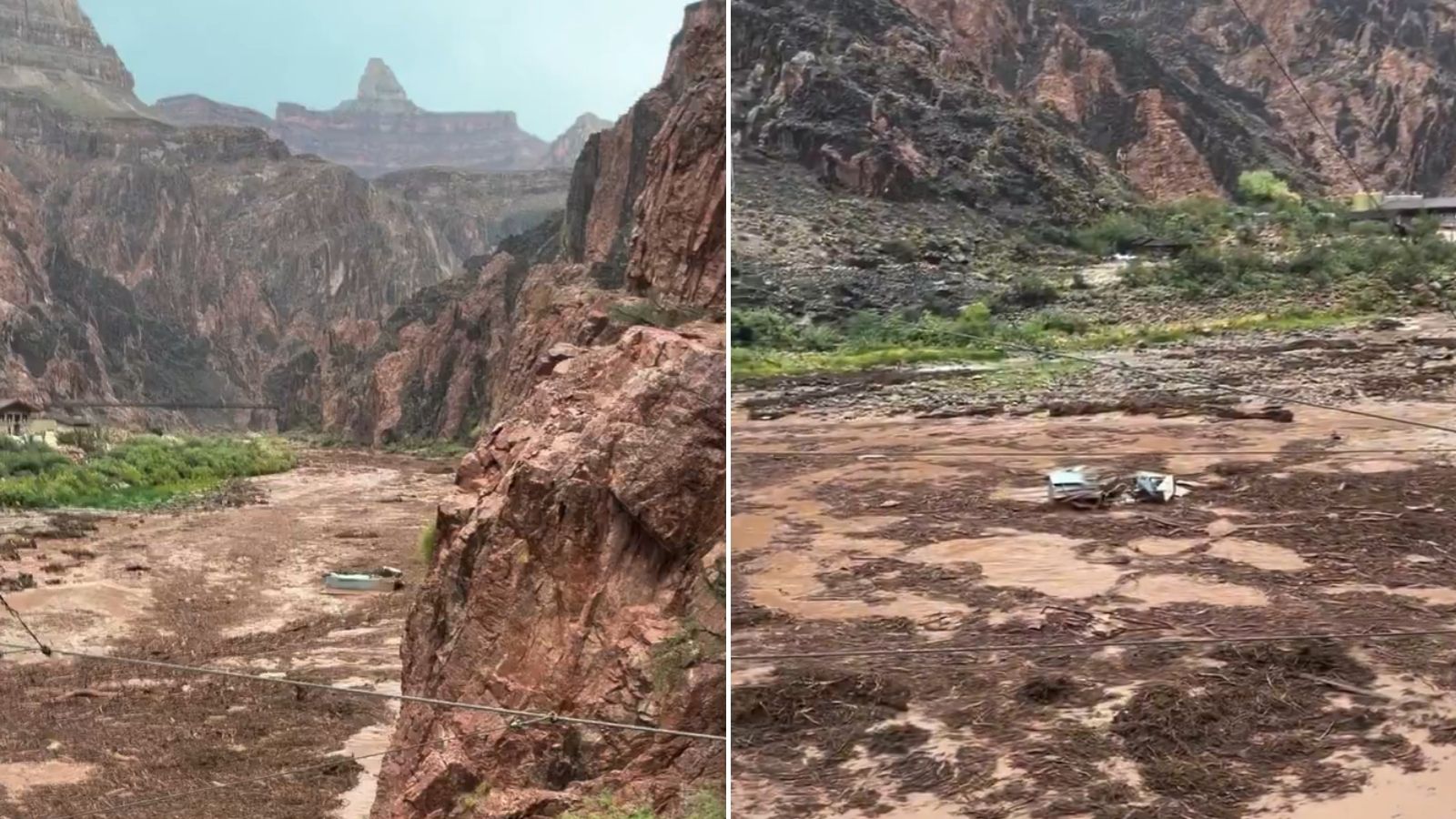
A massive wall of muddy water tore through Bright Angel Canyon, leaving one person dead, roughly 15 people unaccounted for, and more than 60 hikers frantically airlifted to safety. If you've ever hiked down into the inner gorge, you know it feels like stepping back into a timeless, permanent stone eternity. But desert monsoons don't care about stone. When a sudden cloudburst dropped up to an inch of rain on the Kaibab Plateau in roughly 30 minutes, the steep terrain turned that ancient rock into a concrete slide. Most of that water didn't soak in. It channeled straight down into Bright Angel Creek, creating a roaring torrent that swept away footbridges, mangled steel structures, and even carried a park bunkhouse downstream like a child's toy.
The National Park Service scrambled emergency response teams alongside the Arizona Department of Public Safety to evacuate stranded campers from Phantom Ranch and the lower North Kaibab Trail. Hikers trapped in the narrow canyon corridor described watching the creek swell from a gentle trickle into an aggressive brown monster within minutes. Helicopters hauled out 62 people, but crews recovered the body of a 46-year-old man near Crystal Rapids on the Colorado River. Because communication lines in the inner canyon are notoriously primitive, officials launched a public appeal to track down roughly 15 hikers who might still be stranded or missing between the North Kaibab Trailhead and the river. For a different perspective, see: this related article.
The Infrastructure Crisis Left Behind
The immediate danger of a flash flood is terrifying, but the systemic fallout hits just as hard. This surge completely wrecked the Transcanyon Waterline, the vital pipe supplying water from Roaring Springs across the canyon to the South Rim and Phantom Ranch. This pipeline sits at the center of a massive $208 million upgrade project because it's chronically vulnerable to natural disasters. With the line knocked out of commission, the park immediately instituted strict water conservation measures, halted overnight lodge stays, and closed major visitor facilities.
You can't just fix a broken pipe at the bottom of a 6,000-foot chasm overnight. Logistics down there require specialized crews, pack mules, and cooperative weather. Yet, afternoon storms in northern Arizona refuse to quit, keeping flash-flood watches active and threatening rescue operations. Similar coverage on the subject has been shared by The Washington Post.
Why Desert Monsoons Catch Hikers Off Guard
People assume the Grand Canyon is dry because it looks like a desert. That assumption gets people killed. Monsoon season runs from July through September, bringing sudden, violent atmospheric shifts. You can have brilliant blue skies at the rim while a microburst unleashes biblical rain miles away on the plateau. That water funnels into narrow slot canyons and dry washes with zero warning, traveling faster than a runner can sprint.
If you plan to hike inner canyon corridors during monsoon season, keep these survival principles locked in your head:
- Check weather miles away: Never look only at the forecast for the rim. Check the higher elevations where runoff originates.
- Never camp in washes: Pitching a tent near a creek bed or dry drainage for the scenic view is a fatal mistake when a midnight storm hits upstream.
- Know your escape routes: Identify high-ground scrambles before you settle in for a break or camp overnight.
The canyon remains an unforgiving wilderness. Respect the water, watch the sky, and stay out of the washes when the weather turns.