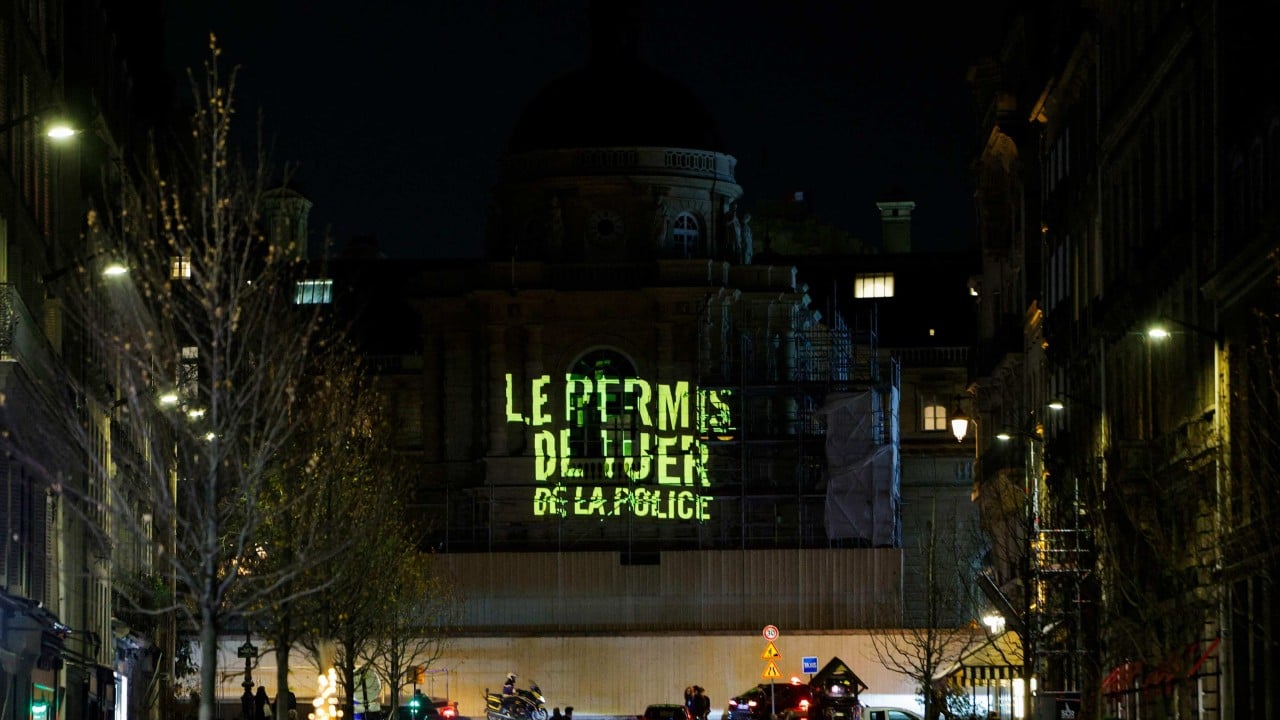
The French Senate just backed a controversial change to police firearm rules, and critics are calling it a "licence to kill." Sounds terrifying. But if you read past the angry headlines, you'll realize almost nobody is explaining what this law actually changes on the street—or why France has been fighting over this exact legal grey area for nearly a decade.
When senators voted to expand the legal protections for officers who pull the trigger during traffic stops and high-risk interventions, civil rights groups immediately sounded the alarm. They argued the bill lowers the threshold for deadly force and shields officers from accountability. Meanwhile, police unions celebrated the move as long-overdue protection for officers facing split-second life-or-death decisions. Both sides are spinning the reality to fit their political playbook.
Let's strip away the noise and look at what the French Senate actually approved, how it interacts with existing laws like Article L435-1 of the Internal Security Code, and what happens next before anything becomes permanent.
Why France Is Rewriting Police Firearm Rules Right Now
To understand this Senate vote, you have to look back at February 2017. That's when France passed its first major reform aligning police shooting rules with those of the Gendarmerie, the military-status police force. Before 2017, regular national police officers could only shoot in strict self-defense. The 2017 law introduced Article L435-1, which allowed officers to open fire if a driver ignored an order to stop and posed a likely threat to the life or physical safety of the officer or bystanders.
On paper, that sounded clear enough. In practice, it created a legal minefield.
Since 2017, fatal shootings during refusals to comply—known in France as refus d'obtempérer—spiked dramatically. The most famous case happened in June 2023, when 17-year-old Nahel Merzouk was shot dead by a police officer during a traffic stop in Nanterre, sparking days of nationwide riots. That tragedy put Article L435-1 under a microscope. Prosecutors, judges, police unions, and families all found themselves arguing over two vague words in the law: "likely" and "necessity."
Police officers complained that they were being put on trial for making split-second judgments when a car accelerated toward them. Human rights lawyers countered that officers were shooting at fleeing vehicles that posed zero immediate threat to anyone's life.
The new Senate-approved measure attempts to tip the scales back toward law enforcement. Supporters of the bill argue that judges have been interpreting "absolute necessity" too strictly after the fact, sitting in comfortable courtrooms analyzing slow-motion video of incidents that lasted two seconds.
What the New Senate Bill Actually Changes
Here's where most people get tripped up. The Senate didn't just hand every beat cop a blank check to shoot whoever they want. France still operates under the European Convention on Human Rights, and Article 2 of that convention strictly limits lethal force to cases of "absolute necessity." No French Senate vote can erase European human rights law.
Instead, the Senate-backed text focuses on presumption of self-defense and procedural shields during investigations.
Specifically, the legislation aims to:
- Shift the initial legal presumption in favor of officers who fire their weapons while facing an immediate, documented threat during specific high-risk operations.
- Restrict the automatic placement of officers in pre-trial detention simply because a firearm discharge resulted in death or serious injury, unless clear evidence of intentional misconduct exists.
- Clarify the legal definition of threat during vehicle refusals to comply, attempting to codify when a moving car constitutes a lethal weapon.
Honestly, the phrase "licence to kill" is political shorthand, not a legal reality. An officer who shoots an unarmed person in the back while they're running away on foot will still face murder or manslaughter charges. That hasn't changed.
What has changed is the friction an officer faces immediately after pulling the trigger. Under the proposed framework, prosecutors face a higher bar before treating an officer like a criminal suspect rather than a witness or defender acting in the line of duty.
Why Critics Call It a Licence to Kill
You don't have to be an anti-police activist to see why defense attorneys and civil liberties organizations are furious. Their argument isn't built on hysteria; it's built on how French courts actually function.
When you create a legal presumption of self-defense for state agents carrying lethal weapons, you fundamentally alter the burden of proof. In a normal homicide investigation, anyone who kills another person has to demonstrate that their life was in immediate danger and that their response was proportionate. Critics point out that the Senate's bill flips that logic upside down for police officers.
Organizations like Amnesty International and the French Human Rights League (Ligue des droits de l'Homme) have repeatedly warned that France already suffers from an accountability gap in police violence cases. They point to data from the IGPN—the internal affairs body overseeing the National Police—showing a sharp rise in fatal traffic-stop shootings following the 2017 law change.
There's also a practical psychological effect on the street. Legal experts warn that when laws are rewritten to reassure officers they won't be prosecuted, restraint erodes. If an officer believes the law automatically assumes they acted in self-defense, the mental threshold for drawing and firing a weapon drops. Even a slight shift in that mindset leads to more dead bodies on French asphalt.
The Police Union Perspective Nobody Wants to Hear
If you talk to rank-and-file officers in Paris, Marseille, or Lyon, you get a completely different picture. And frankly, ignoring their reality makes it impossible to understand why the French Senate voted the way it did.
France's police force has spent the last decade dealing with terrorist attacks, violent urban riots, and a steep rise in drivers using vehicles as battering rams to escape routine checks. According to Interior Ministry figures, tens of thousands of refus d'obtempérer incidents happen every year in France. In thousands of those cases, officers are directly targeted or struck by fleeing cars.
From a cop's perspective, the current system feels rigged against them. Imagine standing on a dark road at 2:00 AM, waving down a car, and watching the driver rev the engine and aim straight at your knees. You have half a second to decide whether to jump, shoot, or get run over.
If you shoot and kill the driver, your name is leaked to the press within hours, you're thrown into custody, your family receives death threats, and you spend the next four years under formal investigation while politicians debate your split-second reaction on television. Police unions like Alliance and Unité SGP Police have argued for years that officers are hesitating in genuinely deadly situations because they're terrified of the judicial aftermath.
That's the political pressure cooker that pushed the conservative-majority Senate to pass this bill. Senators weren't trying to encourage brutality; they were responding to a real crisis in police morale and recruitment.
The Constitutional Roadblock Ahead
Before anyone celebrates or panics, there's a massive hurdle standing between this Senate vote and actual French law.
First, the French legislative process requires agreement between both chambers of Parliament—the Senate and the National Assembly—or a final override vote by the National Assembly. Because the National Assembly is deeply fractured with no single party holding an absolute majority, getting this exact wording through the lower house will be a brutal fight. Left-wing lawmakers have already vowed to block it at every stage, and centrist lawmakers aligned with the government remain divided on how far to push police protections without triggering fresh street protests.
Second, even if the bill passes Parliament, it will immediately be referred to France's Constitutional Council (Conseil constitutionnel).
And here's the kicker: the Constitutional Council has already ruled on this exact issue before.
Back in 2017, and again in subsequent legal challenges, France's top constitutional judges made it crystal clear that any law governing police use of force must strictly respect the principles of absolute necessity and proportionality. A law that creates an irrebuttable presumption of self-defense for police officers would almost certainly be struck down as unconstitutional. Judges will not allow Parliament to write a blank check that violates Article 2 of the European Convention on Human Rights or the 1789 Declaration of the Rights of Man and of the Citizen.
To survive constitutional review, the final version of the law will have to be watered down significantly—or interpreted so narrowly by judges that its real-world impact looks very different from what the headlines promise.
How France Compares to Neighboring Countries
It helps to zoom out and look at how the rest of Europe handles this problem, because France is kind of an outlier.
In Germany, police firearm laws are governed by state-level police acts, and officers are trained extensively in de-escalation and containment rather than shooting at moving vehicles. In fact, German police guidelines explicitly discourage firing at cars in almost all circumstances, recognizing that shooting a driver turns a two-ton vehicle into an unguided missile.
In the United Kingdom, the vast majority of patrol officers don't even carry firearms. Armed response units operate under strict engagement rules where every single discharge triggers an automatic, independent investigation by the Independent Office for Police Conduct.
France sits in an awkward middle ground. Every municipal and national police officer carries a sidearm on routine patrol, yet tactical training hours for firearm judgment remain notoriously low compared to specialized units. Changing the law on paper won't fix a training deficit. If an officer only gets to the firing range a couple of times a year, rewriting the penal code won't make their split-second decisions any safer.
What You Should Watch Next
If you're following this story to see whether France actually changes how its police operate, ignore the loudest soundbites from both ends of the political spectrum. Keep your eyes on three specific milestones over the coming months:
- The National Assembly committee amendments. Watch how the lower house alters the Senate's language around "presumption of self-defense." If lawmakers replace "presumption" with weaker procedural guidelines, the bill loses most of its teeth.
- The Constitutional Council referral. Once a final text passes, opposition lawmakers will immediately send it to the Constitutional Council. Their ruling will determine whether the law survives intact or gets gutted before taking effect.
- Training and body-camera mandates. Legal tweaks mean very little without enforcement transparency. Pay attention to whether the final budget pairs these legal protections with mandatory, continuous body-camera activation during all traffic stops—something civil rights groups demand and many officers actually support to prove their side of the story.
France's struggle isn't really about giving cops a licence to kill. It's about a country trying—and repeatedly failing—to draw a clear legal line between protecting the officers who enforce the law and protecting the citizens who live under it. Until Parliament addresses police training alongside legal protections, every new bill will just fuel the next political firestorm.


