The idea that BRICS is a unified economic powerhouse ready to topple the Western world order just hit a massive, missile-shaped wall.
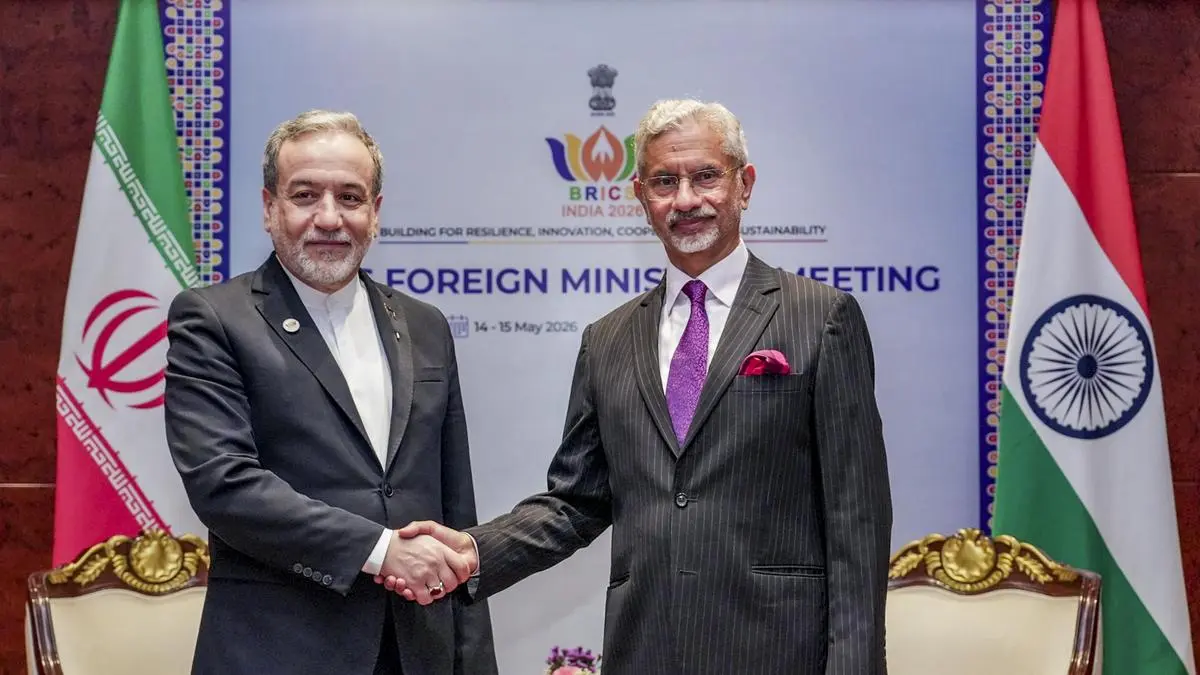
When foreign ministers gathered in New Delhi for the May 2026 BRICS meeting, the air inside the closed-door sessions wasn't filled with cozy talk of de-dollarization or shared global south prosperity. Instead, it was filled with genuine, unadulterated hostility.
The two-day summit wrapped up without a joint communique. Think about that for a second. An organization that prides itself on offering an alternative to Western hegemony couldn't even agree on a basic piece of paper to wrap up their meeting. Why? Because the war involving Iran, Israel, and the United States has spilled directly into the bloc's living room, exposing fractures that India, despite its best diplomatic acrobatics, simply could not fix.
If you think this is just a minor disagreement over wording, you're missing the bigger picture. This is a fundamental identity crisis for the expanded BRICS bloc.
The UAE and Iran Showdown in New Delhi
Let's look at what actually happened behind those closed doors in Delhi. The expansion of BRICS was supposed to bring the Middle East's heaviest hitters into the fold. Instead, it brought a raging regional war straight to the table.
The war started on February 28, 2026, with heavy US and Israeli military strikes on Iranian targets. Since then, the conflict has blown up. Iran launched repeated missile and drone strikes against US military installations in the region. The big problem for BRICS is that many of those American bases are located right on the soil of another BRICS member: the United Arab Emirates.
During the Delhi meetings, Iranian Foreign Minister Seyed Abbas Araghchi and UAE officials essentially turned the diplomatic summit into a courtroom.
- Tehran's Demand: Iran demanded that the final joint statement explicitly condemn the "aggression" by Israel and the United States.
- Abu Dhabi's Retort: The UAE flatly refused unless the document also condemned Iranian missile and drone strikes hitting energy facilities and civilian infrastructure inside the Emirates.
Iran's deputy foreign minister, Kazem Gharibabadi, didn't hold back. He openly called the UAE an "aggressor" rather than just an accomplice, claiming Iran has records of every single warplane that took off from Emirati bases to support operations against Tehran. Araghchi later told journalists that a specific member state with "special relations with Israel" blocked the statement. He warned that "Israelis cannot protect them, Americans cannot protect them."
When you have one member state telling another that their Western allies can't save them from missiles, you don't have a functional economic bloc. You have a powder keg.
Why India Couldn't Fix the Rift
India held the chair for this meeting, and Indian diplomats are usually masters at writing vague, watered-down text that makes everyone happy. Not this time. BRICS operates strictly on consensus. If one country says no, the whole thing falls apart.
New Delhi was forced to release a weak "Chair’s statement and outcome document" instead of a joint declaration. The text openly admitted to "differing views among some members as regard to the situation in the West Asia/Middle East region."
It gets worse. Even the fallback Chair's statement had to include explicit footnotes noting that an unnamed member state had major reservations about paragraphs dealing with the unification of the West Bank and Gaza under the Palestinian Authority, and freedom of navigation in the Red Sea.
India tried to spin this as a partial success by pointing out that members agreed on basic things like reforming global governance and cultural ties. But let's be honest: agreeing on cultural exchange while your members are actively dodging each other's missiles is a terrible look.
India's real panic during these talks wasn't just about diplomatic prestige; it was about its own economic survival.
The Hormuz Trap and India's True Interests
Look closely at the wording India sneaked into the outcome document. It heavily stressed the "importance of safe and unimpeded flow of maritime commerce through international waterways."
That is code for the Strait of Hormuz and the Bab Al-Mandab Strait.
India imports over 80% of its crude oil. A massive chunk of that flows right through the Strait of Hormuz. With Iran threatening to lock down the strait and the Tehran-backed Houthis causing chaos in the Red Sea, India's economic engine is highly vulnerable.
During the summit, Iranian officials tried to play nice with New Delhi, dangling a carrot. Gharibabadi claimed that Iran was actively facilitating the safe passage of Indian vessels through the Strait of Hormuz, noting that 11 Indian ships had recently been granted safe passage. He even hinted at a new mechanism to let more Indian ships through—provided countries are willing to "pay for it."
Indian government sources immediately shut that down, making it clear there is no way India is paying Iran protection money to sail through international waters.
Then there is the Chabahar Port in Iran, a project India has poured millions into to bypass Pakistan and access Central Asia. Iran is now openly tying the future of Chabahar to how aggressively India can secure a sanctions waiver from the Trump administration in Washington. India wants to be a global bridge, but right now, it's caught in a vise between its strategic alliance with the US, its energy ties with the UAE, and its infrastructure investments in Iran.
The Core Myth of a Unified BRICS
This diplomatic failure blows up the biggest myth surrounding BRICS: that it is a coherent geopolitical alliance.
It never was, but the new expansion has made it totally unmanageable. When the group just consisted of Brazil, Russia, India, China, and South Africa, it was already tough to find common ground because of the intense military rivalry between India and China. Now, by adding bitter Middle Eastern rivals like Iran and the UAE into the mix, BRICS has inherited the world's most volatile geopolitical blood feuds.
Russia's Foreign Minister Sergey Lavrov tried to smooth things over by suggesting that India could act as a long-term mediator between Iran and the Arab world. While that sounds great on paper, the reality is that India cannot mediate a conflict where its own vital energy supplies and strategic partnerships are being used as leverage.
What Happens Next
The foreign ministers' deadlock means the upcoming full BRICS Summit in September 2026 is going to be incredibly awkward. If you're watching this space to see where global power is shifting, stop looking at vague statements about alternative currencies and start looking at these concrete realities:
- Watch the shipping lanes: See if Iran actually starts disrupting non-Indian commercial vessels in the Strait of Hormuz, or if the UAE retaliates by squeezing Iranian financial networks operating in Dubai.
- Track the Washington factor: Keep a close eye on how India balances its BRICS obligations with the intense pressure coming from the US to enforce sanctions against Tehran.
- Forget the joint statements: Stop expecting BRICS to issue powerful, unified declarations on global security. From here on out, expect fractured "Chair's statements" to be the norm.
BRICS wanted to prove it could run the world better than the West. Right now, it can't even keep its own members from verbally tearing each other apart in a conference room.
For a deeper dive into how this diplomatic deadlock unfolded on the ground in New Delhi and what it means for the future of global power balances, this detailed video analysis breakdown looks at the intense behind-the-scenes negotiations and Russia's push for India to step in as an emergency mediator.