Most headlines treat every border wall ruling like a brand-new ideological earthquake. They're wrong. When the U.S. Supreme Court cleared the path for Trump to build a border wall section in Texas's Big Bend region, the real story wasn't about sudden conservative activism on the bench—it was about dry, technical emergency docket procedure and decades-old executive waivers.
If you've followed border litigation over the past decade, you know the rhythm by now. An administration moves money or bypasses environmental reviews, a coalition of local landowners and conservation groups sues, a lower court hits pause, and the Supreme Court steps in on its emergency docket to lift the stay while the main lawsuit drags on for years. That's exactly what played out here.
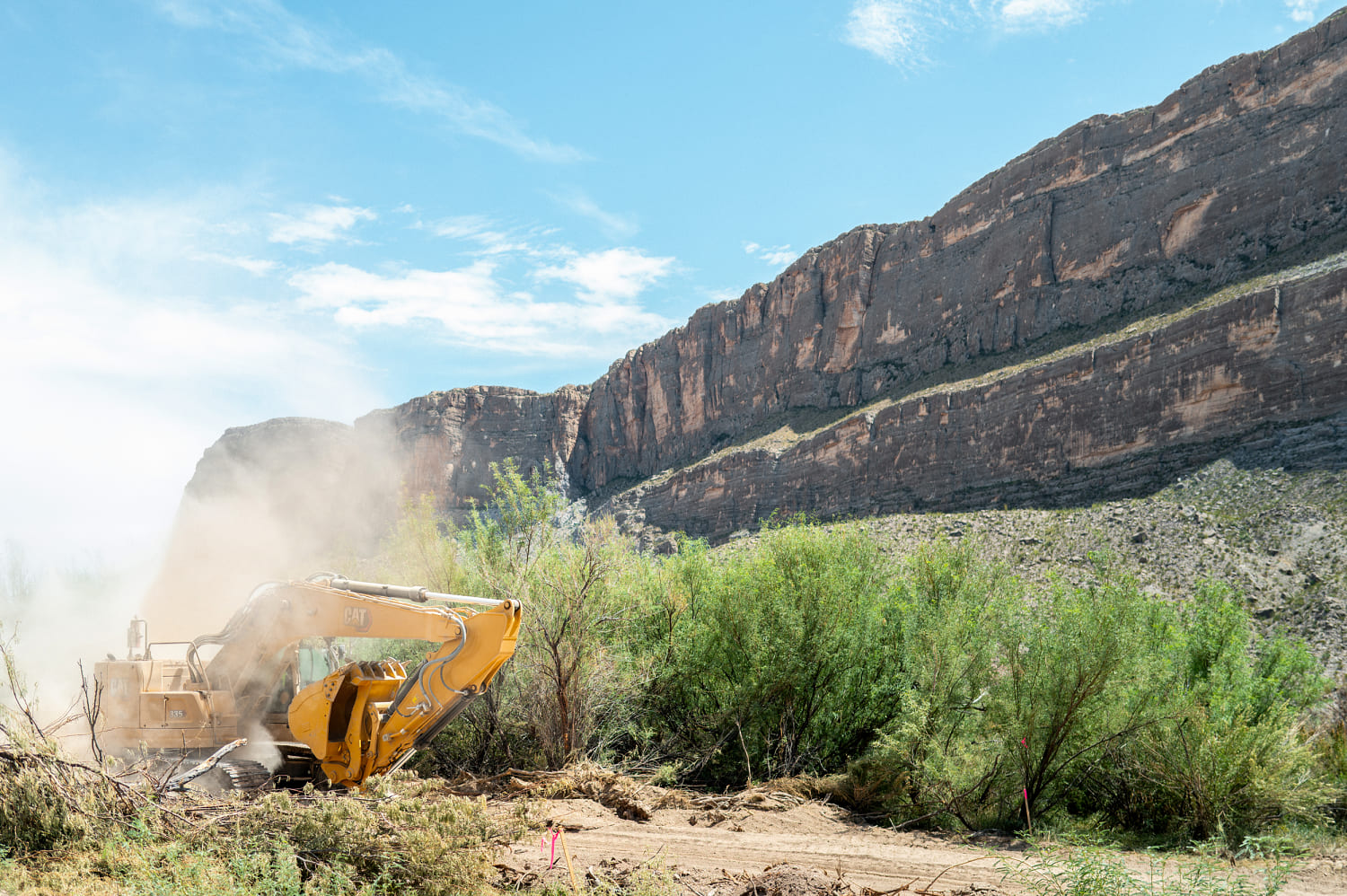
The Big Bend sector isn't El Paso or the Rio Grande Valley. Anyone who has spent time out in West Texas knows the geography is already doing most of the heavy lifting. You're talking about sheer limestone canyons, blistering Chihuahuan Desert stretches, and remote terrain where the nearest paved road can be an hour away.
Why Big Bend Is Different From Every Other Border Sector
Border Patrol agents and local ranchers in Brewster and Presidio counties will tell you straight up that the Big Bend sector has historically seen the lowest migrant apprehension numbers along the entire southern border. It's brutal country. Crossing the Rio Grande through Santa Elena Canyon isn't like wading across a shallow stretch near McAllen.
That's why the fight over putting steel bollards in Big Bend hits a raw nerve for locals. People who vote solidly conservative out in West Texas often push back hard against physical barriers in the Big Bend area. It's not about soft-on-crime politics. It's about private ranch access to the river, cattle watering rights, and ruining one of the last untouched stretches of desert wilderness in North America.
When the Department of Homeland Security targets a stretch near Big Bend National Park or Big Bend Ranch State Park, you aren't just dealing with Washington think tanks. You're dealing with fourth-generation ranchers, river guides in Terlingua, and county judges who rely on dark-sky tourism to keep their towns afloat.
The Terrain Problem Nobody Mentions
Building a 30-foot steel wall across flat dirt in Arizona is expensive enough. Trying to engineer concrete foundations and access roads across jagged limestone cliffs and flash-flood arroyos in West Texas drives the per-mile cost into the stratosphere.
In heavy monsoon rains, desert washes in Big Bend turn into roaring walls of water within minutes. Engineers have to design massive drainage gates into the fencing so the wall doesn't act like a dam and wash away entire sections of highway or private ranchland. Those gates often stay propped open during storm seasons anyway, which makes locals question what the billions of dollars are actually buying.
How the Supreme Court Actually Made This Happen
Let's strip away the cable news shouting. The Supreme Court didn't hold a full trial on the merits of environmental law or private property rights to get to this point. Instead, the justices acted on an emergency application—what legal scholars like University of Texas law professor Steve Vladeck call the "shadow docket."
When a federal district judge blocks construction because of environmental review violations or funding disputes, the Justice Department asks the Supreme Court to pause that lower court order. Under the standard established in cases like Nken v. Holder, the government argues it will suffer "irreparable harm" if construction stalls, and that it's likely to win once the full appeal is heard months or years later.
The liberal justices typically dissent, pointing out that once you bulldoze desert habitat and pour thousands of tons of concrete, you can't put the landscape back together if the plaintiffs eventually win their lawsuit. The conservative majority counters that lower courts shouldn't freeze executive border enforcement nationwide—or sector-wide—while litigation crawls through the appellate system.
The 2005 Law Doing All the Heavy Lifting
Here's the detail almost every casual news reader misses. The Trump administration didn't invent the legal authority to ignore environmental laws on the border. Congress handed that power to the executive branch back in 2005 with the REAL ID Act.
Section 102 of the REAL ID Act gives the Secretary of Homeland Security sweeping power to waive all legal requirements—including the National Environmental Policy Act (NEPA), the Endangered Species Act, and the Clean Water Act—if the Secretary decides it's necessary to ensure the expeditious construction of barriers and roads.
Think about how wild that is. Under that statute, the government doesn't have to prove a wall will actually stop smuggling in Big Bend. It just has to publish a notice in the Federal Register stating that the waivers are necessary. Federal courts have consistently ruled that Congress made those waivers nearly immune to judicial second-guessing, leaving challengers with very narrow constitutional arguments to work with.
What Critics and Supporters Both Get Wrong
If you listen only to environmental groups, you'd think the entire 800,000-acre Big Bend National Park is about to be paved over tomorrow morning. That's not happening. DHS typically targets specific corridors—places with existing dirt roads, flatter approaches near ports of entry like Presidio, or gaps where smuggling crews use off-road vehicles.
On the flip side, if you listen only to border hawks in Washington, you'd think putting steel bollards across a few dozen miles of West Texas will instantly seal the border. Smugglers don't just give up when they hit a fence. In sectors where walls went up first, cartel scouts simply shifted routes toward more remote terrain, used battery-powered reciprocating saws to cut through steel slats in minutes, or moved deeper into bribery and commercial port concealment.
Even Customs and Border Protection's own operational data over the years has shown that physical barriers work best in urban corridors like San Diego or El Paso, where agents have seconds—not hours—to respond to a crossing. Out in Big Bend, where response times can stretch past an hour, a fence without dense sensor networks and nearby patrol stations is just an expensive speed bump.
What Happens Next on the Ground in West Texas
A Supreme Court green light doesn't mean bulldozers roll onto private ranches the next morning. Federal contracting, land surveying, and eminent domain lawsuits take months to grind forward.
If you own property along the Rio Grande or follow federal land battles closely, keep your eyes on three specific pressure points over the coming months:
- Federal Register Waiver Notices. Watch for formal DHS announcements specifying exact mile markers in Brewster and Presidio counties. Until those coordinates are published, nobody knows the exact footprint.
- Eminent Domain Filings in Federal District Court. Where the government doesn't already own the riverbank, Justice Department lawyers have to file condemnation lawsuits to seize easements from private ranchers—a process that frequently drags out even when environmental laws are waived.
- Merits Appeals at the Fifth Circuit. Lifting a stay lets construction move forward while the underlying lawsuit continues. Environmental organizations like the Center for Biological Diversity and local coalitions will keep fighting the funding and statutory authority questions in appellate court.
If you want to track the actual ground truth instead of partisan spin, skip the press releases and read the docket filings in the Western District of Texas and the Federal Register notices from the Department of Homeland Security. That's where the exact maps, contractor awards, and mileage numbers show up first.