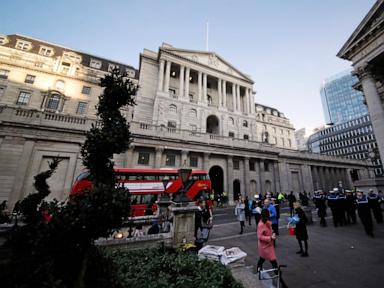
Everybody panics the second headlines scream that the Bank of England is set to hike interest rates to tackle higher inflation. You see the news alerts on your phone, you immediately start calculating how much more your mortgage is going to eat out of your paycheck, and you assume the entire British economy is about to hit a brick wall.
Stop for a second. That knee-jerk reaction misses half the picture.
When the Monetary Policy Committee (MPC) votes to push the Bank Rate higher, they aren't trying to punish households or crush small businesses just for the fun of it. They're pulling the loudest, heaviest lever they own to cool down an overheating price spiral before your pound loses even more purchasing power at the grocery store.
I've watched market cycles in London for years, and the biggest mistake regular people and retail investors make isn't misunderstanding the rate hike itself. It's misunderstanding the lag—and reacting to yesterday's news instead of positioning for what happens six to eighteen months down the road.
Why Threadneedle Street Pulls the Trigger on Rates
Inflation isn't just an abstract number cooked up by economists at the Office for National Statistics (ONS). It's the quiet tax that makes your weekly shop at Tesco cost twenty quid more than it did last autumn while your salary stays completely flat.
The UK government gives the Bank of England one primary job. Keep Consumer Prices Index (CPI) inflation at a steady 2% target. When CPI shoots past that mark—driven by sticky services inflation, tight labor markets, or external energy shocks—the MPC steps in.
Here's the basic mechanics of what happens when they raise the Bank Rate. Commercial banks like Barclays, Lloyds, and NatWest pay more to borrow overnight funds or hold reserves. Naturally, they pass those higher borrowing costs straight onto you and me.
Credit cards get pricier. Car loans lose their zero-percent promo luster. Businesses shelve plans to build a new warehouse because financing the debt suddenly eats up their projected profit margins.
Less borrowing means less spending. Less spending forces retailers and service providers to stop hiking prices—or even start offering discounts—just to keep customers walking through the door. That's the theory, anyway.
The Sticky Problem of Services and Wages
If inflation were purely caused by global shipping bottlenecks or spikes in wholesale natural gas prices, raising UK interest rates wouldn't fix the root cause. You can't make container ships move faster through the Suez Canal by charging British homeowners more on their tracker mortgages.
The real reason the Bank of England gets aggressive with rate hikes comes down to domestic pressure. Specifically, wage growth and services inflation.
When workers demand higher pay to cover rising bills, companies raise prices to cover higher payrolls. Economists call this a wage-price spiral. Once that mindset sets in across the UK economy, breaking it takes serious monetary tightening. The MPC watches private-sector regular pay growth and core inflation (which strips out volatile food and energy costs) like a hawk. If those numbers refuse to budge downward, Threadneedle Street keeps its foot on the brake.
The Mortgage Time Bomb Nobody Explains Properly
If you own a home in Britain, a Bank of England rate hike hits differently than it does in the United States. In America, most buyers lock in a 30-year fixed mortgage and never think about central bank policy again unless they move.
Britain doesn't work like that. Most UK borrowers sit on two-year or five-year fixed deals, alongside a smaller chunk on standard variable rates (SVRs) or base-rate trackers.
This creates a massive delay—what economists call the transmission mechanism. When the MPC announces a 25 or 50 basis point hike on a Thursday afternoon, maybe 15% of mortgage holders feel it the next month. Everyone else stays shielded inside their existing fixed-rate bubble until their deal expires.
That lag tricks people into thinking rate hikes aren't working. For months after a hike, restaurant bookings stay full and retail sales look decent. Then, eighteen months later, hundreds of thousands of homeowners roll off cheap fixed deals onto rates that are two or three percentage points higher. Suddenly, disposable income vanishes overnight.
If your fixed rate ends within the next six months, waiting until the last week to shop around is a rookie error. Most UK lenders let you lock in a new mortgage product up to six months in advance. If rates climb further before your switch date, you keep the lower rate you reserved. If rates drop, you can usually switch to the cheaper deal before completion. Talk to a whole-of-market broker early and lock in your safety net.
Savers Finally Get Leverage After Years of Zero Returns
For over a decade following the 2008 financial crisis, keeping cash in a high-street savings account felt like a slow-motion robbery. Interest rates hovered near zero, and banks had zero incentive to compete for your deposits.
Rate hikes flip that script completely. Almost overnight, cash stops being trash.
When the Bank Rate rises, challenger banks and building societies—think Chase UK, Marcus, Starling, or Nationwide—scramble to attract deposits so they can fund their own lending books. High-street giants usually drag their feet, hoping loyal customers won't bother moving their money.
Don't give them a free pass.
Look at your current instant-access savings rate right now. If your high-street bank is paying you 1.5% while the Bank Rate sits several points higher, they're pocketing the spread on your laziness. Moving money takes ten minutes on an app.
Watch out for the tax trap, though. Higher interest rates mean you'll hit your Personal Savings Allowance way faster than you used to. Basic-rate taxpayers only get £1,000 of tax-free savings interest per year, while higher-rate taxpayers get just £500. Anything above that gets taxed at your marginal income tax rate. Maxing out your £20,000 annual Cash ISA allowance suddenly becomes mandatory if you hold significant emergency funds.
What Rate Hikes Actually Do to the British Pound and FTSE
Currency markets don't wait for official announcements. Traders at investment banks price in expected Bank of England moves weeks—sometimes months—before the MPC even sits down around the table.
Higher interest rates generally make a currency more attractive to global capital. International investors want yield. If UK government bonds (gilts) offer higher returns than comparable European or Japanese debt, money flows into sterling, pushing up the value of the British pound against the euro and the US dollar.
A stronger pound sounds great when you're booking a summer holiday in Spain or buying imported electronics. It's a mixed bag for your investment portfolio.
Take the FTSE 100. Roughly 70% to 80% of the revenues generated by companies in London's flagship index come from overseas—giants like AstraZeneca, Shell, HSBC, and Unilever. When the pound surges on the back of a hawkish Bank of England, those foreign dollar and euro earnings convert back into fewer pounds. That's why you'll often see the FTSE 100 dip on the exact day the pound rallies.
The FTSE 250 tells a totally different story. It's packed with domestically focused UK businesses—retailers, housebuilders, regional banks, and pub chains. Higher rates squeeze their local customers and raise their debt servicing costs, making the FTSE 250 much more sensitive to domestic economic slowdowns.
Three Common Myths That Cost Investors Money
Financial commentary around central bank decisions gets noisy fast. Clearing out the bad assumptions helps you keep your head straight when markets swing.
Myth one is believing the Bank of England controls mortgage rates directly. They don't. While tracker mortgages follow the Bank Rate lockstep, fixed-rate mortgages are priced off SONIA swap rates—essentially what financial markets expect interest rates to average over the next two to five years. Fixed mortgage rates can actually fall on the day the Bank of England hikes rates if the governor hints that inflation is finally cooling off.
Myth two is assuming higher rates automatically crash house prices. Property markets are stubborn. Yes, higher borrowing costs shrink what buyers can afford to bid, which cools price growth and drops transaction volumes. Yet in the UK, chronic housing supply shortages and strict lending stress tests put in place since 2014 prevent the kind of forced-selling wave people saw in the early 1990s. Most owners simply stay put rather than sell at a discount.
Myth three is thinking you should dump all your stocks and sit in cash. Cash feels safe when savings accounts pay decent yields, especially compared to volatile equity markets. Over longer timeframes, inflation still erodes the real value of cash once taxes are factored in. Profitable companies with strong pricing power and low debt loads historically adapt to higher rate environments and continue compounding wealth.
How to Audit Your Finances Before the Next MPC Meeting
You can't control what Andrew Bailey and the rest of the Monetary Policy Committee vote to do at their next scheduled announcement. You can control how exposed your personal balance sheet is to higher borrowing costs.
Start by listing every single debt you carry alongside its exact interest rate and whether that rate is fixed or variable. Attack high-interest variable debt—especially credit cards and overdrafts—immediately, because those rates adjust upward fastest.
Next, check your cash buffers. Keep three to six months of essential living expenses in an easy-access account paying near the top of the market, wrapped inside a Cash ISA if you're anywhere near your tax-free interest limit. Consider locking away surplus cash you won't touch for a year or two in a fixed-rate bond to guarantee today's elevated yields before rates eventually cycle back down.
Finally, resist the urge to overhaul your long-term pension or ISA investments based on a single inflation print. Markets move on expectations, not headlines. By the time a rate hike hits the front page of the papers, institutional money has already moved on to pricing in the next turn of the cycle.