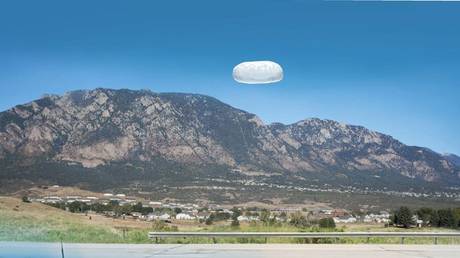
The Department of Defense recently released another massive repository of documents detailing military encounters with Unidentified Anomalous Phenomena, or UAPs. Ostensibly, this data drop aims to satisfy public demands for transparency regarding unexplained aerial objects operating in restricted airspace. However, a close examination of the released material reveals that the Pentagon is not revealing secrets about extraterrestrial life. Instead, the government is using these massive data dumps as a sophisticated bureaucratic shield to hide major gaps in domestic aerospace surveillance and downplay encounters with foreign espionage tech.
The strategy relies on data saturation. By flooding the public record with hundreds of unclassified, context-weak incident reports, the military successfully shifts the conversation away from structural intelligence failures. The core issue is not whether intelligent life is visiting Earth. The real crisis is that the world's most sophisticated defense apparatus regularly fails to identify physical objects entering sovereign airspace, and the current classification system prevents the sharing of data needed to fix the problem.
The Art of the Controlled Data Dump
Dumping a massive cache of redacted files is an old Washington tactic. When an agency faces intense political pressure to reveal secrets, it rarely fights back with total silence. Silence breeds congressional subpoenas. Instead, the agency complies so completely that the truth gets buried under a mountain of administrative noise.
The latest files follow this exact blueprint. They consist of hundreds of pages of pilot logs, radar track summaries, and internal memos spanning several years. Most reports describe the same basic scenario. A Navy pilot or air force radar operator spots an object moving erratic paths or hovering at unusual altitudes. The encounter lasts a few minutes. The sensor data remains inconclusive. The report gets filed, categorized, and filed away.
When you strip away the sensational headlines, these files do not contain smoking-gun evidence of non-human technology. They contain a massive collection of cold cases. By releasing them all at once, the All-domain Anomaly Resolution Office (AARO) satisfies the literal letter of transparency mandates while ensuring that independent investigators spend months chasing dead ends. It is an information shell game designed to exhaust the observer.
The True Vulnerability in Our Skies
The focus on the supernatural hides a much more grounded threat. While the public debates anti-gravity propulsion, foreign adversaries are exploiting the exact blind spots highlighted in these logs.
Modern military radar systems are marvels of engineering, but they are programmed to look for specific threats. They scan for high-speed fighter jets, massive bombers, and ballistic missiles. They filter out slow-moving, low-radar-cross-section objects like weather balloons, commercial drones, and flocking birds to avoid cluttering the screens of air traffic controllers.
This filtering process creates a massive visibility gap. Peer competitors like China and Russia understand this technical limitation. The 2023 Chinese spy balloon incident demonstrated exactly how an adversary can exploit these gaps by deploying low-speed, high-altitude surveillance platforms that blend into the radar noise. The newly released files show that the military has been tracking similar low-signature objects for over a decade without adjusting the underlying detection systems.
Sensors Designed for Yesterday's Wars
The hardware itself limits what we can know. A fighter jet's Forward-Looking Infrared (FLIR) camera is optimized for locking onto hot engine exhaust, not cold, passive materials. When a pilot encounters an object without a visible thermal signature, the sensor output often distorts, creating optical artifacts that look like impossible physics on a cockpit display.
The Pentagon uses these technical limitations as a convenient excuse for inaction. If a sensor artifact cannot be definitively explained, the incident is labeled unresolved. This categorization allows the military to avoid admitting a more painful truth. Our multi-billion-dollar sensor networks are fundamentally ill-equipped to track the low-cost, asymmetrical surveillance tools being deployed by modern adversaries today.
The Classification Trap That Smothers Solutions
The biggest obstacle to solving the UAP issue is not a lack of data, but the classification system itself. The military collects petabytes of information every day, but the moment a sensor captures something unusual, that data enters a classification black hole.
Consider a standard encounter. A Navy F/A-18 Super Hornet captures video of an unknown object using its advanced radar and targeting pod. Because the video reveals the exact resolution, frequency, and operational capabilities of the jet’s classified sensor suite, the entire recording is instantly classified at the Secret or Top Secret level.
- The public receives a highly degraded, low-resolution copy where all useful telemetry is scrubbed.
- Academic scientists and civilian aerospace engineers cannot study the raw data to offer explanations.
- Different branches of the military cannot easily share the data with each other due to compartmentalized security protocols.
This systemic paranoia creates a closed loop of ignorance. The military cannot identify the object because it refuses to let anyone outside a small, cleared circle look at the data. Meanwhile, the circle remains too small to possess the diverse scientific expertise required to solve the mystery. The system protects its own secrets at the expense of national security.
The Commercial Drone Problem in Restricted Airspace
The civilian drone revolution has completely outpaced military regulations and domestic defense capabilities. A significant portion of the newly released logs describe encounters that look identical to commercial quadcopters and fixed-wing drones operating near military bases.
+----------------------------+----------------------------+----------------------------+
| Incident Type              | Primary Sensor Used        | Likely Origin              |
+----------------------------+----------------------------+----------------------------+
| High-Altitude Transits     | Radar / Visual             | Foreign Surveillance       |
+----------------------------+----------------------------+----------------------------+
| Perimeter Incursions       | FLIR / Optical             | Commercial/Private Drones  |
+----------------------------+----------------------------+----------------------------+
| Sensor Anomalies           | Radar / Telemetry          | System Glitches / Artifacts|
+----------------------------+----------------------------+----------------------------+
As the table indicates, the threats vary wildly in origin, yet they are all grouped under the same ambiguous UAP label. This grouping is intentional. By mixing legitimate security breaches caused by consumer drones with genuine radar glitches and unidentifiable phenomena, the Pentagon dilutes the urgency of the drone problem.
A private citizen flying a modified drone near a sensitive naval station is a law enforcement and security failure. An adversary mapping our electronic signatures with a swarm of micro-drones is an intelligence failure. Labeling both as mysterious anomalies shifts responsibility away from base commanders and intelligence officials, transforming an embarrassing security lapse into an unsolvable mystery.
The Congressional Blind Spot
Capitol Hill has shown a sudden, intense interest in these files, holding high-profile hearings and demanding answers from defense officials. Yet, lawmakers consistently ask the wrong questions. They focus heavily on sensational claims of recovered craft and secret reverse-engineering programs, driven by a desire for historic revelations that will capture headlines.
This focus plays directly into the Pentagon’s hands. Defense officials can easily deny the existence of a massive, decades-long alien cover-up because the evidence for such a claim is virtually non-existent in the actual data. By defeating these extreme theories, the military completely avoids answering tough questions about their daily operational failures.
Congress rarely pushes for a complete overhaul of the classification system. They do not demand to know why the Air Force and the Navy still use incompatible data systems that prevent real-time tracking of unknown objects across domestic borders. They do not force the military to explain why it took years to update radar filters after discovering that foreign nations were using balloons for espionage. The theatrical search for extraordinary secrets prevents routine, rigorous oversight.
Moving Past the Anomalous Mirage
The true value of the latest UAP file release is not what it reveals about the unknown, but what it confirms about the known. The documents paint a clear picture of an intelligence apparatus struggling under its own weight, paralyzed by an archaic classification system, and unable to adapt to new forms of low-cost aerial surveillance.
Solving this vulnerability requires abandoning the sensationalism that has defined the UAP debate for generations. The military must decouple the study of unknown objects from the stigma of science fiction. Airspace security is a matter of clear vision, accurate sensors, and open data sharing.
The Pentagon must strip away the unnecessary security classifications that prevent civil scientists from analyzing these encounters. Sensor telemetry that does not reveal critical wartime capabilities must be made public as a matter of routine, not as a reluctant response to political pressure. Until the data is opened to rigorous, unclassified scientific scrutiny, these massive file drops will remain exactly what they are today. They are a bureaucratic smoke screen designed to keep the public looking at the stars while our actual defenses remain blind to the mundane threats drifting through our airspace.


