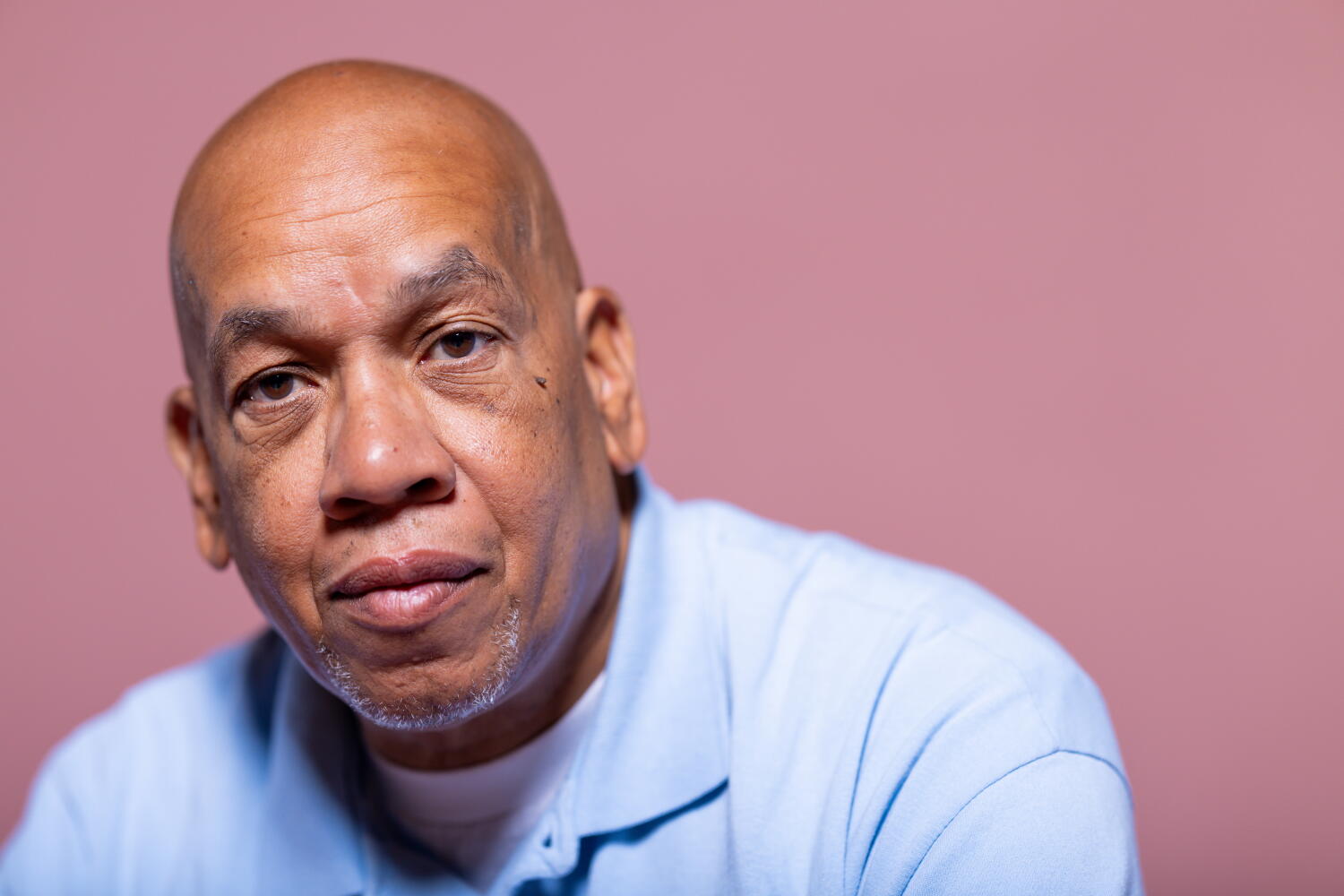
Federal and local law enforcement arrested prominent Los Angeles gang interventionist Skipp Townsend on charges tied to an alleged murder conspiracy, instantly triggering a reckoning across City Hall and South Los Angeles neighborhoods. Townsend, the co-founder of the nonprofit 2nd Call and a longtime fixture in community violence prevention, stands accused of crossing the exact line he spent decades claiming to police. For years, city officials held him up as proof that former gang members could broker lasting truces on the concrete. Now, prosecutors allege that behind the public-facing peacemaking, Townsend remained entangled in lethal street politics.
The arrest hits a nerve that has throbbed beneath Los Angeles public safety policy for over twenty years. Gang intervention is built on a deliberate, high-risk bargain. To stop retaliatory shootings before the LAPD arrives, the city pays people with deep street credibility to walk into active conflicts. That credibility does not come from a college degree or a civil service exam. It comes from having lived the life, knowing the players, and commanding respect on blocks where a badge only buys silence.
The Structural Paradox of Street Credibility
You cannot hire a stranger to talk down a shooter. That is the foundational rule of community violence intervention, and it is also the model's greatest vulnerability. When municipalities contract with organizations like Townsend's 2nd Call, they are explicitly purchasing access to social networks that law enforcement cannot penetrate.
The mechanics of the job require constant proximity to active gang members. An interventionist must answer calls at three in the morning, meet with shot-callers in neutral territory, and negotiate ceasefires after a body drops. In that environment, boundaries blur fast. Sharing information to prevent a retaliation can look identical to passing intelligence for a rival faction. Mediating a dispute over turf or money puts the peacemaker directly inside the orbit of a criminal enterprise.
Law enforcement officials have long viewed this proximity with suspicion. Prosecutors often argue that a "license to intervene" can easily morph into operational cover for ongoing gang activity. When an interventionist receives city funding, carries official credentials, and enjoys regular access to elected officials, that legitimacy can shield illicit behavior from routine scrutiny.
Conversely, community advocates point out that the LAPD has historically struggled to distinguish between active gang leadership and genuine peacebuilding. In the eyes of many detectives, anyone who still commands respect among active gang sets is still part of the structure. This friction creates a permanent fault line between police investigators and the city-funded violence reduction apparatus.
How Los Angeles Built the Intervention Economy
To understand the shockwaves of Townsend's arrest, you have to look at how deeply embedded interventionists have become in the Los Angeles municipal budget. Following the 1992 uprising and the brutal gang wars of the 1990s and early 2000s, city leaders realized that suppression alone could not arrest its way out of generational violence.
Under the administration of Mayor Antonio Villaraigosa, the city formalized the Gang Reduction and Youth Development (GRYD) office. The goal was to professionalize street outreach, move it out of the shadows, and fund community-based organizations to manage ceasefire zones. Over the past decade, especially following the racial justice protests of 2020, funding for alternative public safety models surged. Tens of millions of dollars flowed into nonprofits promising to reduce homicides without relying on traditional policing.
Skipp Townsend became one of the most recognizable faces of this movement. A former Bloods member who served prison time before turning to community work, Townsend co-founded 2nd Call (Second Chance at Life Leadership) in the mid-2000s. He positioned himself not just as a street mediator, but as a workforce developer, a mentor to troubled youth, and a reliable quote for journalists covering South L.A. crime.
He walked the halls of City Hall. He appeared on panels alongside police commissioners, district attorneys, and philanthropic executives. For policymakers looking for a tangible success story, Townsend fit the exact profile they wanted to fund. He spoke the language of reform while retaining the unmistakable aura of the streets.
The Uncomfortable History of Fallen Peacemakers
Townsend is far from the first high-profile interventionist in Los Angeles to end up in handcuffs. The history of the movement is littered with similar collapses, each one threatening to derail funding for the dozens of legitimate outreach workers who put their lives on the line every night.
Consider the trajectory of previous figures who bridged the gap between City Hall and the streets. Over the past fifteen years, multiple prominent outreach workers and nonprofit directors in Southern California have faced federal indictments ranging from narcotics trafficking and extortion to witness intimidation and murder-for-hire.
In nearly every instance, the pattern follows a familiar arc:
- The Redemption Narrative: A former gang figure emerges from prison, renounces the lifestyle, and demonstrates a genuine ability to calm volatile neighborhoods.
- Institutional Embrace: Politicians and private foundations, desperate for measurable drops in violent crime, elevate the individual into a spokesperson and funnel grant money to their organization.
- Erosion of Oversight: Because the work happens informally on street corners and in private conversations, traditional nonprofit auditing fails to track what the interventionist is actually doing day to day.
- The Relapse into Street Politics: Financial pressure, unresolved personal loyalties, or the intoxicating pull of street power draws the individual back into the very conflicts they were paid to extinguish.
When these arrests happen, the political fallout is immediate. Critics of criminal justice reform seize on the indictments as proof that municipal dollars are subsidizing organized crime. Meanwhile, grassroots leaders scramble to protect their budgets, arguing that the failure of one individual should not invalidate an entire public health approach to violence.
Where Oversight Fails in Violence Prevention
The core failure in cases like this is rarely a lack of passion or good intentions. It is a structural absence of accountability. Government contracting is designed to measure concrete outputs—miles of road paved, number of meals served, hours of classroom instruction delivered. It is notoriously bad at auditing human relationships.
When the city of Los Angeles funds a gang intervention contract, administrators look at metrics like the number of "rumor control" incidents handled, safe passage hours logged near schools, or job readiness workshops completed. None of those paperwork deliverables capture whether a contractor is secretly taking sides in a neighborhood feud or using their city-backed status to settle old scores.
Furthermore, the vetting process for interventionists relies heavily on self-reporting and community vouching. You cannot run a standard corporate background check and disqualify candidates with felony convictions; having a criminal record is practically a prerequisite for the job. As a result, agencies often rely on the reputation of established directors to police their own ranks.
When the director is the one accused of orchestrating violence, the internal check vanishes completely.
"You are asking people who survived by mastering the rules of street survival to suddenly operate inside a bureaucratic framework that neither understands their world nor knows how to verify their work."
This blind spot leaves taxpayers exposed and puts honest outreach workers in an impossible position. Every time a high-profile figure falls, every legitimate interventionist on the payroll has to answer for it. Police officers become less willing to share real-time intelligence at crime scenes. Families become more skeptical of letting outreach workers near their children.
The Ripple Effect on South Los Angeles Streets
Beyond the courtroom and the political theater at City Hall, the most immediate consequences of Townsend's arrest play out on the sidewalks of South Los Angeles. Gang truces are fragile ecosystems built entirely on personal trust. They are not binding legal treaties; they are handshakes between men who have spent their lives looking over their shoulders.
When a central broker is suddenly removed from the board under allegations of a murder conspiracy, those truces destabilize overnight. Rival factions begin questioning whether past negotiations were conducted in good faith. Information that was shared in confidence during mediation sessions suddenly feels like a liability.
Law enforcement agencies typically respond to the arrest of a major figure by bracing for retaliatory violence. Vacuums in street leadership—even informal leadership—rarely stay empty for long. Younger, less disciplined members often view the disruption as an opportunity to test boundaries, settling grievances that had been kept on ice through years of quiet diplomacy.
For the residents living in these neighborhoods, the nuance of municipal contracting debates means nothing. They only know that the person they called when gunfire erupted down the block is now sitting in a federal detention center, and the quiet they enjoyed for the past few summers feels suddenly temporary.
Rethinking the Model Without Abandoning the Streets
The arrest of Skipp Townsend forces Los Angeles to confront a question it has dodged for two decades. How do you fund people with deep ties to violent networks without underwriting the networks themselves?
Abandoning community-based intervention is not a viable option. Decades of data confirm that aggressive policing alone leaves communities fractured and fails to stop cyclical retaliation. The LAPD cannot be on every corner, and detectives cannot talk a grieving teenager out of picking up a gun ten minutes after his brother is shot. Only credible messengers can do that work.
However, credibility cannot be a blank check. If violence intervention is going to survive as a legitimate pillar of public safety, the city must strip away the celebrity culture that surrounds its most prominent practitioners and replace it with rigorous operational guardrails.
First, separation of duties must become mandatory. Outreach workers who operate on the street level should not simultaneously control the financial books, grant distribution, and political lobbying of large nonprofits. Separating administrative governance from street mediation prevents any single individual from consolidating unchecked power.
Second, peer accountability boards need real teeth. Rather than relying solely on distant city bureaucrats to audit contracts, established intervention networks should utilize independent review panels composed of veteran outreach leaders, behavioral health clinicians, and former prosecutors who understand the specific red flags of street relapse.
Third, clear ethical boundaries must be explicitly defined and enforced. Meeting with active gang members to stop a shooting is part of the job. Attending gang functions, holding money for active members, or mediating disputes over illicit business must result in immediate termination and loss of city credentials, regardless of how famous the interventionist happens to be.
The tragedy of allegations like those facing Townsend is not merely the betrayal of public trust or the wasted grant money. It is the collateral damage inflicted on a delicate, indispensable craft. Real peacemaking requires walking right up to the edge of the abyss without stepping over. When a prominent guide falls in, everyone left standing on the ledge has to work twice as hard just to prove the ground beneath them is still solid.