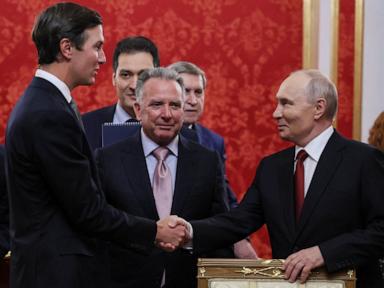
The diplomatic theater playing out in Moscow and Kyiv right now is a masterclass in comforting delusions. Special envoys Steve Witkoff and Jared Kushner touching down at Vnukovo Airport, trading pleasantries with Kremlin aides, and securing temporary 72-hour capital city bombing pauses creates fantastic television. It feeds the insatiable media appetite for high-stakes momentum.
It is also entirely detached from the mechanical realities of a grinding war of attrition.
The lazy consensus in mainstream coverage treats these back-channel delegations as genuine inflection points. Pundits obsess over personal chemistry, secret peace proposals, and carefully choreographed handshakes in vaulted Kremlin halls. They ask whether Washington can finally bridge the gap between Moscow's immovable territorial demands and Kyiv's absolute sovereignty.
That question is wrong. It frames a structural military deadlock as a communications breakdown or a negotiation failure.
The Arithmetic of Attrition
Look at the underlying numbers rather than the press releases. The front line stretches across roughly 750 miles of heavily fortified terrain. Both combatants have reorganized their entire state apparatuses around industrial-scale production of uncrewed systems, electronic warfare countermeasures, and deep-interdiction missile strikes.
When Vladimir Putin sits down with American intermediaries or Volodymyr Zelenskyy coordinates a temporary halt to capital-targeted drone runs, neither side is abandoning its core theory of victory.
- The Russian Strategy: Grind down Ukrainian economic output, exhaust western air defense interceptor stockpiles, and wait for political fatigue to shatter foreign assistance coalitions.
- The Ukrainian Strategy: Impose unacceptable financial and infrastructural costs on the Russian interior through long-range asymmetric strikes, bleeding the aggressor's economy until holding conquered ground becomes economically unsustainable.
Neither objective can be resolved by a middle-ground compromise drafted in a hotel suite. Territorial integrity versus total annexation leaves zero space for a stable median. If Kyiv cedes the four contested eastern regions, it commits strategic suicide. If Moscow withdraws to pre-2022 borders without achieving its domestic political mandates, the regime faces an immediate internal crisis.
The Utility of Performative Diplomacy
Why do these missions keep happening if the core positions are fundamentally irreconcilable? Because diplomacy serves an essential domestic political function for every participant.
For the White House, sending high-profile envoys demonstrates active burden-sharing and fulfills a pledge to prioritize conflict termination, regardless of structural headwinds. For Moscow, hosting American delegations projects great-power status and fractures the illusion of a unified Western diplomatic boycott. For Kyiv, engaging with the peace process reassures jittery international financial backers that the government is reasonable, cooperative, and open to rational solutions.
Imagine a scenario where Washington drops all mediation pretense, cuts off back-channel messaging, and leaves the belligerents to fight until combat power completely collapses. The diplomatic class would panic. Markets would flinch. Yet, that hypothetical scenario reveals the uncomfortable truth: negotiations do not halt wars until the military balance on the ground forces a reassessment of what is possible. Right now, neither army believes it has exhausted its capacity to inflict pain.
Moving Past the Illusion
Stop treating temporary capital ceasefires as peace. A three-day moratorium on striking Kyiv or Moscow is a tactical pause for logistics and public relations, not a strategic pivot toward disarmament.
Journalists and analysts need to stop evaluating these summits by the warmth of the greetings in the Kremlin and start measuring them against industrial output figures, casualty ratios, and artillery barrel wear. Until the material reality of the battlefield shifts so drastically that one side faces catastrophic collapse, every peace proposal brought forward by private envoys is just expensive punctuation in an endless war.
WATCH: Putin Holds High-Stakes Moscow Talks With U.S. Envoys Witkoff and Kushner
This video footage from the Kremlin captures the high-level diplomatic choreography and arrival formalities as Russian leadership meets with the U.S. delegation to discuss the ongoing conflict.