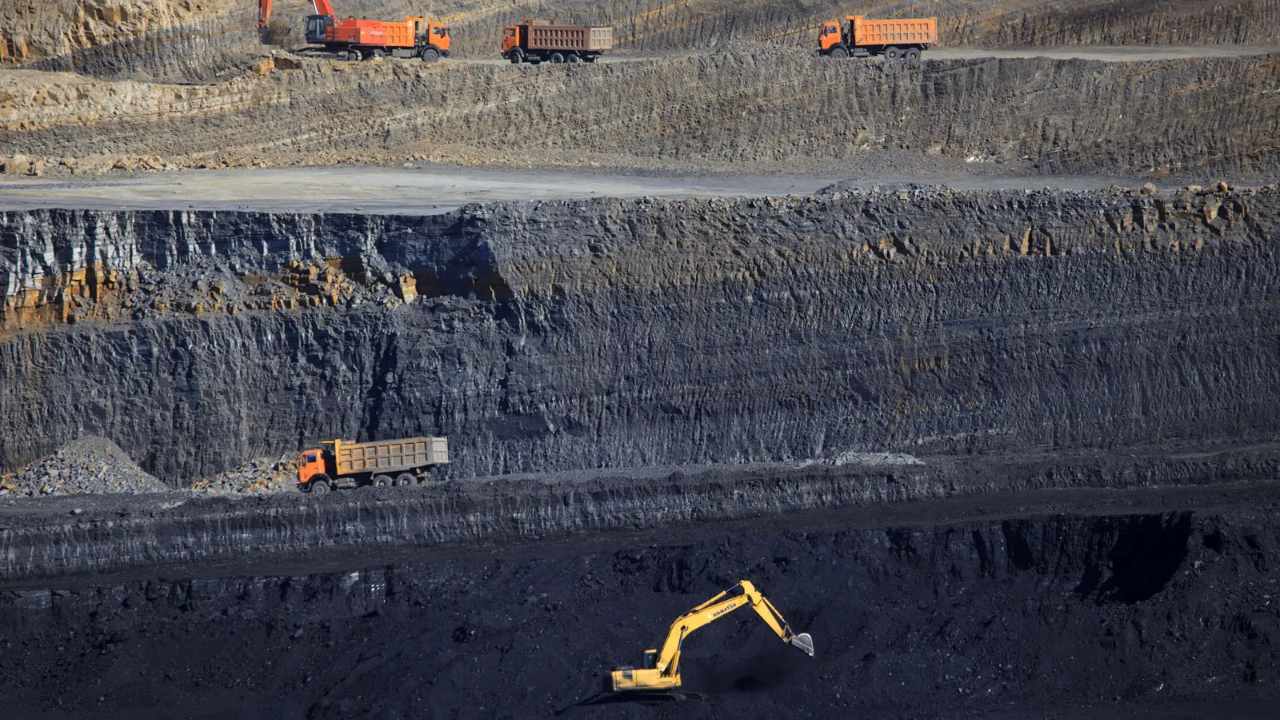
Every civic booster within a five-hundred-mile radius cheered when a blasted, leveled mountaintop in Southwest Virginia was flattened further to anchor a massive two-hundred-thousand-square-foot high school. The local press hailed it as a triumphant reinvention, a pristine phoenix rising from the rubble of extraction capitalism. It makes for a great human-interest photograph. Massive steel beams standing where coal draglines once gouged the earth. A shining beacon of progress sitting on a terraced plateau carved out of rock.
It is also an infrastructural absurdity that squanders public funds to treat symptoms while ignoring the structural rot of rural economic geography.
When municipal governments and school boards point to reclaimed strip mines as blank canvases for civic megaprojects, they are falling for the sunk-cost fallacy on a geological scale. They look at a moonscape of fractured shale and compacted overburden and see free land. It is never free. Building a mega-facility on a reclaimed surface mine means wrestling with differential settlement, engineered fill that behaves unpredictably over decades, and a total lack of localized economic gravity.
Let us dispense with the feel-good narrative immediately. Strip-mined earth is not a blank slate. It is a geotechnical headache. When mountaintop removal occurs, millions of yards of blasted rock are dumped into adjacent valleys, and the flattened summit is hastily graded using unconsolidated material. Building a multi-million-dollar institutional structure on top of this unstable soup requires millions more in deep foundation work, specialized drainage mitigation, and endless stabilization protocols.
Yet the physical engineering challenge is only the secondary failure. The primary failure is logistical and demographic.
The Geography of Nowhere
Strip mines are deliberately located where the coal is, which means they are almost universally situated far away from dense residential centers, commercial hubs, and functional transit networks. By placing a massive consolidated high school on an isolated mountain peak, planners create a transit desert. Students are subjected to grueling bus rides winding up switchbacks, burning municipal budgets on fuel and fleet maintenance that should be spent inside the classroom.
We are told that consolidating three or four crumbling legacy schools into one monolithic palace on a ridge achieves economies of scale. This is the spreadsheet delusion of bureaucrats who have never managed a budget in the real world.
Consolidation rarely saves money. It simply shifts the costs. You trade building maintenance for transportation overhead. You replace community-scaled hubs—where a school acts as the de facto center of a walkable town—with an isolated fortress accessible only by highway. When the final bell rings at three in the afternoon, students do not walk down Main Street to work a part-time job, grab an ice cream, or visit the public library. They get shoved back onto buses for a forty-minute descent off the mountain because the school exists in a spatial vacuum.
The Sunk Cost of Reclamation Theater
For decades, the standard bargain of surface mining has been the promise of post-mining economic utility. Mining companies are required by federal law to reclaim the land to "approximate original contour" or to a beneficial use approved by the state. Developers love the latter option because it allows them to pitch industrial parks, airports, and schools on the flat benches carved into the sky.
Here is the dirty secret that state regulators and local economic development authorities refuse to say out loud: most of these high-altitude flat spaces sit vacant for a generation.
When a school board decides to anchor a mountaintop, they are locking a declining population into a fixed asset that will require decades of capital expenditures. Enrollment curves in rural coal-dependent counties are not trending upward. Young families are leaving for urban centers where the economic engine actually runs. Building a sprawling educational complex designed for two thousand students in a county bleeding population is financial malpractice. Within twenty years, that school will be half-empty, operating at a crippling overhead per-pupil cost, trapped on top of a mountain where no one else wants to live or do business.
If you want to revitalize Appalachia, you do not build mega-schools on artificial plateaus. You invest in the valleys where the water, the roads, and the people already are. You upgrade existing municipal infrastructure in towns that have legitimate pedestrian footprints. You stop chasing the architectural vanity of conquering nature with dynamite and concrete.
The mountain was scarred by extraction. Covering the scar with a gymnasium and an administrative wing does not heal the land. It just puts a multi-million-dollar bandage on a logistical wound that will bleed the county tax base dry long after the ribbon-cutting ceremony is over. Stop mistaking monumental concrete pours for economic development.