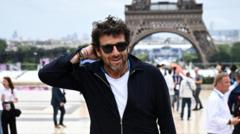
The media is running its standard playbook on Patrick Bruel. Headlines scream about the 67-year-old pop icon being thrown into police custody, facing down 13 accusers, and watching his summer tour collapse in real-time. The commentary follows a lazy, predictable consensus: France's slow-moving judicial system is finally waking up, flexing its muscles, and executing a textbook #MeToo reckoning.
That narrative is completely wrong.
What we are witnessing in the Nanterre prosecutor’s office isn't a triumph of due process. It is a panic move. By aggressively pushing for Bruel’s immediate indictment and demanding pre-trial detention for alleged acts stretching back decades, prosecutors are trying to hide a deeper institutional rot. They are weaponizing public optics to cover up years of systemic failure, creating a dangerous precedent where media pressure dictates judicial velocity.
The Mirage of Sudden Efficiency
I have covered high-profile public falls for over fifteen years. I have watched prosecutors drag their feet on ironclad corporate fraud cases, only to suddenly move at warp speed the second a celebrity’s name trends on social media.
The timeline of the Bruel case exposes this exact desperation. For years, the French justice system ignored or quietly shelved complaints against elite cultural figures. In Bruel's case, accusations involving massage therapists in Perpignan and Ajaccio were closed in 2020 due to a lack of evidence. But the moment television presenter Flavie Flament went public via Mediapart with a highly publicized allegation from 1991, the legal apparatus panicked.
Flament herself noted the absurdity, pointing out that everyday women had been trying to make themselves heard for years, yet it took high-profile media coverage to make the gears turn. When a justice system requires a media circus to function, it is no longer operating on law. It is operating on PR.
The sudden rush to place Bruel in custody and demand pre-trial detention isn't a sign of a robust investigation. It is a performative overcorrection. Prosecutors are terrified of looking lenient after years of public backlash over the sluggish handling of film industry abuse. So, they overcompensate by treating a 67-year-old pop singer—who had already publicly stated he was fully available to investigators—like a flight-risk cartel boss.
The Mathematics of the Statute of Limitations
Let us look at the actual legal mechanics of what the Nanterre prosecutor is attempting. The state's case is structurally flawed, relying on a strategy of volume over legal viability.
Of the 13 accusers brought into the orbit of this investigation, the prosecutor's office admits that a massive chunk of the complaints—alleging acts from 1992 to 2008—are likely well beyond the statute of limitations (prescription under French law).
The state is executing a classic prosecutorial maneuver: stacking expired or legally unenforceable allegations into a single file to create a psychological weight of numbers. They are counting on the sheer volume of names to overwhelm the defense and sway the investigating magistrates, even when those historical claims cannot legally stand on their own in a court of law.
Imagine a scenario where a commercial business is audited. The auditor finds accounting discrepancies from 15 years ago that are legally unauditable due to corporate tax limits. Instead of tossing them, the auditor bundles them with a minor current discrepancy to make the company look like a systemic criminal enterprise. Any competent judge would throw it out. Yet, in the court of public opinion, the bundle works flawlessly.
By pushing for pre-trial detention on the remaining active claims between 2010 and 2019, prosecutors are attempting to bypass the normal, methodical verification process. They want punishment before proof because they know the legal foundation of their historical stack is built on sand.
The Collapse of Presumption of Innocence
The standard defense of this aggressive prosecutorial behavior is that the severity of the allegations justifies the means. "People Also Ask" columns frequently ask: Should celebrities accused of multiple crimes be detained to protect the public?
The brutal, honest answer is no—not unless there is a concrete risk of flight, tampering, or immediate physical danger. Bruel is a global public figure who has already canceled his entire summer tour and voluntarily remained in the country to face the music. Locking him up in pre-trial detention serves zero practical investigative purpose.
What it does achieve is the total destruction of the presumption of innocence. In France, the principle of la présomption d'innocence is theoretically sacred. In practice, the moment a prosecutor demands pre-trial detention for a pop cultural icon, the trial is already over. The public assumes that if the state wants you behind bars before a judge has even weighed the evidence, you must be guilty.
This sets a catastrophic standard for the rule of law. If prosecutors can use the momentum of a media wave to bypass standard judicial review and demand immediate imprisonment, then no one’s legal rights are secure. The defense is forced to fight an uphill battle against a state apparatus that has already declared them guilty in the eyes of the public.
The Cost of the Performance
There is a distinct downside to pointing out this reality. Critics will claim that analyzing the procedural flaws of the Bruel case minimizes the voices of the accusers or pushes back against necessary structural reform in the entertainment industry.
But true reform cannot be built on broken legal principles. When the state relies on theatrical arrests and legally questionable bundling to prove it takes sexual violence seriously, it fails everyone. It fails the public by delivering spectacles instead of sound jurisprudence, and it ultimately fails victims by creating cases that are highly vulnerable to being overturned on procedural appeals years down the road.
The Patrick Bruel situation isn't a model for the future of justice. It is an indictment of a system that only moves when it is embarrassed, and when it finally does move, cares more about the optics of the arrest than the integrity of the law. Stop celebrating the speed of the takedown. It is the clearest sign yet that the machine is completely out of control.