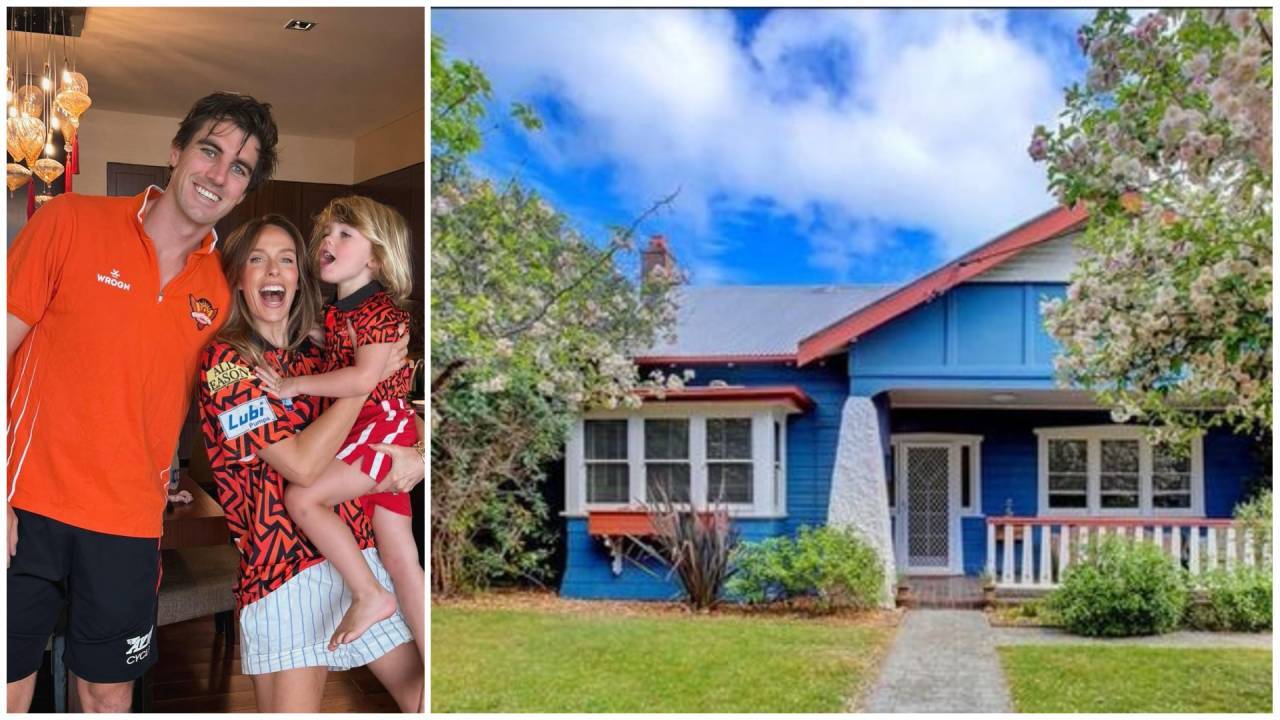
Australian cricket captain Pat Cummins finally unloaded his Moss Vale investment property for a reported $1.16 million, and honestly, the headline numbers make it look way better than it actually was.
On paper, buying a 1920s Californian bungalow for $905,000 in 2017 and selling it nine years later for $1.16 million sounds like a clean $255,000 payday. Look closer. It took eight agonizing months on the market to find a buyer, sold for roughly $90,000 below its initial price guide, and sat in a regional market that has barely budged in four years. Also making news lately: The Ghost in the Silicon (And Why Wall Street Wants Him Back).
If you're thinking about buying a regional "land-bank" property or wondering how pro athletes manage their real estate portfolios behind the scenes, this specific deal at 567 Argyle Street is a textbook case study in patience, holding costs, and knowing when to cut an asset loose to fund a bigger play.
The Real Numbers Behind the Moss Vale Bungalow
Let's strip away the celebrity gloss and look at the raw math of this transaction. Further details regarding the matter are covered by CNBC.
In 2017, Cummins and his wife, interior designer Rebecca "Becky" Boston, paid $905,000 for the three-bedroom, two-bathroom weatherboard home in New South Wales' Southern Highlands. It wasn't a trophy mansion. It was a classic 1920s Californian bungalow sitting on a massive 2,327-square-metre block, complete with coffered ceilings, wainscot panelling, brick fireplaces, a vegetable patch, and a chicken yard.
For most of the past decade, the couple treated it as a straightforward rental. In 2020, it was leased for around $550 a week.
Do the quick yield math on that. At $550 a week, gross annual rent sits at $28,600. Against a $905,000 purchase price, that's a gross rental yield of roughly 3.16%. Once you subtract New South Wales council rates, landlord insurance, property management fees, routine maintenance on a century-old timber house, and land tax, the net cash flow was basically break-even at best.
Then came the exit.
Cummins and Boston quietly listed the property in March 2026 through Richardson & Wrench Southern Highlands agents Georgia Soster and Frank Walsh. By July, public listings carried a price guide of $1.25 million to $1.295 million.
Buyers didn't bite at that number. The campaign dragged on through winter and into spring, finally closing via private treaty on November 3 after roughly eight months on the market. While the exact figure wasn't officially disclosed by the agents, industry reporting pegged the final sale at $1.16 million.
Why Eight Months on the Market Matters
Time on market is the ultimate truth-teller in real estate. You can set any asking price you want, but the market decides how long you wait.
According to realestate.com.au data covering more than 100 comparable four-bedroom sales in Moss Vale over the preceding year, the median time to sell a home in the area was 72 days. Cummins waited roughly 240 days. That's more than triple the local average.
Why did a celebrity-owned house on over half an acre walk distance from Moss Vale's town centre take so long to move?
First, the Southern Highlands hangover. During the pandemic tree-change boom, Sydney buyers flooded towns like Bowral, Berrima, and Moss Vale, pushing local four-bedroom median prices to peaks around $1.8 million in both 2022 and 2024. By late 2026, Moss Vale's median four-bedroom price had cooled to $1,532,500, limping along at just 0.5% annual growth. Sellers anchored to 2022 expectations hit a brick wall in 2026.
Second, zoning doesn't pay the bills today. Marketing materials heavily pitched the block's R3 Medium Density Residential zoning, pointing out its potential for subdivision or multi-dwelling expansion subject to council approval. In theory, developers love R3 zoning on 2,327 square metres. In practice, elevated construction costs, strict Wingecarribee Shire Council planning hoops, and high financing expenses meant developers weren't paying top dollar for raw upside in 2026. Meanwhile, traditional family buyers looking for a renovated weekender saw a dated kitchen and a renovation project they didn't want to tackle.
Gross Gain vs. Net Profit The Trap Most Investors Miss
Most casual readers see "$905,000 to $1.16 million" and assume Cummins walked away $255,000 richer. Any seasoned property investor knows that number is pure fantasy.
When you hold an Australian investment property for nine years, transaction friction eats a massive chunk of your capital growth. Let's look at the real deductions any buyer in New South Wales faces on a deal like this:
- Entry Stamp Duty: Buying a $905,000 established property in NSW in 2017 triggered roughly $36,000 in transfer duty, plus legal and conveyancing fees.
- Selling Costs: Real estate agent commissions in regional NSW typically run between 1.8% and 2.5% plus GST, alongside marketing packages for an eight-month campaign. On $1.16 million, you're easily handing over $25,000 to $32,000 to get the deal done.
- Capital Gains Tax (CGT): Because the bungalow was rented out rather than serving as their primary residence, the net capital gain is subject to CGT. Even with the 50% Australian CGT discount for holding an asset longer than 12 months, a high-income earner at the top marginal tax rate still loses roughly a quarter of their net profit to the Australian Taxation Office.
Once you strip out stamp duty, agent fees, legal bills, and tax, that $255,000 headline gain shrinks closer to $130,000 or $140,000 in actual take-home cash. Spread across nine years, that's an annualized net capital return of under 2% per year.
You wouldn't call it a disaster. He didn't lose money, and tenants helped service the holding costs along the way. Yet as a pure financial investment, a broad index fund would have crushed it with zero busted water heaters or council rate notices.
The Bigger Play Why Cummins Actually Sold Now
If the Moss Vale return was underwhelming, why sell in a flat market instead of waiting for the next Southern Highlands boom?
Because real estate decisions rarely happen in a vacuum. When you look at what Cummins and Boston have been doing in Sydney's Eastern Suburbs, offloading Moss Vale makes total strategic sense.
Cummins had once mused publicly about keeping the Southern Highlands bungalow as a quiet country escape after retiring from international cricket. Life changed. He and Boston now have two young children, Albie and Edi, and their center of gravity is firmly planted in coastal Sydney.
In late 2025, the couple settled on a grand 1888 heritage mansion in Bronte for $16 million. They didn't stop there. In early 2026, they quietly snapped up the adjoining two-bedroom, one-bathroom semi-detached house directly behind their Bronte estate in an off-market deal reported between $4.5 million and $4.8 million.
Combining a $16 million Victorian residence with a $4.8 million neighboring block creates a rare super-site in one of Sydney's tightest beachside postcodes. By mid-2026, they had already lodged development plans with Waverley Council—drawn up by architecture firm MHN Design Union—for a major restoration featuring a steel-and-glass link bridge, new living additions, landscaping, and a swimming pool.
High-end heritage renovations in Bronte aren't cheap. Between architectural fees, heritage approvals, structural steel, and custom joinery, a project of that scale easily runs into several million dollars.
Suddenly, holding onto a distant $1.16 million regional cottage yielding 3% gross rent makes zero sense. Liquidating Moss Vale frees up over a million dollars in dead equity, simplifies their tax and maintenance footprint, and funnels capital directly into a trophy family compound where they actually live.
It's a classic portfolio consolidation move. They're also testing the waters on other holdings, including marketing a refreshed two-bedroom apartment in Sydney's east (bought in 2017 for $975,000) with a $1.2 million to $1.32 million guide after collecting around $900 a week in rent. Meanwhile, their former Arent&Pyke-designed Bronte home, Figtree House—purchased for $9.3 million in 2021—already proved their knack for adding serious architectural value in the eastern suburbs.
Lessons Everyday Property Buyers Can Steal From This Deal
You probably don't have $20 million to assemble a Bronte compound, and your day job isn't captaining Australia's Test squad. Still, the mechanics of Cummins' Moss Vale exit apply directly to anyone buying investment property right now.
1. Never Buy Based on "Future Zoning Upside" Alone
Marketing brochures love throwing around phrases like "medium-density potential" and "STCA" (Subject to Council Approval). Unless you're an experienced developer with the cash flow to actually build townhouses, don't pay a premium for zoning you'll never use. When you go to resell in a flat market, everyday homebuyers won't pay extra for development potential, and professional developers will discount their offer to protect their margins. Buy a property that works for what it is today.
2. Separate Lifestyle Dreams From Investment Math
Cummins bought Moss Vale partly because he loved the Southern Highlands and imagined tinkering with the property after cricket. That emotional attachment is how millions of Australians end up holding underperforming regional assets. If an investment property doesn't deliver strong rental yield or clear capital growth, admitting your life plans changed and selling—even at a discount to your initial hopes—is smarter than clinging to a fantasy.
3. Watch Opportunity Cost Like a Hawk
The biggest mistake property owners make is refusing to sell because they didn't get their dream price. Waiting another two years in Moss Vale hoping to squeeze out an extra $80,000 would have meant tying up $1.16 million in capital while paying ongoing maintenance and missing out on compounding value in their primary Sydney project. Good investors care more about where their equity is going next than what their ego wanted last month.
4. Account for Selling Friction Before You Sign
Before you ever celebrate a projected sale price, run a realistic net-proceeds sheet. Subtract entry stamp duty, five to ten years of maintenance, agent commissions, marketing fees, and Capital Gains Tax. If your net annualized return doesn't beat a low-cost index fund or paying down your own non-deductible home mortgage, rethink the purchase.
If you're sitting on an older regional investment property right now, pull up recent comparable sales from the last 90 days—not 2022 peak prices—calculate your true after-tax equity, and ask yourself honestly whether that money would work harder somewhere else.