Money doesn't buy credibility. That's the blunt lesson Ottawa is learning the hard way right now.
For years, the United States nagged, pushed, and outright bullied Canada to finally hit NATO's defense spending baseline of two percent of gross domestic product. Well, Prime Minister Mark Carney's government actually did it. They aggressively ramped up the budget, pooled resources from multiple departments, and proudly announced that Canada crossed the 2.1 percent mark this fiscal year. It was supposed to be a triumphant geopolitical milestone.
Instead, Washington basically threw the receipt back in Ottawa's face.
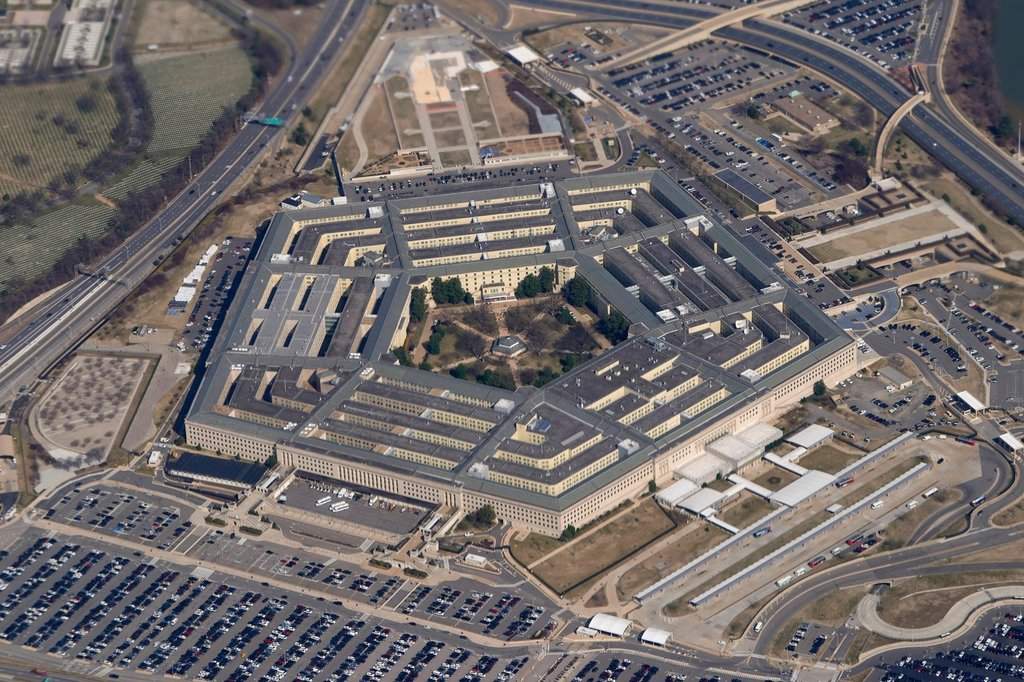
The Pentagon just paused the Permanent Joint Board on Defense, a bilateral military advisory group that has quietly run since 1940. If that wasn't a clear enough slap across the wrist, senior U.S. defense officials went on background to tell reporters exactly what they think of their northern neighbor. The verdict? Canada still isn't a credible partner. It hasn't made the hard choices, and the Pentagon is tired of waiting for rhetoric to turn into actual, deployable military hardware.
This isn't just about a math equation anymore. It's about a fundamental disagreement over what a real security partnership looks like.
The F-35 Stall Tactics are Tanking Trust
If you want to understand why the U.S. is completely out of patience, you have to look at the ongoing debacle surrounding Canada's fighter jet replacement.
When Carney took office, his administration ordered a sweeping review of the planned procurement of 88 Lockheed Martin F-35 stealth fighters. The government missed its own self-imposed summer deadline last year to finish that review. The jets are still stuck in a state of political limbo.
To Washington, this delay looks less like careful governance and more like political posturing. The U.S. is watching its closest continental partner drag its feet on a critical piece of modern airspace defense while the Arctic becomes increasingly contested by Russia and China.
U.S. Ambassador Pete Hoekstra has already dropped subtle warnings about the financial and diplomatic fallout if Ottawa backs out or shrinks the order. The Pentagon's message is simple. If you want to sit at the big table of continental security, you need to buy the tools required to secure the room. Right now, Canada is sitting on an aging fleet of CF-18s that belong in a museum, not patrolling the northern approaches of NORAD.
The Illusion of the Two Percent Accounting Win
How did Canada hit its two percent target so fast while the Pentagon remains completely unimpressed? The answer lies in the accounting.
Ottawa managed to scramble together a $63 billion defense envelope by changing what it counts. They didn't just throw money at the Canadian Armed Forces. They pulled in roughly $14 billion from other pockets of the federal government. This includes funding from:
- Veterans Affairs Canada ($7.8 billion alone)
- The Canadian Coast Guard
- The Communications Security Establishment (Canada's cyber intelligence agency)
Technically, NATO rules allow for these kinds of inclusions. Pensions, healthcare for veterans, and border security infrastructure are valid defense-related expenses under the alliance framework.
But you can't fight a modern war with pension plans.
The Pentagon isn't tracking spreadsheets; it's tracking capabilities. While Canada celebrates hitting a statistical benchmark on paper, its actual military personnel are dealing with a brutal recruitment crisis, unserviceable equipment, and a broken procurement pipeline that takes a decade to buy basic sidearms, let alone warships.
The U.S. sees a Canadian government that used creative bookkeeping to get Donald Trump off its back, rather than a nation genuinely committed to building an independent, lethal military force.
Moving Past the Finger-Pointing
The current war of words between Defence Minister David McGuinty and the Pentagon won't fix the underlying structural cracks. Shrugging off the suspension of a 1940 joint defense board as an insignificant hiccup—as Carney tried to do—is a dangerous miscalculation. The U.S. does not suspend historic bilateral bodies for fun. It does so to send a blunt message before the real economic or diplomatic penalties arrive.
If Canada wants to restore its status as a trusted ally, it has to move past spending announcements and focus on execution. Here's what needs to happen immediately:
First, end the F-35 review. The government needs to either fully commit to the acquisition of the 88 stealth fighters or pick an alternative and sign the contracts. The endless cycle of reviewing and re-reviewing military purchases to satisfy domestic political factions has destroyed Canada's reputation as a reliable buyer.
Second, fix the procurement bottleneck. The Department of National Defence is notoriously slow at spending the money it actually receives. Billions of dollars regularly lapse and return to the treasury because the bureaucracy cannot get out of its own way to sign delivery contracts. Streamlining this process is more vital than hitting arbitrary GDP percentages.
Third, focus on deployable Arctic infrastructure. The Carney government has announced ambitious long-term plans to spend up to five percent of GDP on security by 2035, including upgrades at CFB Halifax and new maritime surveillance infrastructure. Don't wait a decade. Fast-track the construction of deep-water refueling facilities and northern radar networks that directly impact North American security today.
The era of getting a free ride under the American security umbrella is over. Hitting the two percent mark was just the entry fee to stay in the conversation; it wasn't the final destination.