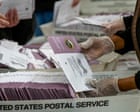
The kitchen table is crowded. Coffee mugs sit beside stack-filled envelopes, tax documents, and bills waiting for attention. For millions of citizens, this exact piece of worn wood serves as the primary outpost of civic participation. It is where signatures are scratched onto envelopes, seals are licked, and the weight of a democratic voice is quietly folded into an official ballot.
Convenience is a modern expectation. We deposit checks through glass screens, renew vehicle registrations online, and track packages from across oceans with a tap of a finger. Yet, the machinery governing how citizens cast their votes remains a shifting battleground of federal oversight, judicial scrutiny, and local administrative mandates.
Consider the logistical reality facing voters across the country. Every election cycle brings an evolving set of frameworks dictating how envelopes must be marked, witnessed, or delivered. When legal challenges mount and higher courts weigh in on procedural rules, the ripple effect reaches straight back to that kitchen table.
The Anatomy of a Postal Vote
To understand the current legal friction, one must examine the mechanics of mail-in voting. Long before ballots arrive in mailboxes, election administrators establish complex timelines. Paper stock is ordered. Security barcodes are generated. Signatures must match registration records on file.
For a hypothetical voter named Elena, working two jobs while raising a toddler, the traditional window of an election day poses an insurmountable hurdle. Standing in a physical queue for hours is simply not an option. The arrival of a ballot in her mailbox changes everything. It grants her the quiet evening hours to research candidates, weigh local bond measures, and participate in a system that might otherwise exclude her due to the sheer rigidity of time.
When courts debate the validity, deadlines, or administrative handling of these remote ballots, they are not merely arguing legal theory. They are reshaping Elena's ability to participate.
Administrative rules vary wildly depending on jurisdiction. Some regions require witness signatures. Others mandate specific drop-off drop-boxes or strict postmark deadlines. When higher courts intervene or signal shifts in how these mail-in procedures are scrutinized, local election boards scramble to adjust their guidance.
Citizens seeking comprehensive, up-to-date resources on their regional voting logistics and administrative status can consult the USA.gov Voting and Election Guide. Additionally, checking specific registration requirements and tracking tools through the U.S. Election Assistance Commission provides a direct line to official guidance.
Navigating the Legal Landscape
The tension between accessibility and security is as old as the republic itself. Proponents of mail-in voting emphasize expanded participation, noting that removing physical barriers traditionally boosts turnout among working parents, elderly citizens, and rural populations. Critics and legal challengers, conversely, argue that decentralizing the voting process introduces administrative vulnerabilities and complicates the timely processing of results.
Judicial interventions often introduce sudden uncertainty. When legal briefs are filed and appellate courts issue stays or injunctions, local clerks find themselves caught in the middle. They must interpret rapidly changing legal doctrines while simultaneously printing ballots, verifying signatures, and managing public communications.
For those attempting to make sense of the administrative rules governing their specific ballots, relying on generalized summaries can be misleading. Regulations differ sharply from state to state, and even county to county.
To review specific voter registration portals and localized administrative details, voters should navigate directly to official state resources, such as the National Association of Secretaries of State, which links directly to official state election offices.
The Human Stakes
Behind every statistic regarding mail-in ballot rejection rates, litigation filings, and appellate decisions lies a human choice. The debate is rarely about paper versus digital; it is about who gets to be heard.
When rules tighten or deadlines shift unexpectedly, the burden falls heaviest on those with the least margin for error. A missed postmark by a single hour, a signature deemed slightly mismatched by an intake scanner, or an unfamiliar envelope requirement can silence a vote that took considerable effort to cast.
Democracy relies on trust. That trust is tested when the rules of engagement change mid-stream, leaving voters wondering whether their ballots will complete the journey from their hands to the final tally.
The paper trail remains. The envelopes continue to land on kitchen tables across the nation. What happens next depends not only on the rulings handed down from high benches, but on the vigilance of citizens demanding clarity, transparency, and access at every level of government.