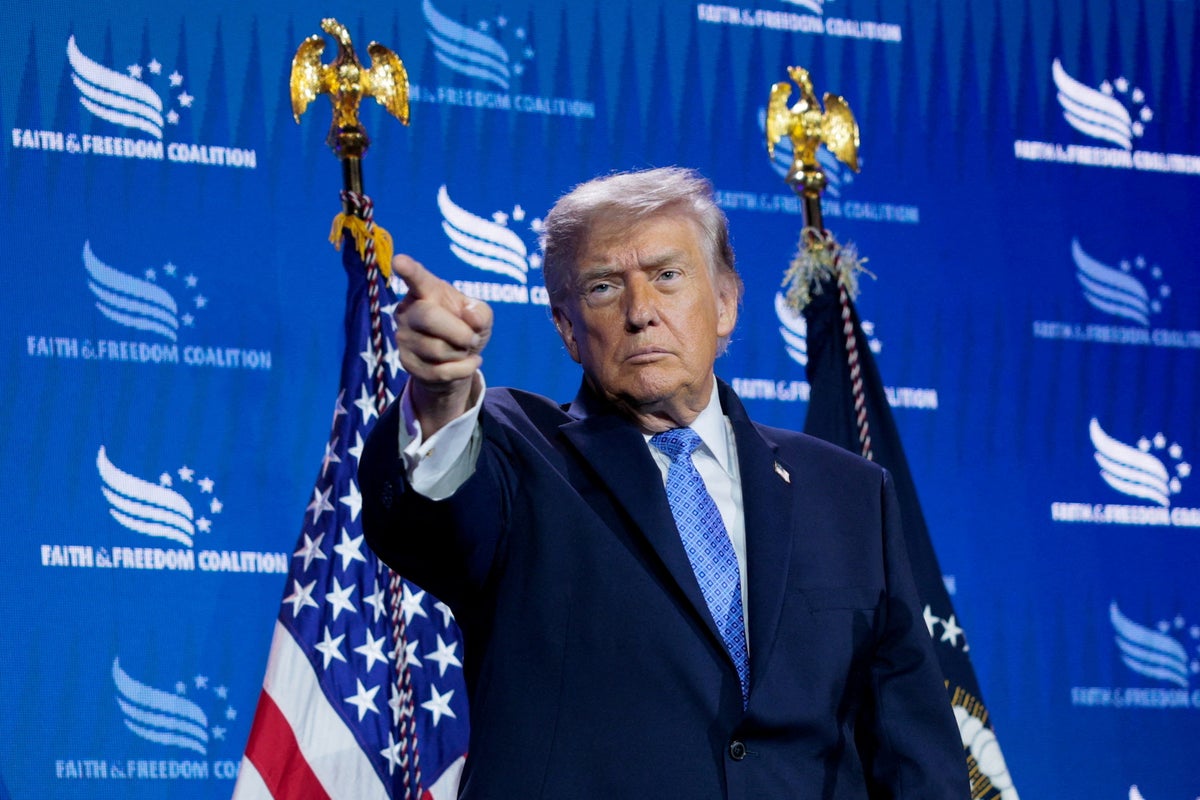
Mainstream financial journalism loves a massive headline, especially when it combines two of its favorite click-magnets: Donald Trump and cryptocurrency. When recent financial disclosures dropped, the media immediately ran with the most sensationalist interpretation possible, screaming that Trump pulled in over $1 billion in crypto earnings.
It is a spectacular narrative. It is also a fundamental misunderstanding of blockchain mechanics, liquidity pools, and how federal financial disclosures actually work. Recently making news lately: The 37 Year Missing Baggage Myth and the Real Cost of Bureaucratic Obsession.
The financial press looked at a set of disclosure forms, saw massive valuations tied to digital assets, and immediately conflated paper wealth with liquid cash. They treated a highly volatile, illiquid basket of memecoins, licensing fees, and non-fungible tokens as if it were a realized cash hoard sitting in a Treasury bill account.
Anyone who has actually managed a liquidity pool or handled high-net-worth digital asset liquidation knows the truth. The headline numbers are a mirage. Further information into this topic are covered by Al Jazeera.
The Valuation Trap of the Federal Disclosure Form
To understand why the $1 billion figure is functionally a fiction, you have to understand the blunt instrument that is the Office of Government Ethics (OGE) financial disclosure form. These forms are designed to track potential conflicts of interest, not to provide an accurate mark-to-market valuation of highly volatile, illiquid digital assets.
When a politician fills out these forms, they are forced to check broad valuation boxes based on the asset's value at a specific snapshot in time.
Here is what the mainstream analysis misses:
- The Valuation Snapshot: Crypto prices fluctuate by double-digit percentages in hours. A token balance worth a fortune on the day the disclosure disclosure snapshot was taken could be down 70% by the time the public reads the PDF.
- The Illiquidity Discount: If you hold $500 million worth of a top-tier digital asset like Bitcoin, you can exit that position over time with minimal market impact. If you hold $500 million worth of a low-liquidity memecoin or an obscure utility token, attempting to sell even 1% of that holding will collapse the entire order book. The asset value drops to near-zero before you can even route the trade.
- The Cost of Realization: Realizing "earnings" means selling. Selling triggers massive capital gains taxes, slippage, and immediate market panic.
Calling these positions "earnings" is like saying a startup founder who owns 50% of an unlisted, illiquid company valued at $2 billion has a billion dollars in cash. They don't. They have a massive, highly fragile economic exposure that cannot be easily converted into fiat currency.
The Grift of the Unsolicited Airdrop
A massive portion of the crypto wealth attributed to public figures like Trump does not come from savvy trading or direct investments. It comes from marketing stunts orchestrated by token creators.
Imagine a scenario where an anonymous developer launches a new memecoin called "TrumpCoin" or some variation thereof. The developer creates 1 trillion tokens. They keep half, and they send the other half directly to a publicly known blockchain wallet associated with Donald Trump or his digital asset ventures.
Initially, the token has no value. But then, the developer pumps the remaining tokens on a decentralized exchange using a tiny amount of liquidity—say, $50,000. Suddenly, the token has a market price of $0.001.
Mathematically, the 500 billion tokens sitting in Trump's wallet are suddenly "worth" $500 million on paper. The media looks at the wallet address on Etherscan, runs the basic multiplication, and publishes a story: "Trump Holds $500 Million in New Crypto Asset."
It is a classic accounting trick. The actual liquidity available in the decentralized exchange pool to buy those tokens is a tiny fraction of the paper market cap. If Trump's wallet attempted to swap those airdropped tokens for Ethereum or USDC, the transaction would fail due to insufficient liquidity, or it would drain the pool completely, yielding only a few thousand dollars while crashing the token price to zero.
Mainstream journalists consistently fail to check the on-chain liquidity depth of these assets. They report the nominal value as if it is equivalent to cash in a bank account, completely ignoring that these "earnings" are entirely hostage to thin, manipulated markets.
The Licensing Reality vs. The Crypto Investment Myth
The narrative pushed by enthusiasts is that Trump is a visionary crypto investor who timing-marketed the cycle perfectly. The narrative pushed by detractors is that he is running a massive digital casino. Both sides are wrong.
The cold reality is much more mundane. Trump's primary interaction with the crypto world has been through intellectual property licensing.
When the various series of Trump Digital Trading Cards were launched, the mechanics were simple: a third-party entity, NFT INT LLC, managed the creation, marketing, and sale of the NFTs. Trump did not sit in front of a computer minting tokens or managing smart contracts. He licensed his name, image, and likeness in exchange for a licensing fee and a cut of the secondary market royalties.
+------------------+     Licenses Name/Image     +-------------------------+
|   Donald Trump   | --------------------------> |       NFT INT LLC       |
|                  | <-------------------------- | (Third-Party Developer) |
+------------------+    Licensing Fees & %       +-------------------------+
                                                              |
                                                              | Mints & Sells
                                                              v
                                                     +-----------------+
                                                     |   NFT Buyers    |
                                                     +-----------------+
This is the traditional real estate licensing model applied to the blockchain. It is low risk, high margin, and requires zero capital expenditure from the licensor.
The disclosure documents reveal that these licensing fees were paid in digital assets, which were then held in wallets. The "earnings" reported are largely the accumulation of these upfront payments and ongoing royalties, amplified by the general upward movement of the crypto market during the reporting period. It is an accumulation of royalty revenue, not an active investment strategy.
The Nightmare of Realizing Paper Profits
Let us look at what happens if a high-profile political figure actually tries to spend a billion dollars of crypto wealth.
I have seen funds and high-net-worth individuals try to liquidate nine-figure positions in mid-cap digital assets. It is an absolute bloodbath if not executed with extreme institutional precision. For a polarizing political figure, the complexity multiplies exponentially.
First, there is the compliance gauntlet. Every centralized exchange on earth operates under intense regulatory scrutiny. A deposit of hundreds of millions of dollars in crypto from a Politically Exposed Person (PEP) triggers every anti-money laundering (AML) alarm in the system. The compliance reviews alone can freeze the assets for months.
Second, there is the market impact. The moment an on-chain analytics firm spots a wallet linked to Trump moving large quantities of tokens to an exchange wallet, the market reacts. Short-sellers pile in. Algorithmic trading bots front-run the sell orders. The price moves against the seller before the first trade even executes.
Third, the tax drag is immense. Digital asset sales are subject to capital gains tax. Unlike traditional real estate, where an investor can utilize a 1031 exchange to defer taxes by reinvesting the proceeds, crypto-to-crypto and crypto-to-fiat transactions are immediate taxable events. A massive chunk of that reported billion vanishes the second it hits the ledger of the IRS.
Stop Asking the Wrong Questions About Political Crypto Holdings
The media keeps asking: "How much money did Trump make in crypto?"
The real question we should be asking is: "How is the illiquidity of these digital asset portfolios influencing regulatory posturing?"
When a public figure holds a massive portfolio of illiquid, sentiment-driven assets, their net worth becomes directly tied to the regulatory environment of that asset class. They do not need to cash out to benefit. The mere existence of a pro-crypto regulatory stance pushes the speculative value of their illiquid holdings up, which expands their collateral capacity and borrowing power in the traditional financial system.
You do not sell the crypto. You borrow against the paper valuation using institutional lenders who are willing to accept the volatility risk in exchange for political access or massive interest margins.
That is how real financial power works at this level. You do not dump tokens on a retail exchange like a day trader. You use the bloated, unliquidated market cap as a balance sheet booster to secure fiat loans that are completely tax-free until the collateral is called.
The mainstream consensus looks at the financial disclosure and thinks they are looking at a giant bank account. In reality, they are looking at a complex web of marketing agreements, illiquid memetic tokens, and strategic collateral that functions entirely differently from traditional wealth.
The billion-dollar figure is a great headline. But on the blockchain, numbers on a screen mean absolutely nothing until you find a buyer on the other side of the ledger willing to take the other side of the trade without crashing the floor. And right now, that buyer does not exist at that scale. No conclusion needed; just look at the order books.