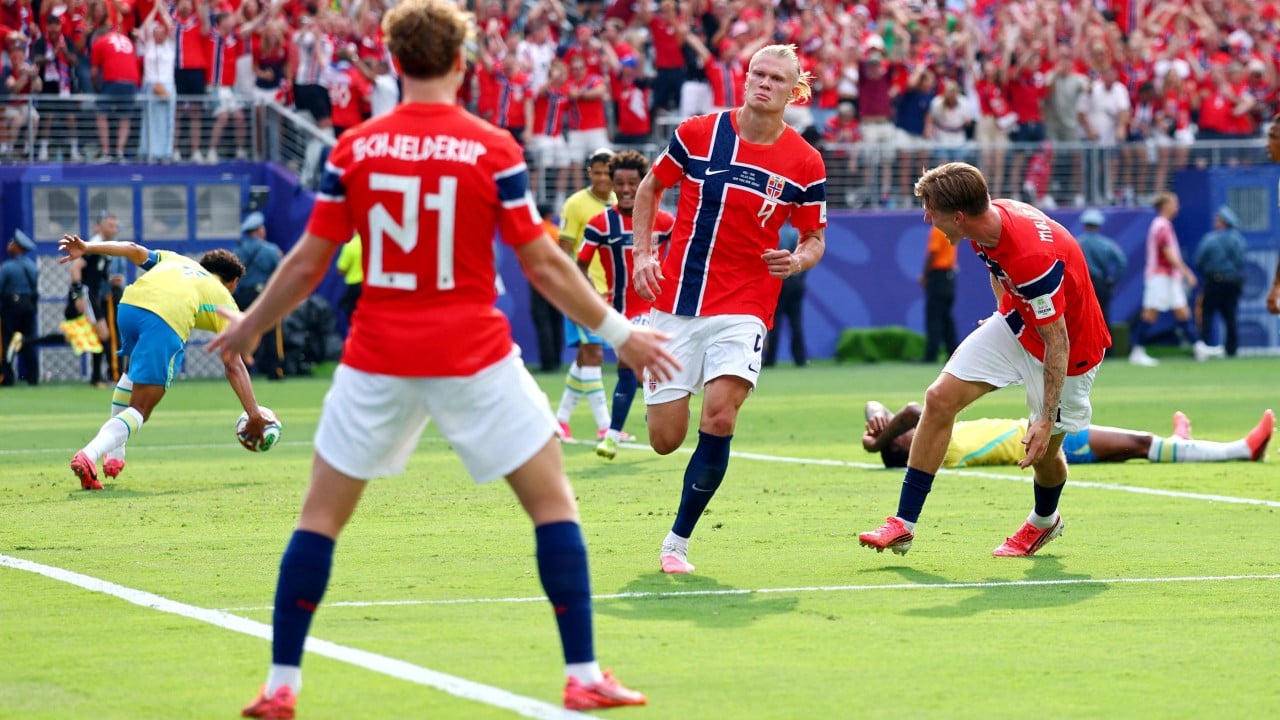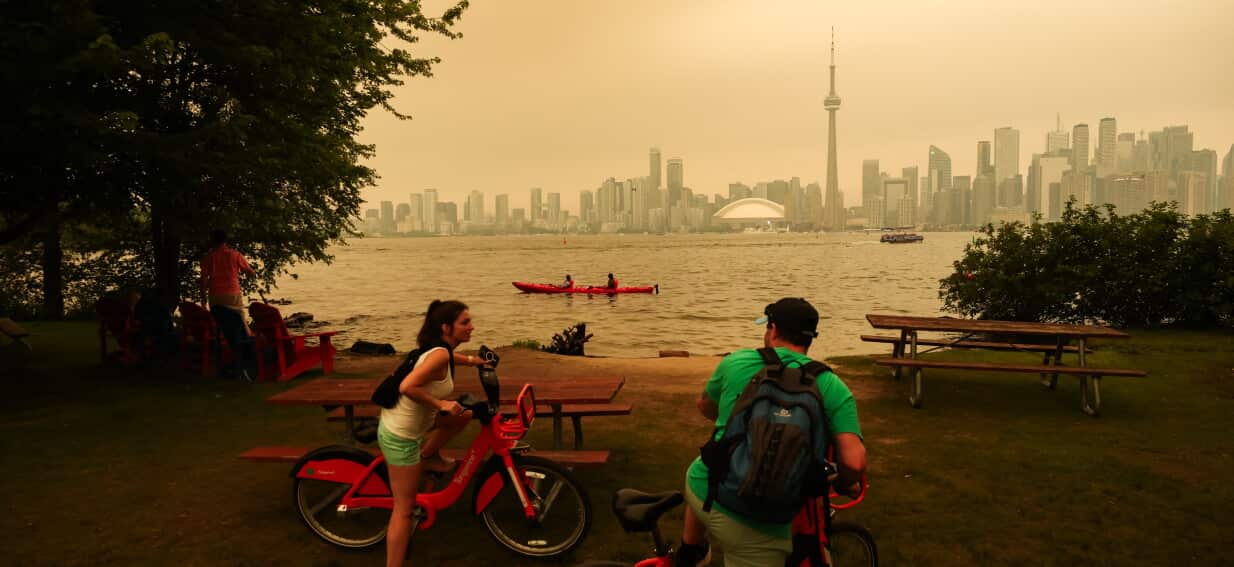
The image of a blood-orange sun hanging over a packed World Cup stadium is the ultimate media clickbait. It is atmospheric doom-porn at its finest. Writers scramble to pen hand-wringing obituaries for the "beautiful game," lamenting how climate change has finally breached the sacred walls of sport.
It is a beautiful, tragic, and utterly fraudulent narrative.
The collective freak-out over wildfire smoke interrupting elite sporting events is sports journalism’s favorite new performative theater. Every time a hazy sky descends on a major match, the reaction is entirely predictable: empty platitudes about athlete safety, dramatic photos of fans in masks, and demands to cancel or move matches.
This is not a serious conversation about environmental health. It is a highly coordinated public relations exercise designed to shield multi-billion-dollar sports federations from liability while ignoring the real, dirty mechanics of how professional sports actually run.
If we want to talk about athlete health and environmental impact, let us stop staring at the orange sky and look at the actual spreadsheets.
The Spectacle of the Orange Sky
The media loves a visual crisis. An orange sky over a stadium is a ready-made metaphor. It looks apocalyptic, meaning it requires zero intellectual effort to explain.
But a colored sky is not a direct metric of human suffering.
The physical reality of wildfire smoke is that the dramatic visual shift—the sepia-toned filter that makes a stadium look like a movie set—is primarily caused by Rayleigh scattering. Large particulate matter ($PM_{10}$) and fine particulate matter ($PM_{2.5}$) scatter shorter wavelengths of blue light, leaving only the red and orange spectrum to pass through.
It looks terrifying. But look closer at the actual Air Quality Index (AQI) during these widely photographed events. Frequently, the visual horror of a smoky sky does not correlate with a proportional threat to elite human physiology over a 90-minute window.
We have been conditioned to believe that any level of smoke is an immediate death sentence for athletic performance. It isn't. The human body is remarkably resilient in the short term, and the panic surrounding these matches is almost entirely divorced from the actual clinical science of acute exposure.
The Actual Physiology of Acute PM2.5 Exposure
Let us clear up the medical misconceptions immediately. No one is arguing that breathing wood smoke is good for you. It is a mix of carbon monoxide, volatile organic compounds, and fine particulate matter that can penetrate deep into the lungs.
But the sports world treats an AQI of 150 as if it were a mustard gas attack.
For an elite athlete with a $VO_2$ max hovering in the high 70s or low 80s, the lung capacity and compensatory mechanisms are vastly different from the average desk worker. During high-intensity exercise, an athlete's minute ventilation—the volume of air breathed in one minute—can increase by a factor of fifteen, reaching over 150 liters per minute.
What does the actual science say about acute exposure to particulate matter during high-intensity exercise?
- The Chronic vs. Acute Divide: The overwhelming majority of pulmonary research on PM2.5 damage focuses on chronic exposure—people living next to highways or coal plants for decades. The physiological toll of running 10 kilometers in moderate wildfire smoke for 90 minutes is negligible for a healthy, elite adult.
- The Bronchial Response: In healthy, non-asthmatic athletes, acute exposure to moderate smoke triggers a mild, transient inflammatory response. Airway resistance increases slightly, but not to a degree that statistically degrades aerobic performance in short-duration events. Studies on runners performing high-intensity trials in smoky conditions show minimal deviation in power output or time-to-exhaustion compared to control environments.
- The Individual Variable: The real danger is localized strictly to athletes with pre-existing hyper-reactive airways (exercise-induced bronchospasm or asthma). For the other 90% of the roster, the discomfort is sensory—dry throat, stinging eyes, unpleasant smell—not systemic failure.
To put it bluntly: an elite athlete faces more long-term health risks from the microplastics in their synthetic turf, the chronic use of non-steroidal anti-inflammatory drugs (NSAIDs) in the locker room, or the repeated sub-concussive impacts of their sport than they do from playing a single match in hazy air.
Yet, we do not see dramatic photo essays demanding the ban of ibuprofen or turf pitches.
The Great AQI Liability Shield
If the physiological threat to healthy athletes is minimal in the short term, why do leagues and federations panic when the AQI ticks past 150?
Follow the money. It has nothing to do with health and everything to do with legal indemnification.
Professional sports leagues are terrified of class-action lawsuits. Having watched the NFL pay out over a billion dollars for concussion settlements, every sports executive now operates with a singular focus: liability mitigation.
The Air Quality Index is not a precise medical diagnostic tool for elite performance; it is a public-health warning system designed for the general population, including infants, the elderly, and those with severe chronic obstructive pulmonary disease (COPD). By applying blanket AQI thresholds to elite sporting events, leagues are using a blunt instrument to solve a legal problem.
+-------------------+-----------------------------+-----------------------------+
| Stakeholder       | Stated Concern              | Real Motivation             |
+-------------------+-----------------------------+-----------------------------+
| Sports Leagues    | Athlete and fan safety      | Avoiding class-action suits |
| Media Outlets     | Environmental crisis        | High-engagement clickbait   |
| Sponsors          | Green-certified corporate   | Maintaining brand image     |
|                   | citizenship                 |                             |
+-------------------+-----------------------------+-----------------------------+
When a league postpones a game due to air quality, they are not protecting the players' lungs. They are protecting their insurance policies. They are ensuring that if an athlete has an asthma attack on the pitch, the league can point to a policy document and say, "We followed the guidelines."
It is bureaucratic self-preservation masquerading as corporate empathy.
The Staggering Hypocrisy of Sports Greenwashing
The supreme irony of the "orange skies at the World Cup" narrative is the sheer, unadulterated hypocrisy of the organizations hosting these events.
Consider the setup. FIFA, the International Olympic Committee (IOC), or any major domestic league will happily greenlight a tournament that requires:
- The construction of massive, concrete-heavy stadiums that sit empty after three weeks.
- The operation of dozens of daily chartered flights transporting players, staff, media, and VIPs across continents.
- The consumption of millions of single-use plastics by hundreds of thousands of traveling fans.
They will generate a carbon footprint equivalent to a small nation-state over the course of a month. Then, when the winds shift and blow wildfire smoke over their stadium, they will pause the match, put on a somber face, and talk about the "existential threat of climate change."
This is greenwashing in its purest form. They use the environmental crisis as a backdrop to signal their virtue, while actively contributing to the exact global emissions driving the wildfires in the first place.
If FIFA actually cared about the air quality at the World Cup, they would not host a tournament sprawled across three countries with thousands of miles of flight paths between group-stage matches. They would host it in a single, highly connected metropolitan area with public transit.
But that would mean sacrificing billions in expansion revenue. They would rather let the sky turn orange, cancel a game, and write a press release about how much they care.
Stop Looking at the Sky, Look at the Indoor Arenas
If we want to have a genuine, non-performative conversation about sports and air quality, we need to stop obsessing over outdoor stadiums and start looking at indoor arenas.
The air quality inside many indoor hockey, basketball, and track arenas is consistently worse than a moderately smoky outdoor day. Why? Because indoor environments are closed systems subject to different, and often neglected, pollutants.
- Ice Resurfacing Emissions: In older ice rinks, fuel-powered Zambonis release carbon monoxide ($CO$) and nitrogen dioxide ($NO_2$) directly into the air at ground level—exactly where the athletes are breathing at maximum capacity.
- Poor HVAC Filtration: Most indoor sports arenas operate on commercial HVAC systems designed for temperature regulation, not particulate filtration. They recirculate dust, dander, and external pollutants, creating a concentrated soup of stagnant air.
- Volatile Organic Compounds (VOCs): The solvents used to seal basketball courts, clean locker rooms, and maintain stadium seating release a constant stream of VOCs that athletes inhale during training and competition.
Yet, because indoor pollution does not turn the sky a dramatic shade of amber, it does not get photographed. There are no photo essays about the air quality inside local hockey rinks, even though young hockey players have significantly higher rates of asthma and airway hyper-responsiveness than the general public.
Our outrage is entirely aesthetic. We only care about the air when it ruins our photos.
How to Actually Fix Sports Infrastructure
If we want to move past the empty PR cycles and actually address the intersection of sports, environment, and athlete performance, we need to throw out the current playbook. We need to stop relying on arbitrary AQI numbers and implement hard, systemic changes.
1. Ditch the General AQI for Athlete-Specific Metrics
The standard Air Quality Index is useless for elite sport. We need a specialized "Athletic Air Quality Index" (AAQI) developed by pulmonologists, exercise physiologists, and sports scientists.
This index should ignore the visual haze and focus strictly on the concentration of ultrafine particles ($PM_{0.1}$ to $PM_{2.5}$) and gaseous pollutants like ozone ($O_3$) and nitrogen dioxide ($NO_2$). It must account for ventilation rates and incorporate mandatory pre-competition screening for athletes with airway hyper-responsiveness. If an athlete has asthma, they sit out or get treated; the other 21 players on the pitch keep playing.
2. Mandatory Stadium Air-Filtration Systems
If we are going to build billion-dollar stadiums, we must mandate that they be equipped to handle the modern environment.
For covered or semi-retractable stadiums, this means integrating high-volume, positive-pressure air filtration systems capable of scrubbing PM2.5 from the entire bowl. If a stadium can afford a 360-degree halo video board, it can afford a commercial-grade MERV 16 filtration system.
3. End the Carbon-Heavy Tournament Model
The era of the sprawling, multi-city mega-tournament must end.
Sports federations must stop organizing events that require team flights every three days. Tournaments should be centralized. Keep the matches in tight geographic clusters with robust electric public transit options. This actually reduces the emissions that feed the wildfires, rather than just complaining about the smoke when it arrives.
The next time you see a photo of a soccer match played under a hazy, orange sky, do not fall for the cheap, emotional narrative. Do not join the chorus of performative concern.
The smoke is not a surprise. It is the natural consequence of a global sports industry that prioritizes expansion, broadcast rights, and corporate travel over everything else.
The orange sky is not just wildfire smoke. It is the color of sports greenwashing coming home to roost. If leagues want to play under clean blue skies, they need to stop flying their private jets to get there.