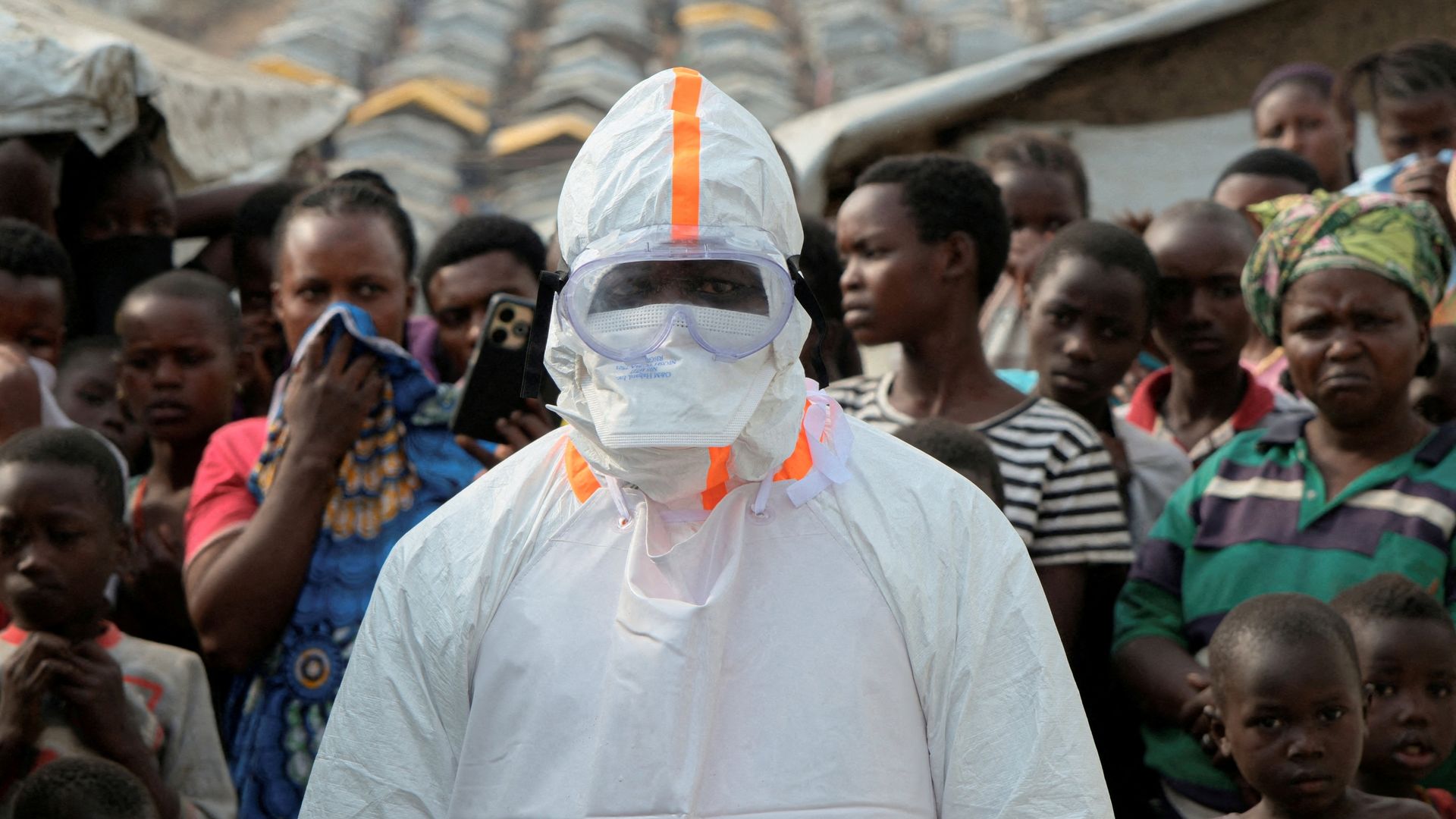
Every time the headlines flash with news of an Ebola surge in the Democratic Republic of Congo, the global public health establishment reaches for the exact same script. Sirens blare, emergency committees convene in Geneva, and breathless reports declare the latest wave the deadliest in history. The reflexive narrative blames ancient traditions, community resistance, and stubborn skepticism in remote forest villages.
It is a convenient fiction. It places the burden of failure on the people dying in the DRC while absolving the international apparatus that profits from chronic crisis management.
I have spent decades watching billions of dollars flow into emergency response mechanisms while foundational healthcare infrastructure in Central Africa remains hollowed out. We do not have an intractable virus problem. We have a structural logistics and allocation problem wrapped in institutional theater.
The Lazy Consensus Of Blaming The Victim
The standard diagnosis from international health agencies always centers on human behavior. We are told that burial traditions spread the pathogen, that distrust of outsiders fuels violence against treatment centers, and that local ignorance undermines containment.
This argument is intellectually lazy and empirically bankrupt.
When you drop a foreign medical team into a community with no prior trust, no functioning local clinics, and no clean water, and you fence them off behind armed guards in high-tech treatment units, people do not see salvation. They see an occupying force. The resistance is not irrational panic; it is a rational calculation by populations who have been abandoned by their own government and treated as epidemiological specimens by outsiders.
People do not flee treatment centers because they love Ebola. They flee them because entering a poorly integrated, isolated triage unit historically meant walking into a place where family members entered alive and exited in body bags, without traditional mourning rites, accountability, or transparency.
The Economics Of Emergency Theater
Why does the narrative persist? Because emergency responses are funded generously, while preventative primary care is starved of resources.
Global health funding runs on spectacular crises. Donors open their wallets when a headline screams about a terrifying hemorrhagic fever threatening global stability. They do not write multi-million-dollar checks to train rural midwives, build reliable cold chains for routine vaccines, or pay local nurses a living wage year after year.
Imagine a scenario where the world spent half as much on upgrading provincial sanitation and primary healthcare infrastructure in the Kivus and Equateur as it spends on chartered cargo planes and panic summits during an outbreak.
The metrics would shift overnight. Yet, the current industrial complex surrounding epidemic response relies on chronic vulnerability. Every outbreak validates the existence of the agencies designed to fight it.
Dismantling The Case Count Obsession
Media coverage hyper-ventilates over raw case numbers and fatality percentages, treating every epidemic as an isolated statistical anomaly. This misses the mechanical reality on the ground.
Ebola is not an airborne contagion sweeping uncontrollably through modern metropolises. It requires close physical contact with bodily fluids, which means transmission is entirely dependent on the baseline quality of basic hygiene infrastructure and local healthcare delivery.
When a clinic lacks running water, soap, and disposable gloves, a nurse treating a malaria patient becomes a vector. When health workers go months without pay, they strike, closing facilities entirely and forcing communities to rely on unregulated, informal care networks where safety protocols do not exist.
The deadliness of an outbreak in the DRC is a direct function of state collapse and structural neglect, not the intrinsic cunning of the filovirus.
What Actually Works
If we want to stop treating symptoms and start fixing the system, three shifts must happen immediately:
- Decentralize funding away from Geneva and Washington: Hand operational control and financial budgets directly to local health districts and indigenous medical workers who already possess community trust.
- Invest in boring infrastructure: Prioritize reliable electricity, solar-powered refrigeration for clinics, clean well water, and guaranteed salaries for frontline health workers over high-profile mobile isolation units.
- Acknowledge political economy: Stop pretending health security is separate from governance, road quality, and economic opportunity. A region with paved roads and functioning local markets contains outbreaks in weeks; an isolated forest zone with broken supply chains turns every cluster into a national crisis.
The next time an international agency declares a record-breaking outbreak, look past the panic. Ask why the foundational clinics were empty before the first case was ever diagnosed.
Stop funding the circus and start building the hospital.