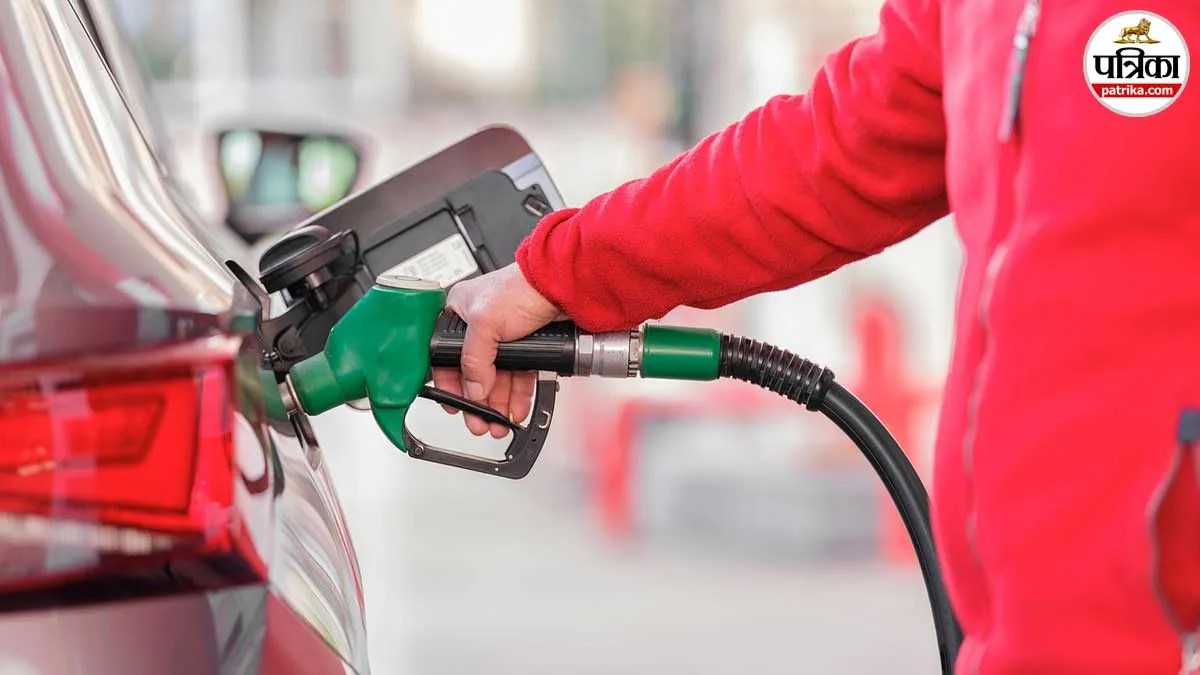
A massive 80-rupee drop in petrol prices and free public transport sounds like a victory for the common man. It looks like a government finally listening to the screams of a squeezed middle class. It feels like relief.
It is actually a mathematical hallucination.
When a state with a crumbling balance sheet slashes revenue streams and inflates subsidies simultaneously, it isn't "solving" an oil crisis. It is sabotaging the currency to buy three weeks of political silence. This isn't economics; it’s a controlled demolition of the national treasury.
The Subsidy Trap: Borrowing from Your Children to Pay for Your Commute
Most people see a price at the pump as a fixed reality. It isn't. In a country like Pakistan, which relies heavily on imported refined petroleum, the price is a brutal reflection of global Brent crude rates and the strength of the PKR against the USD.
When the government artificially hacks 80 rupees off that price, that money doesn't just vanish into thin air. The international suppliers still demand their pound of flesh in dollars.
The difference is covered by the taxpayer. Or, more accurately, by the central bank printing money to cover the "Price Differential Claims" (PDCs) promised to oil marketing companies. This is the definition of a circular debt trap. I have watched emerging markets pull this lever for decades; it always ends with a desperate midnight call to the IMF and a massive, inflationary spike that makes the original "high" price look like a bargain.
The Myth of Free Public Transport
Free public transport is the "bread and circus" of modern populist policy. On paper, it reduces the burden on the poor. In practice, it destroys the infrastructure it claims to democratize.
Public transport systems require constant capital expenditure (CapEx) for maintenance, fuel, and labor. When you remove the fare-box recovery, the system becomes 100% dependent on government handouts. In a fiscal crisis, these handouts are the first thing to get cut.
- Buses break down.
- Routes get cancelled.
- The "free" system becomes so unreliable that the poor are forced back onto expensive private rickshaws.
True mobility isn't about making a ride cost zero; it's about making the system efficient enough that the cost of a ticket is a negligible fraction of a rising wage. You don't get rising wages in a stagnant, subsidy-choked economy.
The Logic of Pain: Why High Prices are Necessary
Nobody wants to hear that expensive fuel is "good." But in an import-heavy economy, the price signal is the only thing preventing a total drain of foreign exchange reserves.
High prices force efficiency. They push people toward carpooling, they incentivize smaller engines, and they reduce non-essential consumption. When you artificially lower the price, you encourage waste. You are effectively subsidizing the guy driving a 3.0L SUV with the taxes of a person who can barely afford a bicycle.
Imagine a scenario where a country has $5 billion in reserves and spends $1 billion a month on fuel. By cutting prices and increasing consumption, you accelerate that burn rate. When the reserves hit zero, you don't just have "expensive" petrol—you have no petrol. Ships stop docking. The lights go out. That is the "nuance" the headlines ignore.
Energy Sovereignty vs. Political Survival
The competitor's narrative suggests this move is a masterstroke of governance. It is actually an admission of defeat.
Real leadership would involve dismantling the IPP (Independent Power Producers) contracts that are bleeding the country dry. It would involve a massive, uncomfortable shift toward domestic renewables and the modernization of the refining sector. But those things take years and involve fighting powerful cartels.
Slashing petrol prices takes five minutes and a press release.
The Invisible Tax: Inflation
You might save 80 rupees at the pump today, but you will pay 200 rupees more for a bag of flour tomorrow.
$$Inflation = \frac{Money Supply}{Goods & Services}$$
When the government prints money to fund these fuel subsidies, the total supply of currency increases while the amount of actual value in the economy stays the same. The result is the devaluation of every single rupee in your pocket. You aren't getting a discount; you're getting a high-interest loan that you'll pay back every time you buy groceries.
The IMF Shadow
The International Monetary Fund isn't a villain; it’s a lender of last resort that demands you stop bleeding before they give you a bandage. One of their primary "priorities" (a word I hate, but let's use it for clarity) is the removal of unfunded subsidies.
By implementing this 80-rupee cut, the government is effectively spitting in the face of the only institution standing between them and sovereign default. When the IMF inevitably pulls the plug, the "correction" will be violent. We aren't talking about petrol going back up by 80 rupees; we're talking about it doubling overnight to catch up with reality.
The Solution Nobody Wants
If you want to fix the oil crisis, you don't lower the price. You fix the productivity.
- Deregulate the Energy Market: Let the market set the price. It's harsh, but it stops the bleeding of state funds.
- Targeted Transfers: If you want to help the poor, don't give "free transport" to everyone (including the wealthy). Use a digital ID system to give direct cash transfers to the bottom 10% of the population.
- End the Import Obsession: Shift the focus from "how do we buy more oil?" to "how do we move people without it?"
I've seen this movie before in Caracas and Colombo. The credits always roll over a backdrop of empty stations and hyperinflation.
Stop cheering for the 80-rupee cut. It is the most expensive "gift" you will ever receive.
Stop asking how the government will make life cheaper. Start asking why the government is so afraid of a functioning market that they’d rather bankrupt the future to survive the afternoon.
The tank is empty, and no amount of subsidized fuel can fix a broken engine.
***