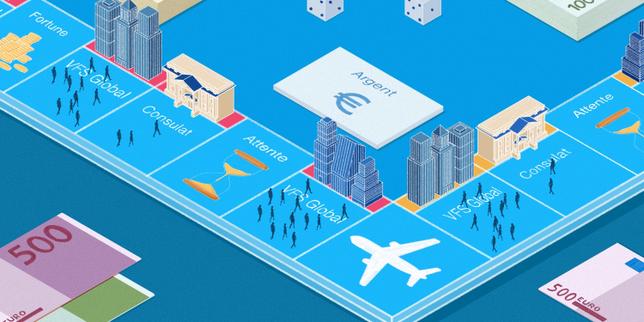
The lazy media consensus loves a good monopoly-shaming narrative. For years, investigative outlets have salivated over VFS Global, painting the visa outsourcing giant as a parasitic middleman extracting billions from desperate travelers while enabling state-level laziness. Critics point to the creeping costs of "premium lounges," SMS tracking alerts, and courier delivery fees, framing them as predatory taxations on human mobility. They look at sovereign governments handing over administrative processing to a private Swiss-based entity and scream "privatization of the border!"
They are fundamentally wrong. They are asking the wrong questions, looking at the wrong metrics, and fundamentally misunderstanding how global bureaucracy actually functions.
The standard critique assumes that before the era of third-party processors, visa issuance was a majestic, egalitarian public service. It assumes that if governments reclaimed total control over the paperwork, the process would magically become cheaper, faster, and more humane.
I have spent fifteen years navigating international logistics, corporate mobility, and consular relations. I have stood in the pre-outsourcing lines, and I have audited the backend processing systems. The reality is brutal: without private visa processing networks, international travel for citizens of emerging economies would completely grind to a halt. The outsourcing of visa administration isn't a symptom of state failure or corporate greed. It is a masterclass in operational efficiency that saves taxpayers billions and actually expands global access.
The Myth of the "Free" Consular Service
Let's dismantle the primary grievance: the cost. Critics weep over the service fees charged by private operators on top of the standard consular fees. They argue that applying for a visa shouldn't require paying a corporate toll.
This argument operates in an economic vacuum. It ignores the crushing reality of sovereign balance sheets.
When a government processes a visa entirely in-house, the real cost of that operation doesn't vanish; it is hidden. It is absorbed by the host country’s taxpayers through embassy real estate, diplomatic security, public sector pensions, and outdated government IT infrastructure. Maintaining a physical consulate capable of handling thousands of daily applicants in a major metropolis like New Delhi, Lagos, or Cairo costs millions of dollars annually.
Traditional Consulate Model:
[Taxpayer Funding] -> [Embassy Real Estate + Diplomatic Salaries + Local Security] -> Limited Capacity

Outsourced Model:
[Applicant Service Fee] -> [Private Scalable Infrastructure] -> Flexible High-Volume Capacity
By outsourcing the front-end administrative burden—the document verification, biometric collection, and passport handling—governments convert a massive fixed cost into a variable cost. The private vendor absorbs the capital expenditure of building data-compliant centers, hiring local staff, and managing crowd control.
If governments were forced to internalize these operations tomorrow, two things would happen, and both would devastate travelers:
- Visa fees would skyrocket to cover the sudden expansion of diplomatic personnel and real estate.
- Consular footprints would shrink. Governments would consolidate operations into fewer cities, forcing applicants to travel thousands of miles just to submit a passport.
The private model allows a country like France or the United Kingdom to have application footprints in dozens of secondary and tertiary cities worldwide without spending a single euro of taxpayer money to build them. The applicant pays a localized service fee, yes, but they save thousands on domestic travel, hotels, and lost workdays.
The Value of Premium Upgrades
Much of the media's outrage centers on the upselling of auxiliary services. The narrative is that companies use artificial friction to force applicants into buying premium lounge access, express courier shipping, or document photocopying at inflated rates.
This is a classic misunderstanding of tiered service architecture.
In any high-volume operational funnel, demand is heterogeneous. Some applicants are low-income students with flexible timelines; others are corporate executives whose time is worth thousands of dollars an hour. A flat, rigid government system treats them exactly the same, resulting in long queues and administrative bottlenecks that choke everyone.
The introduction of premium services introduces a crucial market mechanism: cross-subsidization. High-net-worth individuals and corporate clients willingly pay premium rates for luxury lounges and personalized assistance. This high-margin revenue stream allows the operator to maintain the baseline infrastructure for the standard application tracks, keeping the entry-level service fee lower than it would be if the system were entirely flat.
Furthermore, let’s be honest about the "friction." Filling out a visa application is not a constitutional right; it is a complex legal procedure. When an applicant fails to bring the correct photocopy or format their photograph correctly, a government bureaucrat’s default response is to reject the application, pocket the non-refundable fee, and tell them to rebook an appointment three months later. A private vendor, incentivized by operational throughput, provides a paid photocopy machine or a photo booth on-site to fix the error immediately. It isn't extortion; it’s a convenience tax that prevents catastrophic delays.
The Sovereign Wall
The most dangerous misconception circulated by critics is that private processors hold the keys to the border—that they are making decisions on who gets in and who gets kept out, leading to potentials for corruption and bias.
This shows a complete ignorance of the separation of duties.
Private visa processors do absolutely zero adjudication. They do not approve visas. They do not deny visas. They do not even influence the decision-making process. They are, quite literally, glorified couriers and data entry clerks operating under a strict zero-knowledge framework regarding the ultimate decision.
[Applicant] -> (Data Collection / Biometrics via Private Vendor) -> [Secure VPN / Physical Transit] -> (Adjudication by Diplomatic Consuls Only) -> [Decision]
The data collection is standardized. The files are digitized, encrypted, and pushed directly to the sovereign state’s immigration officials, who sit behind secure walls in embassies or capital cities. The private company cannot alter the criteria, nor can they bypass a security check.
In fact, outsourcing reduces corruption at the local level. Historically, when visa processing was handled directly by local embassy staff, bribery and favoritism ran rampant. Local clerks held immense gatekeeping power over who could get an appointment or whose file moved to the top of the pile. By transferring the front-end operations to a heavily audited, highly scrutinized corporate entity with centralized digital logging, the opportunity for low-level back scratching is systematically erased. Every passport is tracked via barcode; every interaction is caught on camera.
The Real Downside Nobody Talks About
To be absolutely fair, the outsourced visa model is not flawless. But its vulnerability is not the one the media whines about. The real risk is not corporate greed; it is technological ossification through vendor lock-in.
When a company builds a global network that handles biometrics and secure document transport for dozens of major governments, they create massive barriers to entry. The risk isn't that they charge twenty dollars for an SMS update. The risk is that the contracts are so massive, and the infrastructure requirements so specific, that governments become terrified of ever switching vendors.
This lack of hyper-competition can lead to customer service complacency. The software interfaces can feel like they were designed in 2008. The appointment booking systems can be vulnerable to automated bots deployed by third-party black-market agencies—a problem that vendors have been agonizingly slow to solve.
That is a legitimate critique. It is an infrastructure procurement problem, not an ethical crisis about the privatization of state functions.
Stop Demanding a Return to the Past
The public consensus demands that we strip these corporations of their contracts and return visa processing to the warm embrace of state bureaucracies.
Be careful what you wish for.
If you dismantle the outsourced visa infrastructure, you do not democratize travel. You cripple it. You return to an era where an applicant in Chiang Mai has to take a two-day trip to Bangkok just to hand over a piece of paper. You return to an era where embassies simply cap the number of applications they accept per year because they physically cannot fit the crowds onto diplomatic territory, causing visa wait times to stretch from weeks to years.
The outsourced visa matrix is a hyper-efficient, self-funding logistical marvel that allows millions of people to cross borders every single week. It is a system that works precisely because it treats a bureaucratic nightmare as a logistical supply-chain problem rather than a political debate.
Stop complaining about the twenty-dollar service fee. It is the only thing keeping the global mobility engine running.