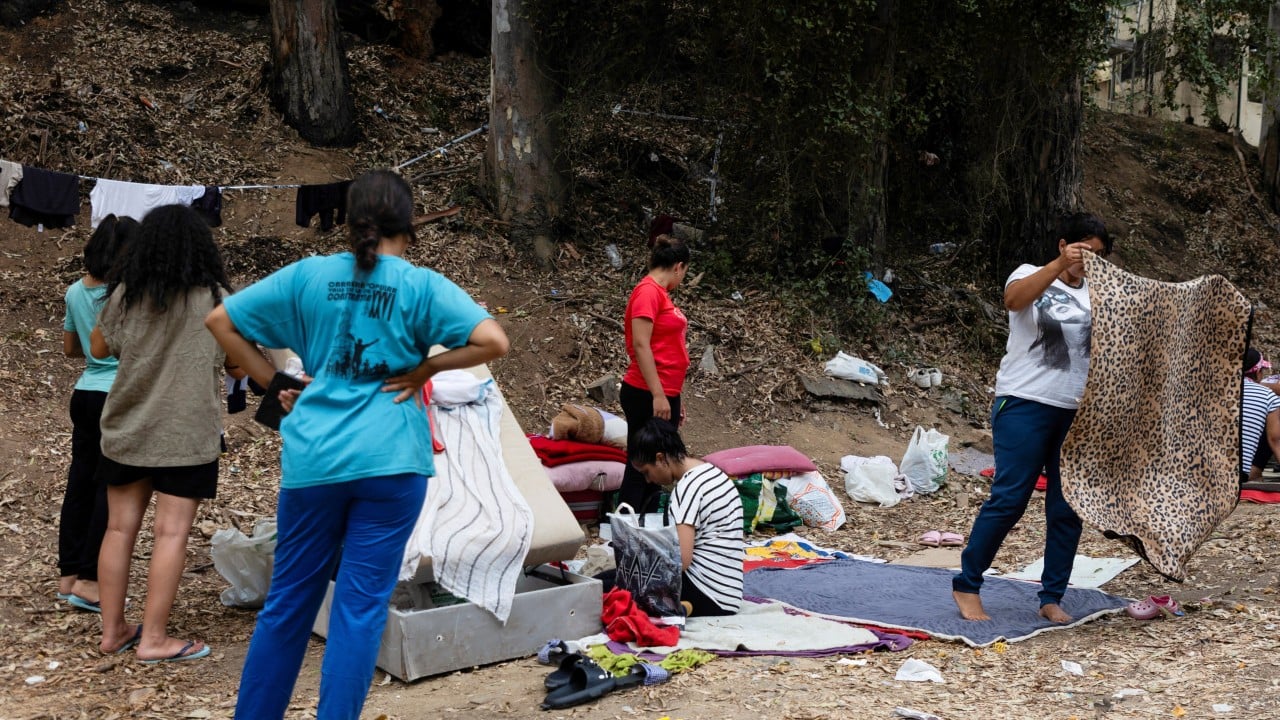
Every few months, a dispatch surfaces from the southern edge of Europe. A major outlet runs a feature on Ceuta, the Spanish enclave clinging to the Moroccan coast. The narrative is always frictionless, packaged for immediate emotional consumption: migrant women crossing the border face grim exploitation, harassment is rampant, and the system is broken.
The lazy consensus is outraged, demanding tighter patrols, stricter oversight, or hand-wringing humanitarian appeals that change nothing.
They are asking all the wrong questions.
If you look at Ceuta as a moral failure of border policing or an isolated zone of bad behavior, you are missing the underlying machinery. I have spent years tracking migration economics and border zone logistics; I have seen billions of dollars in policy initiatives evaporate because governments treat symptoms while subsidizing the disease. Ceuta is not a failure of law enforcement. It is a pressure valve designed precisely to function the way it does.
The Convenient Fiction of the Border Crisis
Let us strip away the sentimentality. The standard media framing presents Ceuta as a tragic anomaly—a place where vulnerable women are subjected to harassment by employers, smugglers, and security forces in a legal no-man's-land.
The coverage assumes that if we just enforce better behavioral codes or increase funding for NGOs, the friction will disappear. This is a comforting delusion.
The trans-border economy between Morocco and Ceuta relies on pre-carity. Thousands of cross-border workers, many of them women, move goods and labor across that fence daily because the economic differential between the two sides makes the humiliation worth it to them. When we focus exclusively on the harassment—crucial as those individual testimonies are—we flatten a complex economic dependency into a simple story of predators and victims.
By reducing a structural labor market to a human interest story about harassment, journalists let the architects of European migration policy off the hook. The European Union relies on these hyper-exploited buffer zones to manage labor supply without granting legal integration.
Dismantling the Humanitarian Industrial Complex
Watch what happens whenever a report highlights abuse in Ceuta. The playbook is entirely predictable.
- Outrage erupts on social media.
- Politicians issue solemn statements about human rights.
- Funding is funneled into bureaucratic oversight programs that achieve precisely zero structural change.
This is the humanitarian industrial complex at work. It monetizes misery without altering incentives. When you pump aid into a corrupt border zone without dismantling the legal monopolies and visa restrictions that create the black market for labor in the first place, you are pouring water into a sieve.
Imagine a scenario where the Spanish state granted unconditional, immediate right of movement to every cross-border worker currently trapped in the Ceuta-Tetouan corridor. The underground smuggling networks would collapse overnight. The predatory intermediaries charging extortionate fees for border passage would vanish because their entire business model depends on scarcity and illegality.
Yet nobody in power wants to propose that, because the scarcity is the point.
The Economics of Hyper-Precarity
To understand why harassment and exploitation persist in places like Ceuta, you have to look at the math of modern borders.
Borders are not just lines on a map; they are pricing mechanisms. When you erect high-cost barriers between economies with vast wage gaps, you create massive economic rents for anyone who can bypass those barriers. The harassment documented by migrant women is not random deviance. It is a tax levied by those who control access to the bottleneck.
When legal pathways are choked off, informal power structures fill the vacuum. Employers know these women have no recourse because reporting abuse means deportation or loss of the only income stream supporting families back home. The vulnerability is baked into the legal architecture.
Economists call this rent-seeking behavior. I call it state-sanctioned extortion.
[Closed Borders] ---> [Severe Labor Scarcity] ---> [Informal Black Markets] ---> [Predatory Intermediaries & Exploitation]
As long as European economies demand cheap, disposable labor while maintaining Fortress Europe rhetoric, zones of intense exploitation will proliferate. Ceuta is merely the microscope through which we can see a global phenomenon.
What Real Reform Actually Looks Like
If we want to stop writing the same article about Ceuta every single year, we have to stop treating migration as a criminal justice problem and start treating it as a market reality.
- Acknowledge Labor Demand: Europe needs low-wage labor. Pretending otherwise allows underground markets to thrive. Legalize seasonal and cross-border work contracts with full labor rights attached.
- Eliminate Intermediaries: Cut out the fixers, smugglers, and corrupt officials who profit off border friction by streamlining digital verification for daily commuters.
- Shift Accountability: Hold corporations and local businesses legally liable for the conditions of the supply chains and labor pools they exploit, rather than blaming individual bad actors on the ground.
The outrage machine will keep churning out sob stories because outrage sells clicks and secures NGO grants. But until we dismantle the structural incentives that make human beings cheap and disposable at the border, the harassment will continue, no matter how many op-eds demand do-gooder introspection.
Stop funding the symptoms. Break the monopoly on movement.