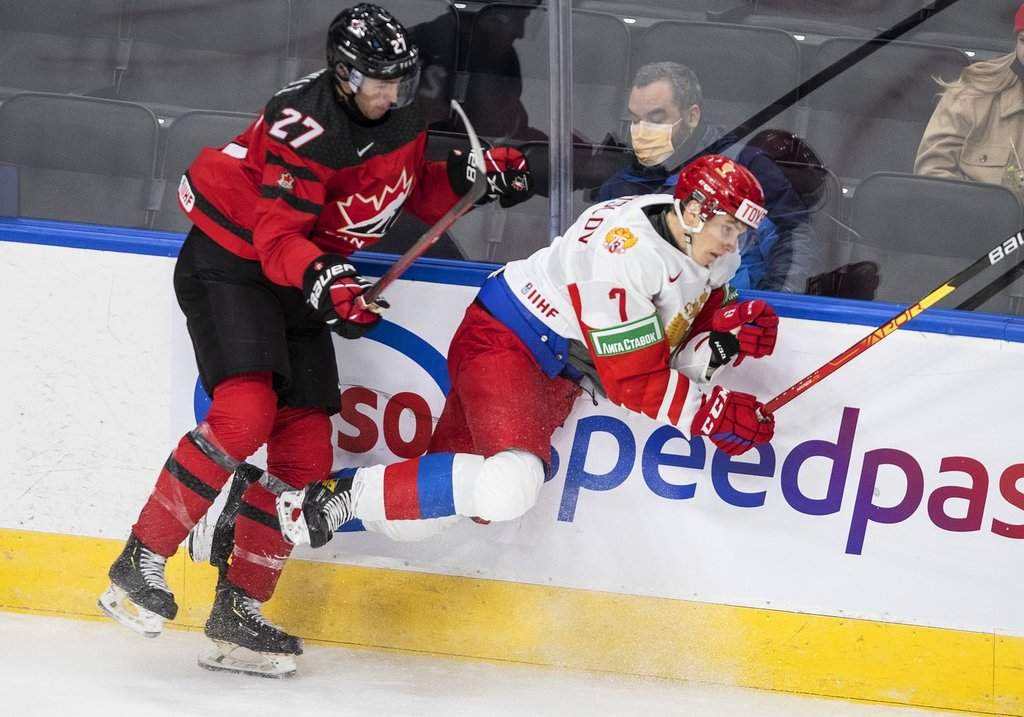
Canadian Prime Minister Mark Carney has officially confirmed that the Russian national junior hockey team will not be permitted to compete in the 2027 IIHF World Junior Championship in Alberta. By drawing a hard diplomatic line ahead of the tournament scheduled for Edmonton and Red Deer, Ottawa has effectively preempted any potential reinstatement effort by the International Ice Hockey Federation, utilizing federal border, visa, and funding authorities to ensure that Russian athletes remain barred from Canadian ice so long as the invasion of Ukraine continues.
The announcement cuts through months of quiet speculation inside international hockey circles. Since the IIHF initially suspended Russia and Belarus in February 2022, the governing body has routinely kicked the can down the road, extending the ban on an annual basis while citing security concerns rather than pure political alignment. With the 2027 tournament returning to the heartland of Canadian hockey, the pressure on Zurich to make a definitive call had reached a boiling point. Carney did not wait for the federation to deliberate. He took the decision out of the hands of sports administrators and placed it squarely within the domain of Canadian foreign policy.
The Mechanics of a Sovereign Veto
Most casual fans assume that international sports federations hold absolute authority over who plays in their tournaments. They do not. While the IIHF controls the rulebook, the seeding, and the broadcast rights, it does not control sovereign borders.
To stage an event of this magnitude in Edmonton and Red Deer, the IIHF relies entirely on the cooperation of the host nation. Every foreign player, coach, trainer, and federation official requires entry clearance from Immigration, Refugees and Citizenship Canada. Furthermore, Hockey Canada depends heavily on federal grants, municipal security apparatuses, and tax exemptions to make the math work on a major international tournament.
When a sitting Prime Minister states unequivocally that a nation will not be allowed to participate, the mechanism is simple. Visas are denied. Security guarantees are withheld. Public funding is tied directly to compliance with federal sanctions. Even if the IIHF Council woke up tomorrow and voted unanimously to lift the suspension on the Russian Ice Hockey Federation, those players would never make it past customs at Edmonton International Airport.
This is the reality that sports governing bodies rarely admit publicly. Autonomy in international sport exists only at the pleasure of the host government. Ottawa understands this, and Carney used that structural reality to end the debate before ticket packages even went on sale.
Why Alberta Changes the Political Calculus
Hosting the World Juniors in Canada is never just another entry on the sporting calendar. In Alberta, specifically, the tournament is an economic engine and a cultural touchstone. Edmonton and Red Deer have hosted the event before, including the pandemic-era bubble in 2021 and the summer edition in 2022, proving that the region can deliver massive gate receipts and wall-to-wall television ratings regardless of the circumstances.
However, the political optics of bringing Russia back into that specific environment would have been toxic.
Canada is home to the largest Ukrainian diaspora in the Western world, with a massive concentration residing across the Prairie provinces. Edmonton itself has deep historical, cultural, and familial ties to Ukraine. Placing a Russian national team in Rogers Place—wearing state-sponsored emblems and representing a government actively waging war—would have triggered immediate, sustained civil unrest outside the arenas.
Local law enforcement and federal security agencies would have faced a logistical nightmare. Protecting a visiting delegation in a province where hundreds of thousands of residents have direct personal connections to the conflict zone requires intelligence resources and physical security perimeters that quickly erode the profitability of the event. For Hockey Canada, an organization still slowly rebuilding its corporate sponsorships and public trust after years of governance scandals, absorbing the fallout of a Russian return was entirely untenable.
Carney’s declaration spares Hockey Canada from having to take a public stand that might alienate international partners, while simultaneously protecting the federal government from domestic backlash. It is a calculated political maneuver that aligns domestic sentiment with foreign policy objectives.
The IIHF Dilemma and the Myth of Neutrality
Inside the IIHF headquarters in Zurich, reactions to Ottawa’s firmness are inevitably mixed, even if public statements remain diplomatic. For years, IIHF President Luc Tardif has walked a tightrope. The federation’s official stance has always leaned heavily on the concept of safety and security—arguing that the inclusion of Russia and Belarus creates unacceptable risks for players, fans, and tournament organizers.
That framing was deliberate. By categorizing the ban as a safety issue rather than a moral or political sanction, the IIHF sought to insulate itself from legal challenges at the Court of Arbitration for Sport and preserve a pathway for Russia’s eventual return once the geopolitical climate cooled.
Carney’s intervention shatters that careful ambiguity.
If the host government explicitly bars a country on geopolitical grounds, the IIHF can no longer pretend the exclusion is merely a temporary logistical precaution. It forces the federation to confront the widening rift between its North American and Nordic power bases—which remain fiercely opposed to Russian participation—and other international factions that are eager to restore the traditional financial and competitive order of global hockey.
There is also the matter of the Olympic precedent. While the International Olympic Committee explored pathways for individual athletes to compete under neutral flags in recent cycles, team sports present a fundamentally different problem. You cannot strip the national identity out of a 25-man hockey roster competing in a tournament built entirely on nationalistic fervor. The World Juniors sells passion, flags, and anthems. A team of "neutral" Russian teenagers playing in Edmonton without a flag would fool no one, and Ottawa has made it clear that rebranding the jersey will not bypass the border.
The Financial and Competitive Reality
A persistent counter-argument among hockey traditionalists is that the World Juniors suffers competitively without Russia. On paper, that is true. A tournament featuring Canada, the United States, Sweden, Finland, and Russia represents the true pinnacle of under-20 hockey. Russia has historically produced some of the tournament’s most electric talent and its fiercest rivalries, particularly against Canada.
Yet the financial data from recent tournaments tells a different story.
The absence of Russia has not cratered television ratings in North America, nor has it depressed ticket sales in major markets. The emergence of nations like Czechia and Slovakia as legitimate medal contenders has injected fresh unpredictability into the knockout rounds. The rivalry between Canada and the United States has easily filled the emotional vacuum left by the old Cold War matchups, delivering record-breaking viewership numbers and genuine animosity on the ice.
From a purely commercial standpoint, the IIHF and Hockey Canada do not need Russia to sell out buildings in Alberta. Corporate sponsors, particularly blue-chip Canadian brands that underwrite the majority of the tournament's operational costs, have zero appetite for the reputational risk associated with Russian state-affiliated sports programs. Keeping Russia out is not a financial sacrifice for the hosts; it is a form of risk management.
What This Means for Russian Hockey Development
While the geopolitical arguments dominate the headlines, the long-term athletic consequences for Russia are becoming impossible to ignore. By the time the 2027 World Juniors conclude in January of that year, an entire generation of elite Russian hockey prospects will have passed through their junior eligibility without ever playing a single game of best-on-best international competition.
Development at the highest level requires exposure to different tactical systems, officiating standards, and high-pressure elimination environments. Playing domestic junior hockey in the MHL or logging limited minutes in the KHL does not replicate the crucible of a World Junior quarterfinal in front of 18,000 hostile fans.
NHL scouts are already adjusting to this blind spot. Evaluating top-tier Russian talent—players projected to go in the first round of the NHL Draft—has become significantly harder without international tournament tape to benchmark them against their Canadian, American, and Scandinavian peers. While elite individuals will still find their way to North America, the systemic isolation is eroding the traditional developmental pipeline that once made the Russian national program a perennial powerhouse.
The Precedent for Global Sporting Events
Carney’s stance establishes a clear template for how Western democracies may handle international sporting events moving forward. For decades, global sports governance operated under the convenient fiction that sport and politics occupy separate universes. Host nations routinely swallowed their objections to authoritarian regimes, human rights abuses, and military aggression in order to appease international federations and secure future hosting bids.
That era is closing.
As geopolitical fragmentation deepens, host governments are increasingly willing to use their sovereign authority as a lever of statecraft, regardless of what the charters of the IOC or the IIHF dictate. When Canada hosts major international events—whether it is the World Juniors in Alberta or larger global spectacles—access to Canadian soil is no longer guaranteed simply because an athlete holds a federation credential.
The message from Ottawa is unambiguous. International sports federations may own the trophies, but sovereign nations still own the doors to the arena, and Canada has just bolted this one shut.