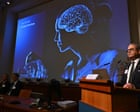
The brain has always been an electrochemical fortress, guarding its operational secrets behind billions of interconnected neurons firing in chaotic, beautiful synchrony. For generations, neuroscientists relied on blunt instruments. They used crude electrical probes that zapped entire tissue regions like a sledgehammer hitting a stained-glass window, or chemical agents that flooded synapses with broad-spectrum modifications. We could watch the organ work from a distance, but we could not steer it. That changed when optogenetics turned light into a scalpel, a transformation officially recognized by the Karolinska Institutet in awarding the Nobel Prize in Physiology or Medicine to Karl Deisseroth, Peter Hegemann, and Georg Nagel for their discoveries concerning light-gated ion channels.
The journey to controlling mammalian brain cells with flashes of blue light did not begin in a high-tech neurobiology laboratory. It started in the murky waters of pond microbiology. Peter Hegemann and Georg Nagel were investigating how single-celled green algae, specifically Chlamydomonas, navigated toward sunlight. These organisms possessed an eyespot that allowed them to sense light direction and intensity using specialized proteins embedded in their cell membranes.
Hegemann and Nagel isolated the genes encoding these proteins, known as channelrhodopsins. These are microbial ion channels that open directly when struck by light of a specific wavelength, allowing ions to flood across the membrane and alter the electrical charge of the cell. It was an elegant evolutionary trick found in primitive aquatic plants.
Then came the conceptual leap that split the history of neuroscience into two eras.
Karl Deisseroth, a psychiatrist and bioengineer at Stanford University, asked a radical question. What would happen if you took the gene for channelrhodopsin out of an alga and inserted it into a mammalian neuron?
To understand why this was audacious, consider how neurons operate. They maintain a negative electrical resting potential. When stimulated by neurotransmitters or electrical currents, positive ions rush inward, shifting the voltage past a critical threshold and firing an action potential—an electrical spike that travels down the axon. If channelrhodopsin could be genetically targeted to specific neurons, and if flashing a laser could force those microbial gates to open, researchers could theoretically fire a single neuron on command while leaving its neighbors completely undisturbed.
In 2005, Deisseroth published the proof. By introducing the channelrhodopsin gene into rat neurons grown in a dish, he demonstrated that a pulse of blue light could trigger precise, millisecond-accurate action potentials. Two years later, the technique crossed the threshold into living tissue, working within the complex, behaving brains of mice. For the first time in history, scientists held a remote control for neural circuits.
The immediate fallout across research institutions was seismic. Traditional electrophysiology, which involved painstakingly patching microscopic glass pipettes onto individual cells to record electrical activity, was supplemented by a method that could selectively activate or silence distinct neural populations in real time.
Consider a hypothetical experiment mapping anxiety circuits in a mouse model. In the past, stimulating the amygdala via electrical implants affected every fiber passing through the target zone—axons of passage, local interneurons, and projection neurons alike. It was messy data, akin to trying to understand a symphony by recording the entire orchestra with a single microphone placed in the middle of the street.
With optogenetics, researchers could engineer only the specific neurons expressing a particular marker protein to respond to light. They could switch a specific anxiety-associated pathway on or off with a fiber-optic cable thinner than a human hair, observing the exact behavioral shifts that followed. Movement disorders, addiction pathways, depression circuits, and memory retrieval mechanisms suddenly yielded to precise experimental interrogation.
Yet, as is true of any transformative scientific leap, the reality on the ground in clinical translation remains complex and halting.
While optogenetics revolutionized basic research, moving the technology into human medicine has faced immense hurdles. The primary barrier is genetic modification. To make human brain cells sensitive to light, viral vectors must be deployed to deliver microbial genes into human tissue. Regulatory agencies exercise extreme caution—and rightfully so—when reviewing therapies that permanently alter the DNA sequence of human neurons.
Furthermore, delivering light deep into the human brain requires hardware. While threading a microscopic optical fiber into the cerebral cortex of a rodent is standard laboratory procedure, implanting permanent lasers and hardware into human patients introduces risks of scar tissue, infection, and hardware failure.
Despite these obstacles, clinical trials are pressing forward where other options have failed. Researchers are currently advancing optogenetic strategies to restore vision in patients suffering from degenerative retinal diseases like retinitis pigmentosa. In these conditions, the light-sensing rod and cone cells of the retina have died, but the underlying retinal ganglion cells remain intact. By using gene therapy to deliver light-sensitive channel proteins directly to these surviving inner cells, scientists hope to bypass the damaged photoreceptors entirely, allowing ambient light entering the eye to trigger visual signals bound for the brain.
Looking at the broader landscape of biomedical innovation, the recognition of optogenetics underscores a recurring truth. The tools that fundamentally change our understanding of human biology frequently emerge from obscure, curiosity-driven inquiries into entirely different organisms. Hegemann and Nagel were not trying to cure Parkinson’s disease or map psychiatric disorders; they were simply trying to figure out how pond algae swim toward the sun.
The Nobel committee’s decision to honor this work highlights the debt translational medicine owes to fundamental, unconstrained science. We spend billions chasing direct applications for specific ailments, yet the breakthroughs that truly shift the paradigm often come from left field.
The brain remains the most complex object in the known universe, a tangled web of eighty-six billion neurons and trillions of synapses that generate consciousness, memory, and emotion. We are still in the infancy of reading and writing that code. But the days of relying on blunt force are over. Light has entered the dark room of the mind, and the architecture of thought is finally coming into focus.
This video provides an in-depth look at the breakthroughs in physiological research and the scientific context surrounding the prize.