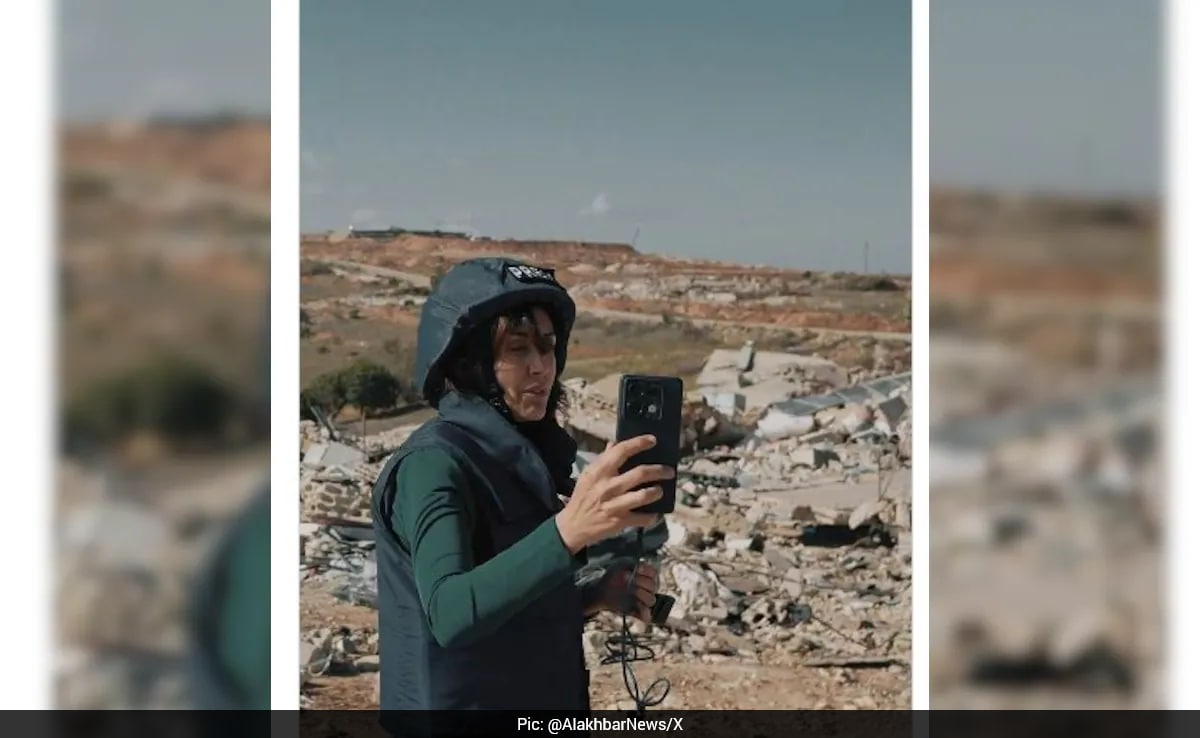
The death of Lebanese journalist Amal Khalil in a targeted strike represents a systemic failure in the deconfliction protocols designed to protect non-combatants in active theaters of war. While conventional reporting treats such events as isolated tragedies, a structural analysis reveals they are the logical output of a collapsing framework of international humanitarian law (IHL). When the distinction between combatant and observer is blurred—either by technological error, intentional policy, or the proximity of military assets to civilian infrastructure—the cost of information procurement in conflict zones reaches a point of total attrition.
The Triad of Kinetic Risk in Modern Warfare
To understand the mechanics behind the death of media personnel in the current Levant conflict, one must analyze the three distinct variables that govern their survivability. These variables interact to create a "kill chain" that often fails to distinguish between a camera and a weapon system.
- Sensor-to-Shooter Compression: The time between identifying a target and executing a strike has been reduced to seconds. In high-intensity urban or border warfare, autonomous and semi-autonomous surveillance systems prioritize movement and thermal signatures. A journalist operating within a 500-meter radius of a launch site or a command node enters the targeting logic of the opposition's AI-driven battery.
- The Information-Combatant Hybridization: Modern warfare is increasingly fought in the cognitive domain. When journalists are perceived not as neutral observers but as logistical components of an information operation, their status shifts from protected persons under the Geneva Conventions to "dual-use" assets. This shift is not necessarily legal, but it is an operational reality in the decision-making processes of military commanders.
- Proximity Hazard and Collateral Probability: The technical precision of modern munitions is often offset by the blast radius or the failure rates of interceptors. If a journalist is embedded within a civilian structure that houses a hidden military asset, the "proportionality" calculation used by targeting officers often deems the civilian loss acceptable relative to the military advantage gained.
Structural Failures in Deconfliction Mechanisms
The primary mechanism for preventing the death of journalists like Amal Khalil is the deconfliction line—a communication channel where non-combatant movements are broadcast to all warring parties. The failure of this system suggests a breakdown in one of four critical layers:
- Intelligence Latency: The inability of the striking force to update their target list with real-time GPS coordinates of known journalists.
- Identification Disconnect: The failure of visual identifiers (the "PRESS" vest or "TV" vehicle markings) to register on high-altitude drone sensors or thermal optics, which may prioritize the shape and movement profile of the individual over textual signage.
- Strategic Intent: A policy of "deterrence through attrition," where the risks of operating in a specific geographic zone are made so high that media coverage becomes functionally impossible, creating a vacuum of visual evidence.
- Signal Noise: In a dense electronic warfare environment, the GPS signals or satellite uplinks used by journalists can be jammed or spoofed, leading to "blue-on-brown" incidents where non-combatants are misidentified as enemy signals intelligence (SIGINT) sources.
The Economic and Logistical Cost of Field Reporting
The death of a veteran correspondent like Khalil does not just remove a single voice; it disrupts the entire supply chain of localized intelligence. We must categorize the impact through the lens of institutional risk management.
The Insurance Barrier
The premium for Kidnap and Ransom (K&R) and high-risk life insurance for journalists in Southern Lebanon has reached a threshold where only state-funded or massive multi-national conglomerates can afford to deploy personnel. This creates an "information oligarchy" where only specific narratives—those funded by large institutions—survive the financial barrier. Independent or local journalists, who lack these safety nets, operate at a 100% risk-to-reward ratio.
The Logistics of Evasion
Journalists must now adopt a "stealth-lite" posture. This includes frequent movement, the avoidance of established hotels or known media hubs (which become targets), and the use of low-signature communication devices. However, the paradox of modern surveillance is that low-signature behavior (silencing phones, moving at night, using encrypted bursts) mirrors the behavior of insurgent cells, further increasing the probability of a kinetic strike.
The Legal Threshold of Proportionality
Under Article 79 of Protocol I of the Geneva Conventions, journalists in war zones are titled to the same protections as civilians. The "Proportionality Test" requires that the incidental loss of civilian life must not be excessive in relation to the concrete and direct military advantage anticipated.
The death of Amal Khalil serves as a case study in the subjective application of this test. If the strike was intended for a high-value military target (HVT), the military actor will argue that the "value" of the HVT outweighed the life of the journalist. The lack of an independent, international auditing body to review these "proportionality logs" in real-time means that military forces operate with near-total impunity, governed only by internal legal reviews that are shielded from public or judicial scrutiny.
The Erosion of the Neutral Observer Status
We are witnessing the transition from "War Reporting" to "Information Combat." This transition is driven by three primary forces:
- Platform Polarization: In the current media ecosystem, a journalist’s output is instantly categorized as either "pro" or "anti" by algorithmic feeds. This erases the concept of the neutral observer in the eyes of the combatants.
- OSINT and Geolocation: The rise of Open Source Intelligence means that a journalist’s photo of a smoke plume can be used by the opposing side to triangulate artillery positions within minutes. By merely performing their job, journalists become unintentional spotters for the enemy.
- Targeting of Narrative Nodes: If a journalist is particularly effective at documenting civilian harm, they become a high-value target in the "war of perception." Eliminating the source of the imagery is a more efficient way to control the narrative than attempting to counter the imagery with propaganda.
The Technical Reality of Target Identification
In the Levant theater, the use of loitering munitions (kamikaze drones) has changed the survival calculus. These systems often utilize object-recognition software. While a human pilot might see a camera and hesitate, an algorithm programmed to recognize "groups of four or more adult males in a restricted zone" will execute a strike based on a mathematical probability of hostility.
If the algorithm's training data does not heavily weigh the visual signatures of press equipment—especially when that equipment is being used in proximity to tactical vehicles or fortified positions—the result is an automated execution. This is not a "mistake" in the traditional sense; it is a feature of a system optimized for speed over nuance.
Strategic Realignment for Field Operations
The current trajectory suggests that the traditional model of the "visible journalist" is obsolete. To maintain an information flow from high-risk zones, organizations must pivot toward a decentralized, low-footprint model.
- Remote Sensing and Automation: Increasing reliance on stationary, high-resolution remote cameras and drone-mounted optics operated from outside the kinetic zone.
- The "Shadow" Network: Moving away from "PRESS" branded vehicles which, in the current conflict, have served more as a target designator than a shield.
- Hardened Communication: Deploying burst-transmission hardware that minimizes the time a journalist's location is visible on the electromagnetic spectrum.
The death of Amal Khalil is a data point in a broader trend: the deliberate or systemic narrowing of the "safe zone" for independent observation. When the cost of truth is high-precision death, the resulting silence is not an accident of war, but a calculated objective of modern military strategy. Organizations must now treat "journalist safety" not as a set of rules to be followed by the combatants, but as a technical problem of signature management and electronic deception. Failure to adapt to this clinical reality will result in the total extinction of on-the-ground reporting in contested territories.


