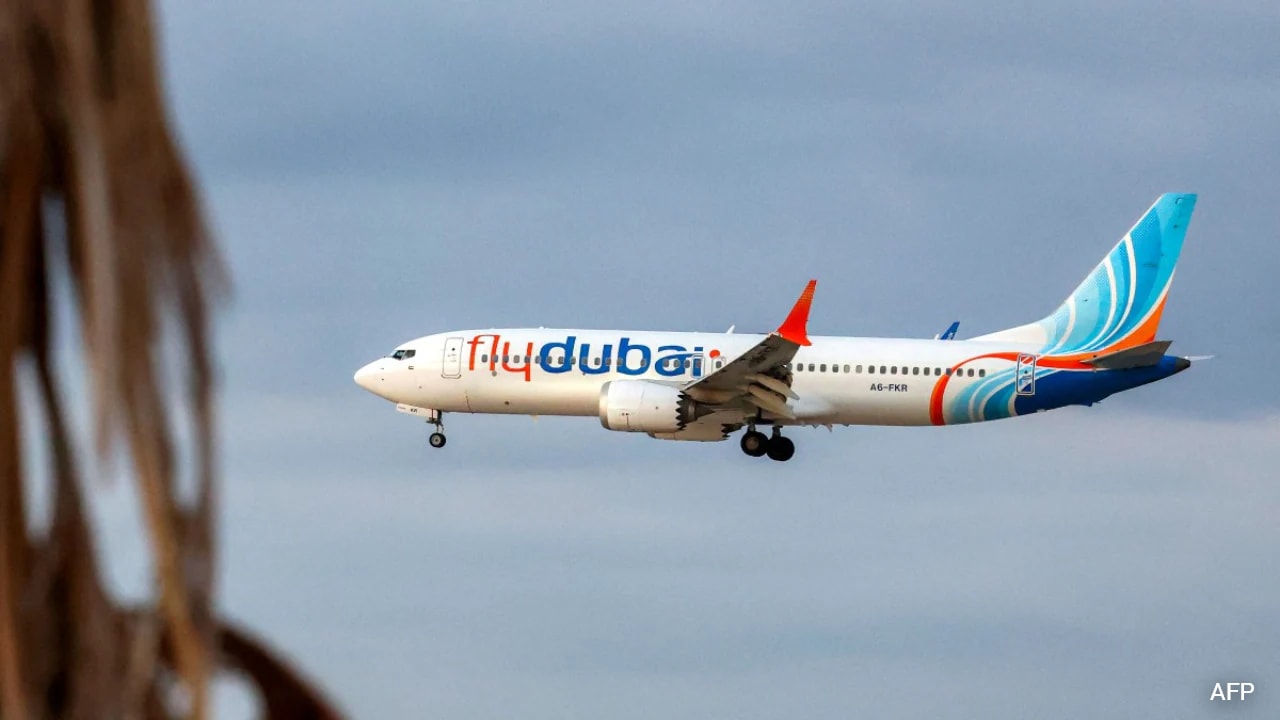
When Tribhuvan International Airport in Kathmandu experiences severe convective weather, its status as a single-runway, high-altitude tabletop airfield creates immediate systemic bottlenecks across regional air corridors. A clear manifestation of this operational vulnerability occurred when a flydubai service operating from Dubai carrying 161 passengers faced an intense hailstorm over the Kathmandu basin. The localized weather event compromised runway availability, forcing the flight crew to execute a diversion to Chaudhary Charan Singh International Airport in Lucknow. Deconstructing this event reveals the precise operational thresholds, decision matrices, and infrastructure dependencies that govern modern cross-border commercial aviation under meteorological stress.
The Aerodrome Profile and Weather Mechanics
Tribhuvan International Airport presents a complex topographical challenge. Surrounded by mountainous terrain, the facility relies on a single runway orientation, concentrating all arrival and departure vectors into a narrow corridor. When convective activity generates heavy hail, the accumulation of ice pellets on the asphalt creates conditions functionally equivalent to an active ice sheet. Braking action coefficients plummet below acceptable safety thresholds, rendering standard landing roll calculations invalid.
Simultaneously, airborne hail poses a severe dual threat to approaching airframes. Large ice stones inflict structural damage on composite nose cones housing weather radar arrays and fracture multi-layered cockpit windshields. Faced with these terminal constraints, flight dispatchers and pilot-in-command officers must transition from destination-oriented execution to alternate contingency routing.
The Diversion Decision Matrix
The choice of Lucknow as an alternate aerodrome is governed by strict regulatory fuel planning and geographical proximity. Under standard flight planning protocols, aircraft must carry sufficient contingency fuel to reach a designated alternate airport after accounting for missed approaches, holding patterns, and en-route meteorological deviations.
Lucknow provides the requisite runway length, instrument landing system (ILS) precision approach capabilities, and customs infrastructure necessary to process an international flight on short notice. When the flydubai Boeing 737 MAX 8 encountered the Kathmandu runway closure, the flight crew evaluated alternate options based on three core operational variables:
- Fuel Burn and Reserve Margins: Remaining trip fuel dictates the radius of viable alternates. Lucknow sits within optimal range for flights forced to abort approaches into northern Himalayan airfields.
- Ground Handling Interoperability: Handling agents at the alternate station must possess the clearance and physical capacity to service a foreign narrowbody carrier, managing passenger containment during extended ground delays.
- Air Traffic Flow Management (ATFM): Cross-border clearances between civil aviation authorities require rapid diplomatic and operational coordination to integrate unscheduled international arrivals into domestic traffic streams without causing systemic gridlock.
Ground Operations and Onward Integration
Upon touching down safely in Lucknow at approximately 2:50 PM local time, the aircraft entered a tightly managed turnaround phase. Unlike emergency diversions involving technical system failures, a weather diversion requires zero mechanical intervention but demands meticulous regulatory coordination.
The ground stay of less than two hours was dictated by air traffic control clearance windows and meteorological updates from Kathmandu. During this period, airport authorities executed ground formalities to maintain passenger security per international civil aviation standards while coordinating slots for the subsequent departure. Once Kathmandu ground control confirmed that maintenance crews had cleared the runway surface of hail obstruction, the flight received its departure clearance, lifting off for its final destination at 4:36 PM.
Systemic Resilience and Future Vulnerabilities
Incidents of this nature underscore the fragile equilibrium of regional aviation networks where hub airports lack parallel runways. A single convective cell can paralyze inbound traffic flow, creating cascading delays that propagate across international schedules.
Airlines mitigate these risks through advanced meteorological monitoring systems embedded in modern flight decks, allowing crews to anticipate convective hazards before committing to final descent profiles. However, as localized weather patterns grow increasingly volatile across South Asian mountain corridors, the reliance on secondary regional nodes like Lucknow will remain a fundamental pillar of cross-border flight safety architecture.