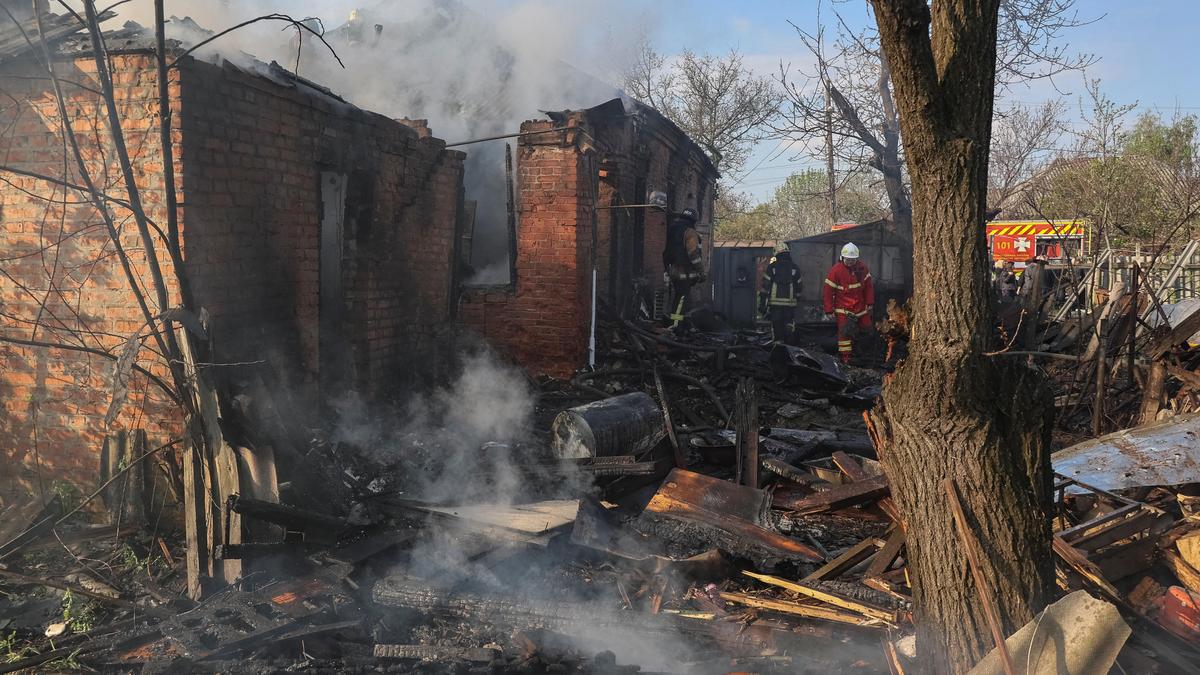
The declaration of a state of emergency following a large-scale warehouse fire is not a bureaucratic formality; it is a critical resource-allocation mechanism necessitated by the failure of localized suppression systems. When an industrial facility transitions from a controlled environment to an active fire vector, the primary objective shifts from asset preservation to the mitigation of systemic externalities. These externalities include toxic plume dispersion, groundwater contamination from chemical runoff, and the total paralysis of regional logistics corridors. Understanding the mechanics of these events requires a move away from sensationalist reporting toward an analysis of the structural vulnerabilities in modern supply chain nodes.
The Failure Mechanics of Industrial Fire Suppression
A warehouse fire of sufficient magnitude to trigger state-level intervention indicates a breach in three specific layers of defense. The failure is rarely the result of a single ignition source; it is a cascading breakdown of the integrated safety stack.
Hydraulic Exhaustion
Modern high-pile storage facilities rely on Early Suppression Fast Response (ESFR) sprinkler systems. These systems are engineered to discharge a specific volume of water per minute based on the anticipated fuel load. When a fire surpasses the design density of the system—often due to unauthorized storage of flammable polymers or lithium-ion batteries—the hydraulic demand exceeds the local water main’s capacity. Once the system loses pressure, the fire achieves a thermal state where water evaporation occurs before the liquid can penetrate the fire’s seat.
Structural Integrity Decoupling
The use of lightweight steel trusses in contemporary warehouse construction creates a narrow window for intervention. At approximately 593°C, steel loses nearly 50% of its structural strength. In large-format warehouses, the heat flux generated by high-density storage can reach these temperatures within minutes. The resulting roof collapse transforms a contained internal fire into an oxygen-rich open-air combustion event, rendering interior offensive operations impossible for fire crews.
Containment Failure
Secondary containment systems, such as drainage pits and interceptors, are frequently sized for standard operational spills rather than the millions of gallons of contaminated water generated during multi-day fire suppression efforts. The breach of these systems forces the state of emergency, as the risk shifts from the building to the regional watershed.
The Strategic Logic of a State of Emergency
The declaration of a state of emergency by a governor or regional authority functions as a legal trigger to bypass standard procurement and jurisdictional limitations. It addresses the "Coordination Gap" that occurs when an incident outstrips the capabilities of municipal responders.
- Resource Reallocation (The Mutual Aid Mandate): Local municipalities operate on finite budgets and equipment inventories. A state of emergency allows for the mandatory deployment of specialized units—such as high-expansion foam task forces or hazardous materials (HAZMAT) teams—from distant jurisdictions without the delay of inter-municipal billing disputes.
- Regulatory Suspension: Under emergency protocols, strict environmental and transport regulations are temporarily eased to allow for the rapid removal of debris and the rerouting of heavy commercial traffic. This is essential for maintaining the flow of goods through adjacent logistics hubs that would otherwise be choked by the incident perimeter.
- Access to Federal Backstopping: By declaring an emergency at the state level, the path is cleared for Federal Emergency Management Agency (FEMA) involvement and technical assistance from the Environmental Protection Agency (EPA). This transition shifts the financial burden of the response from the local taxpayer to a broader pool of disaster relief funding.
Quantifying the Socio-Economic Fallout
The impact of a major warehouse fire is measured in three distinct phases of disruption. Most analysts focus on the immediate property loss, but the long-term economic friction is where the true cost resides.
Phase I: The Immediate Suppression Cost
This includes the hourly burn rate of personnel, equipment, and consumables (such as Class B firefighting foam). For a multi-day fire requiring state-level intervention, these costs can escalate into the millions of dollars before the first investigator enters the site.
Phase II: Supply Chain Node Paralysis
Warehouses in regions like New Jersey serve as critical "last-mile" or regional distribution hubs. The destruction of one facility does not just result in lost inventory; it creates a "Bullwhip Effect" across the network.
- Inventory Displacement: Surviving shipments must be diverted to secondary facilities that may already be operating at 90% capacity.
- Increased Lead Times: Diverted logistics routes add hours or days to delivery windows, impacting downstream retail and manufacturing sectors.
- Insurance Premium Spikes: Regional risk profiles are reassessed, leading to increased "hard market" conditions for all nearby industrial operators.
Phase III: The Remediation Tail
The environmental impact of an industrial fire persists long after the smoke clears. The combustion of plastics, treated wood, and electronics releases a cocktail of particulate matter and volatile organic compounds (VOCs). The state must manage the long-term monitoring of soil and air quality, often resulting in litigation that stalls the redevelopment of the site for years.
Risk Mitigation Frameworks for Industrial Operators
To prevent the necessity of state-level intervention, industrial stakeholders must move beyond minimum code compliance toward a model of "Operational Resilience."
Fire Load Auditing
Facilities must move from static annual inspections to dynamic fuel load monitoring. The proliferation of e-commerce has led to warehouses holding higher concentrations of combustible packaging and high-energy-density products than their original fire protection systems were designed to handle.
Integrated Sensor Networks
Relying on smoke detectors is a reactive strategy. Advanced facilities are deploying thermal imaging and air-sampling systems that detect "pre-combustion" signatures—localized heat increases or off-gassing that occurs before a flame is visible.
Redundant Water Supplies
For high-risk facilities, reliance on municipal water mains is a single point of failure. The installation of on-site water storage tanks and diesel-powered fire pumps ensures that suppression systems remain operational even during a regional infrastructure collapse or power outage.
The Strategic Play for Regional Logistics Safety
The frequency of large-scale industrial fires suggests that current zoning and building codes are lagging behind the scale of modern logistics operations. For state and local governments, the priority must shift from reactive emergency declarations to proactive structural requirements.
The final strategic move for any jurisdiction facing these risks is the implementation of mandatory "Response-Ready" infrastructure for any facility over 500,000 square feet. This includes mandated on-site HAZMAT containment, reinforced fire walls that exceed standard three-hour ratings, and automated reporting systems that provide real-time inventory manifests to first responders. Without these structural shifts, the state of emergency will remain the default—and costly—tool for managing the inevitable failures of an over-leveraged industrial landscape.