Silence.
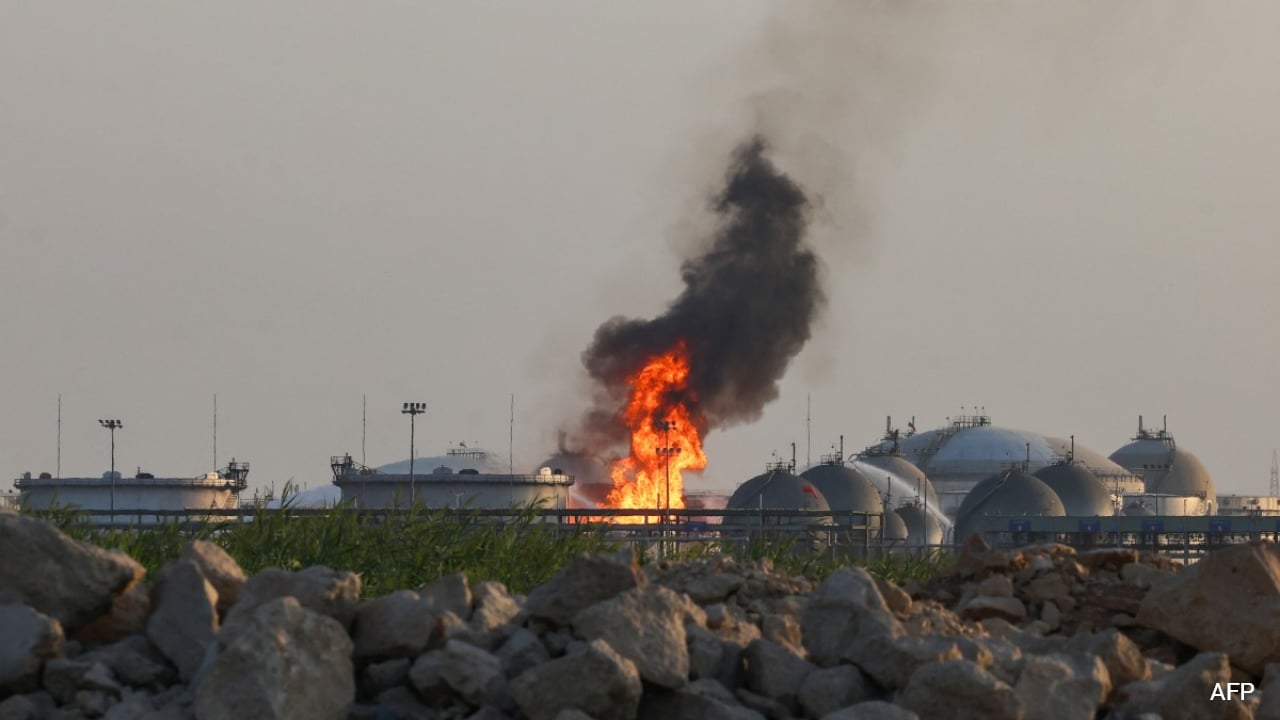
In an operating theater during a complex procedure, silence is never actually quiet, because it is composed of the rhythmic, reassuring hiss of a mechanical ventilator, the steady electronic pulse of a cardiac monitor, and the low, clipped murmurs of a surgical team working under intense white light. Every sound in that room is a thread holding a human life above an abyss. When a surgical wing is struck by a precision-guided munition, that fragile acoustic architecture does not merely break; it vanishes into a wall of concussive pressure, pulverizing concrete into a choking grey fog that coats wet lungs and open wounds alike.
Six people died in that room and the corridors immediately surrounding it. Twenty-eight others were torn apart by shrapnel, falling masonry, and secondary blasts. Among the dead was a doctor—not an abstraction, not a statistic tucked into a military briefing, and not a uniform, but a human being whose hands had spent decades learning the intricate geography of the human body so that others might survive the unthinkable.
To understand what actually happened when an Israeli airstrike hit a Gaza hospital surgical wing, you have to look past the sterile language of wire-service dispatches. You have to look at the invisible math of modern warfare, where the destruction of a single operating room does not end with the six bodies pulled from the rubble, but ripples outward through thousands of untreated fractures, septic infections, and mothers giving birth without anesthesia in dark hallways.
The Anatomy of a Sanctioned Sanctuary
For more than a century and a half, humanity has tried to draw a single, uncrossable chalk line around the places where we mend the broken. The First Geneva Convention of 1864 was born out of the horror of Solferino, where tens of thousands of wounded soldiers were left to die in the mud because no one could safely tend to them. The rule that emerged was simple enough for a child to grasp: when someone is hurt, the people healing them are off-limits.
Hospitals carry a special protected status under international humanitarian law. That protection is not a polite suggestion or a diplomatic courtesy; it is the bedrock distinction between warfare and sheer annihilation. Under the Fourth Geneva Convention, civilian hospitals may under no circumstances be the object of attack. Even in the rare, strictly defined legal exception where a medical facility is allegedly used to commit acts harmful to the enemy, the law demands explicit warning, a reasonable time limit to cease those activities, and a strict adherence to proportionality. You do not burn down a crowded ward to kill a phantom in the basement.
Yet look at what happens when that chalk line is smeared into dust.
Consider a hypothetical surgeon—let us call him Dr. Tariq, though he stands in for the real physician killed in this strike and the hundreds of Palestinian healthcare workers lost since the conflict erupted. Imagine Dr. Tariq thirty minutes before the impact. He has been awake for thirty-six hours. His scrubs are stiff with dried sweat and antiseptic. The hospital generator is sputtering because diesel is rationed down to the liter, and the air smells faintly of burnt wiring and bleach.
In front of him lies a nineteen-year-old boy whose femur was shattered by collapsing concrete three days earlier. Without this surgery, osteomyelitis—a bone infection that rots tissue from the inside out—will take his leg, and then his life. Dr. Tariq is not thinking about geopolitics, intelligence assessments, or press releases. He is thinking about the femoral artery, a vessel the width of a drinking straw that will empty a human body of blood in ninety seconds if nicked.
Now consider what happens next.
A projectile engineered in a pristine laboratory thousands of miles away pierces the roof of the surgical wing. In a fraction of a second, the kinetic energy of several hundred pounds of high explosive converts sterile steel instruments into lethal projectiles. The ventilator hoses snap. The overhead surgical lamps crash downward. The nineteen-year-old boy on the table, already sedated and defenseless, absorbs a second trauma before he has even recovered from the first. And Dr. Tariq, leaning over the sterile field, becomes one of the six fatalities recorded in the morning tally.
The Invisible Multiplier of Medical Collapse
When a standard news report states that six people were killed and twenty-eight were injured in a hospital strike, the human brain naturally tries to contain the tragedy within those two numbers. Six. Twenty-eight. Thirty-four lives altered or extinguished in a single flash.
That framing is a lie of omission.
In a functioning city, losing one surgical wing is a crisis; in a besieged territory where the healthcare system has already been systematically dismantled, losing a surgical wing is a mass-casualty event that unfolds in slow motion over months. Think of a hospital in a war zone not as a building, but as a dam holding back an ocean of biological chaos. Every war generates a relentless flood of trauma—blast injuries, crush syndrome, severe burns, perforated bowels. At the same time, normal human vulnerability does not pause for airstrikes. Appendices still burst. Diabetic patients still go into ketoacidosis. Women still experience obstructed labor.
Every single doctor killed in a strike represents tens of thousands of future procedures that will never happen. You cannot train a trauma surgeon in six weeks. You cannot air-drop fifteen years of clinical intuition into a tent hospital. When you kill a specialist in a territory under total blockade, you are not merely taking one life; you are retroactively sentencing dozens of future patients to die on filthy floors waiting for hands that no longer exist.
I have stood inside emergency wards where the triage system has collapsed, and the memory does not live in the mind—it lives in the nose and the throat. It is the metallic tang of blood pooling faster than mops can soak it up, mixed with the sweet, sickening odor of gangrene that tells you a patient arrived twelve hours too late. In those rooms, you learn quickly that the absence of an operating theater is just as lethal as a direct hit from a missile. A simple compound fracture, something an orthopedic resident in Boston or London could pin together before lunch, becomes a death sentence when the autoclave is buried under three tons of pulverized cinderblock.
And what of the twenty-eight injured in the strike? Many of them were already patients—people who had dragged themselves or been carried by frantic relatives to the one place on earth legally guaranteed to be safe. Imagine the psychological rupture of surviving a bombing in your neighborhood, reaching the supposed sanctuary of a hospital bed, having an IV line taped to your forearm, and then watching the ceiling cave in on top of you. Trauma layered upon trauma does not simply double the pain; it destroys the human nervous system's capacity to believe that safety exists anywhere on the planet.
The Fog of Justification and the Erosion of Truth
Whenever a hospital is struck, a predictable, almost choreographed rhetorical battle begins before the dust has even settled over the stretchers.
On one side, military spokespeople issue statements referencing intelligence assessments, alleging that militants were operating within or beneath the compound, or claiming the strike targeted a specific command node. On the other, hospital administrators, international aid organizations, and survivors point to the bodies of medical staff, the destroyed incubators, and the absence of any warning or evacuation order.
It is exhausting. It is disorienting. And if you are watching from afar, scrolling through conflicting headlines on a glowing screen, it is tempting to throw up your hands and retreat into cynicism, concluding that the truth is unknowable and both sides are locked in an endless cycle of blame.
Do not surrender to that cynicism. Complexity is not an excuse for moral blindness.
Even if we grant, for the sake of rigorous argument, the hardest possible security dilemma—that armed actors in asymmetric conflicts frequently embed themselves near civilian infrastructure—the laws of war were written specifically for that reality. International humanitarian law was not drafted for polite, symmetrical duels in empty deserts; it was drafted for messy, desperate wars fought in crowded cities. That is precisely why the legal threshold for striking a medical facility is extraordinarily high, and why the burden of proof rests squarely on the party pulling the trigger.
Let us look at the cold mechanics of verification. When a surgical wing is hit without prior evacuation, without independent verification of an imminent military threat, and with devastating civilian casualties, the strike fails the basic tests of distinction and precaution. You cannot hollow out the Geneva Conventions by declaring every ambulance a troop carrier and every surgical ward a bunker. Once that precedent is normalized, the entire architecture of civilian protection collapses everywhere—not just in Gaza, but in Ukraine, in Sudan, in Yemen, and in whatever conflict erupts five years from now.
What Happens When the Healers Are Gone
To grasp the full weight of this strike, step back and trace the daily reality of the surviving staff in that hospital the morning after the explosion.
There is no grief counseling. There is no administrative leave. The twenty-eight people injured in the blast—nurses with shrapnel in their thighs, orderlies with concussions, patients with fresh burns—still need immediate care, and they need it from the very colleagues who just pulled their dead friend out of the rubble.
Picture a young surgical nurse who was standing at the scrub sink ten feet away when the blast wave threw her against a tiled wall. Her eardrums are ruptured; the world has been replaced by a high-pitched, unrelenting shriek. Blood is trickling from her left ear onto her collar. Her hands are shaking so violently she can barely tear open a package of sterile gauze. Yet within twenty minutes, she is kneeling beside a stretcher in the courtyard because there are no beds left inside, pressing a compress against the abdomen of a boy who was brought in from the street while the surgical wing was still burning.
That is not cinematic heroism. It is sheer, desperate endurance stripped of every illusion.
When medical infrastructure is repeatedly targeted, a subtle, insidious shift occurs inside a society. Hospitals stop being places of hope and become places of dread. Families hesitate to bring injured children to emergency rooms because they fear the hospital itself is a magnet for airstrikes. Pregnant women choose to deliver in unlit, unheated apartments rather than risk a maternity ward. Minor illnesses fester into fatal emergencies because the journey to a clinic feels like walking into an ambush.
Over time, the destruction of healthcare achieves something far more profound than tactical military gain: it unravels the social fabric that allows a human community to imagine a future. Medicine is, by its very nature, an act of faith in tomorrow. You suture a wound because you believe the patient will live to see it heal. You stock vaccines because you believe children will grow up. Bombing an operating room is an assault on that belief itself.
The Machinery of Distance
Why does this keep happening with such numbing regularity? Part of the answer lies in the sheer physical and psychological distance built into modern warfare.
In older wars, a soldier had to look at a hospital through binoculars or iron sights. Even through a lens, the red cross or red crescent painted on a roof registered in the human brain as a recognizable building full of fragile people. Today, target acquisition often happens through layers of digital abstraction—infrared feeds, algorithmic pattern-of-life analysis, coordinates passed across secure networks, and munitions released from miles above the cloud cover.
When a hospital becomes a grid coordinate on a screen, the human reality inside it evaporates. The algorithm does not smell the antiseptic. The targeting software does not see the exhaustion in a surgeon's eyes during the fourteenth hour of a shift, or the mother sitting on a plastic chair outside the operating theater clutching a rosary or a worn pocket Quran, praying for the doors to swing open with good news.
This technological insulation creates a dangerous illusion of surgical precision. Militaries speak of "targeted strikes" as if high explosives behave like scalpels. They do not. A five-hundred-pound bomb dropped on a concrete building does not neatly excise a single room while leaving the adjacent nursery untouched. Overpressure waves travel down corridors like invisible battering rams, rupturing lungs and shattering skulls behind closed doors. Secondary fires consume oxygen and melt plastic tubing. Dust fills every ventilator intake, turning life-support machines into engines of suffocation.
Calling an airstrike on a hospital "surgical" is one of the darkest linguistic perversions of our era. A surgeon cuts to preserve life; a bomb cuts to end it.
The Weight of the Names We Never Learn
In the days following the strike, the headlines will move on. Another crisis, another diplomatic summit, another breaking alert will push those six deaths and twenty-eight injuries down the feed until they disappear entirely into the archive of a relentless conflict.
Before they vanish, hold onto the reality of what was lost inside those walls.
The doctor who died in that surgical wing possessed an irreplaceable archive of human knowledge. Every suture technique he mastered, every subtle sign of internal hemorrhage he learned to spot in a patient's pale nail beds, every calm word he spoke to terrified children before the anesthesia mask lowered over their faces—all of it is gone, erased in a millisecond of white heat.
The six dead had names, favorite songs, half-finished cups of tea sitting on desks, and families waiting for a text message at the end of a shift that never ended. The twenty-eight wounded will carry pieces of that explosion inside their bodies for the rest of their lives, reminders written in scar tissue and chronic pain of the night the sanctuary fell.
Across the ruined floor of that surgical wing, amidst the shattered glass of monitor screens and the grey powder of crushed concrete, a single stethoscope lies half-buried beneath a collapsed ceiling tile, its rubber tubing severed cleanly in two.