The recent decision by the remaining OPEC+ members to increase production quotas by 188,000 barrels per day in September 2026 functions as a statistical formality rather than an operational shift. In an environment defined by kinetic conflict and infrastructure instability, the delta between a government-sanctioned production ceiling and the actual physical capacity to move crude to market has become the primary metric of energy market volatility. Investors and analysts focusing on the nominal quota increase are monitoring a variable that has been rendered inconsequential by the current geopolitical friction.
The Structural Decoupling of Quota and Output
The fundamental error in evaluating current OPEC+ policy lies in assuming a direct correlation between policy decisions and global supply levels. Under stable conditions, a quota increase signals an intent to capture market share or lower price floors. In the current theater of conflict—spanning the Middle East and the ongoing disruption of energy transit routes—the relationship between these two variables has inverted.
- The Nominal Ceiling: The 188,000-barrel increase represents the final phase of unwinding voluntary output cuts initiated in 2023. It is an administrative closing of a ledger.
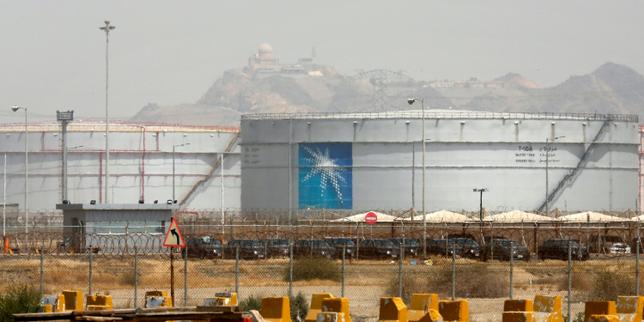
- The Operational Reality: Key regional producers currently face localized infrastructure damage, maritime transit blockades at critical chokepoints like the Strait of Hormuz, and security-driven labor shortages.
When a producer is incapable of physically delivering a barrel of oil due to port closures or refinery damage, a "quota increase" is not a supply expansion; it is an accounting adjustment that allows the producer to nominally claim they are not suppressing output, while their actual volume remains trapped by physical necessity.
The Three Drivers of Supply Inefficiency
The market is currently constrained by three distinct layers of inefficiency that negate the impact of any bureaucratic increase in production quotas.
1. Kinetic Asset Constraints
Direct conflict in the Middle East has compromised the midstream and upstream assets of multiple OPEC+ signatories. When pipeline infrastructure or export terminals become targets of military activity, the ability to increase "production" is moot. Even if a wellhead remains active, the inability to transport crude to a tanker creates a localized bottleneck. The cost of insuring and securing these assets has risen, forcing producers to accept lower realized volumes even when international prices are high.
2. Transit Chokepoint Volatility
The Strait of Hormuz and Red Sea corridors are the circulatory system of the global energy market. Disruptions here do not just affect individual nations; they increase the "time-to-market" for the entire region. Even if producers were to operate at full capacity, the maritime risk profile dictates that fewer vessels are willing to navigate these zones, forcing a de facto supply contraction that market quotas cannot address.
3. Institutional Fragmentation
The withdrawal of the United Arab Emirates from the group earlier this year significantly weakened the cohesion of the alliance. Without full regional alignment, the remaining core—Saudi Arabia, Russia, and others—must navigate a market where the "OPEC+" signal is increasingly interpreted as a fractured, rather than unified, front. This fragmentation reduces the group's collective ability to influence price through volume control.
Assessing Market Probability
The market has priced in the current instability by calculating a roughly 5.9% probability of crude reaching all-time highs by the end of Q3 2026. This percentage, while seemingly small in a vacuum, reflects a high level of nervousness regarding the "tail risk" of a complete closure of transit chokepoints.
When evaluating the impact of the September policy change, distinguish clearly between these two states:
- The Policy Event: The technical decision to raise the quota to complete the 2023 cut rollback. This is a lagging indicator of past policy goals.
- The Supply Event: The ongoing degradation of physical export capacity due to regional war. This is a leading indicator of price volatility.
The decision to freeze production levels through December 2026 after the September hike is an admission of this reality. By removing the variable of monthly quota adjustments, the cartel is signaling that it has lost the ability to manage the supply-demand balance via policy. They are now in a "reactive-only" mode, waiting for the geopolitical environment to stabilize before they attempt to re-establish control over price floors.
Strategic Operational Forecast
The immediate path forward for market participants is to pivot away from monitoring OPEC+ ministerial statements as a catalyst for price movement. Instead, calibrate positions based on the following three operational triggers:
- Refinery Throughput Data: Track actual crude imports in major consuming nations, specifically in Asia, rather than production quotas in producing nations. If imports drop while quotas remain steady, the delta is your indicator of true supply loss.
- Maritime Insurance Premiums: Monitor the risk premiums applied to tankers moving through the Gulf. This is a real-time, high-frequency signal of the physical security reality in the region, independent of political rhetoric.
- Regional Infrastructure Integrity: Prioritize reports on physical infrastructure damage (pipelines, port terminals). A 1% loss in actual physical export capacity is more mathematically significant to global price action than a 10% increase in nominal production quotas.
Ignore the administrative theater of quota adjustments. The market is currently governed by the limitations of physical logistics and the security of critical energy infrastructure, not by the declared output targets of a producer group in decline. Allocate capital based on the assumption that supply is strictly capped by kinetic, not policy, constraints.