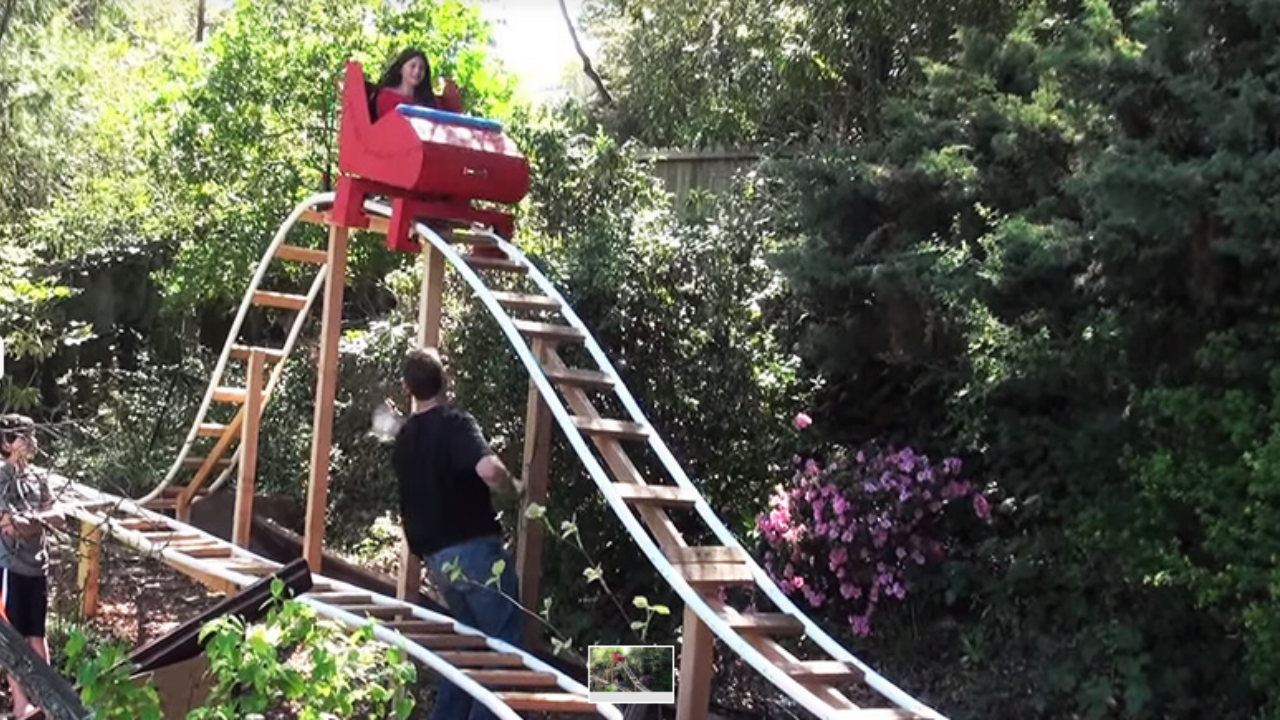
Most kids ask for a video game or a shiny new bicycle when their birthday rolls around. Will Pemble's ten-year-old son Lyle wanted something entirely different. He wanted a roller coaster.
Most parents would chuckle, change the subject, and hope the kid forgets about it by tomorrow. Will Pemble did something crazy. He went out to the garage, grabbed his tools, and started building one.
Building a backyard roller coaster isn't a weekend DIY project you knock out before Sunday afternoon football. It requires a serious understanding of physics, structural engineering, raw materials, and risk management. Yet, what started as a backyard whim turned into an engineering masterclass that captured the internet's attention. If you've ever wondered what it takes to construct a functional gravity-powered thrill ride just a few feet away from your back porch, let's break down the reality behind the hype.
Why a Backyard Coaster Captures Our Imagination
We live in a culture obsessed with screens and sanitized experiences. Theme parks cost a fortune, lines take hours, and everything feels heavily regulated. When a regular dad builds an 180-foot roller coaster in his own yard, it hits a raw nerve. It represents freedom, creative problem solving, and absolute dedication to making a child's dream come true.
People crave authenticity. They want to see someone ignore the boundaries of conventional suburban life and build something extraordinary with their bare hands. But building a coaster means facing immediate engineering challenges that no backyard enthusiast should underestimate.
The Brutal Physics of Backyard Gravity Rides
You cannot fake momentum. A roller coaster cart doesn't have an engine, meaning every single ounce of energy comes from the initial drop. Will Pemble quickly learned that gravity is an unforgiving taskmaster.
To make a 180-foot track work smoothly, you have to nail several critical variables:
- Potential Energy: The initial lift hill has to store enough gravitational potential energy to push the cart through every subsequent dip, turn, and friction point.
- Friction Management: Wheels, track alignment, and bearings create drag. If your track has too much resistance, your car will stall halfway through a loop or a turn, leaving the rider stranded.
- Structural Load: Wood and PVC bend under stress. Every time a car loaded with a human body whips around a curve, it exerts massive lateral and downward forces on the support columns.
If you miscalculate these numbers, your ride either fails to finish the track or becomes dangerously unstable. Pemble approached the build with meticulous care, treating his suburban lawn like a mini amusement park construction zone.
The Build Process From Concept to Reality
Pemble didn't just wing it with duct tape and scrap lumber. He used PVC pipe, dimensional lumber, and custom-engineered brackets to create a track system that could handle real weight and velocity.
Safety was the number one priority. You cannot build a backyard coaster without robust braking systems and secure harnesses. A standard bicycle brake setup or friction-based stop blocks at the end of the run are mandatory unless you want your test dummy—or your kid—crashing into the back fence at twenty miles per hour.
The project took weeks of relentless physical labor. Digging post holes, leveling tracks, and testing runs over and over again tests your patience. Most DIY projects get abandoned halfway through when enthusiasm fades and frustration sets in. Sticking with a massive engineering feat like this separates casual dreamers from actual makers.
What Most People Get Wrong About Backyard Engineering
Scroll through social media and you will find plenty of viral videos showing backyard thrill rides collapsing, tipping over, or throwing riders off course. People often assume that building something fun means throwing caution to the wind.
That mindset gets people hurt.
Real engineering respects limits. Wood snaps. Steel twists. Gravity always wins if your math is sloppy. Pemble documented his entire journey transparently, sharing the failures, the re-engineered tracks, and the structural adjustments required to keep things safe. That level of honesty is rare. Most people only show the polished end result, hiding the hours of tearing down bad tracks and starting over.
The Real Cost and Effort Involved
Let's address the elephant in the room. Building an 180-foot roller coaster takes serious capital and time. Between buying lumber, fasteners, specialized wheels, and safety gear, the budget adds up fast.
Then there is the legal and neighborly reality. Zoning laws, property lines, and liability insurance are real headaches. If a neighborhood kid sneaks over uninvited and gets hurt on your homemade attraction, your homeowner's insurance policy might not cover it. Anyone crazy enough to attempt a project like this needs to weigh the legal risks alongside the fun factor.
It is a massive undertaking that demands respect for the craft.
Lessons From the Backyard Track
The story of the Pemble coaster isn't really about a wooden track or plastic pipes. It is about curiosity and hands-on learning. Lyle didn't just get a cool ride in his backyard; he watched his father design, test, fail, and succeed in real time.
That is an education you cannot buy in a classroom.
If you want to tackle an ambitious project of your own, start small. Build a smaller model. Test your materials. Understand the loads and forces involved before you start digging holes in your yard. Great things rarely happen by accident, and safe thrills require deliberate, careful execution.