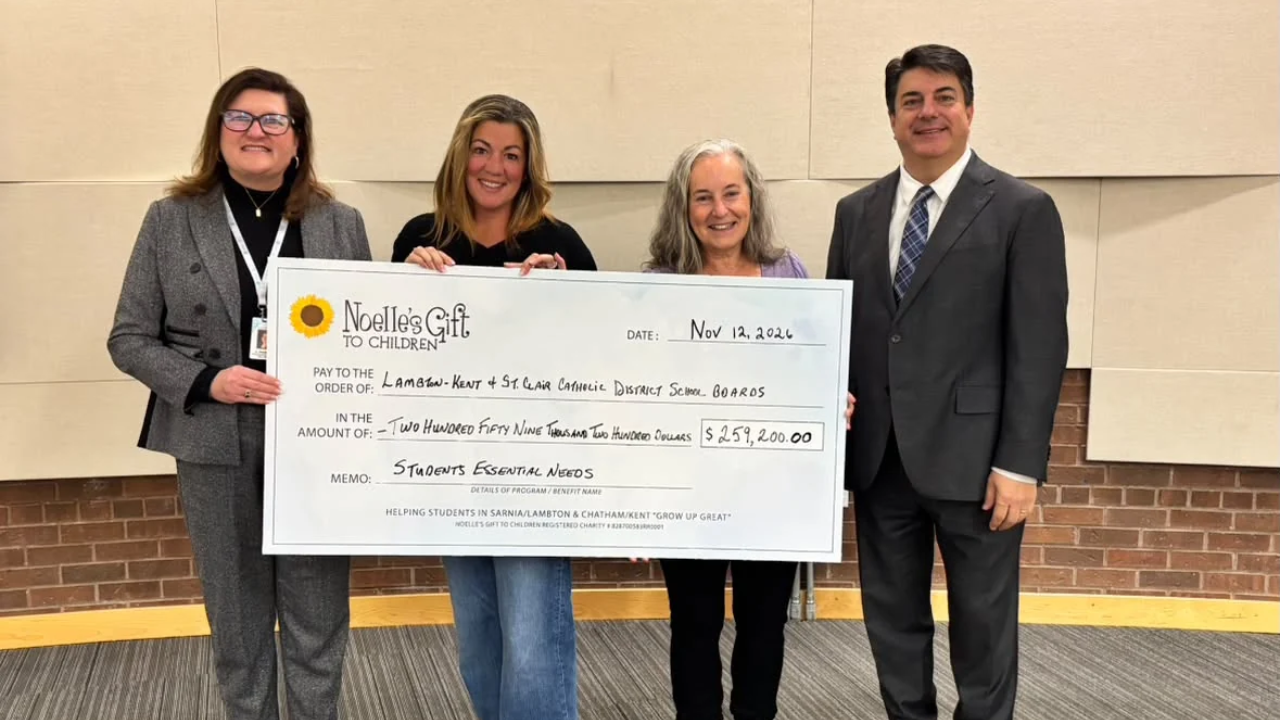
Thirteen years after a Canadian teacher’s untimely death sparked an effort to honor her memory, the resulting charitable organization has quietly funneled more than $5 million directly to children—bypassing the bloated administrative overhead that plagues modern philanthropy. Most memorial funds burn out within twenty-four months. They exhaust the immediate sympathy of grieving friends, hit a wall of regulatory paperwork, and dissolve into forgotten bank accounts. Surviving past the decade mark while scaling to seven-figure distributions requires more than good intentions; it demands a ruthless focus on operational efficiency, community trust, and direct-to-recipient logistics.
The story of a Canadian teacher inspiring a multi-million-dollar children's charity is compelling on its face, yet local news coverage almost always stops at the emotional surface. They print the tearful tributes and the oversized novelty checks while ignoring the structural mechanics that actually keep money moving for thirteen years. When you strip away the sentimentality, you are left with a fascinating case study in how small, grief-driven initiatives outperform legacy non-profits.
The Anatomy of a Memorial Fund That Refuses to Die
Grief is a terrible long-term business model. In the immediate aftermath of a tragedy—especially one involving an educator who spent her life investing in young people—donations pour in effortlessly. Neighbors write checks. Local businesses sponsor Memorial Golf Tournaments. Schools hold bake sales.
Then the calendar turns.
By year three, the emotional urgency fades, and the founders are left staring at Canada Revenue Agency (CRA) compliance filings, board governance disputes, and donor fatigue. According to sector data across North America, the vast majority of small, single-cause memorial charities plateau well below the $100,000 lifetime mark. Reaching $5 million over thirteen years means averaging nearly $385,000 annually—every single year, through economic downturns, inflation spikes, and a global pandemic that shuttered in-person fundraising across Canada.
To pull that off, an organization has to transition from a mourning circle into an operational engine without losing the personal touch that made people care in the first place.
The Zero-Overhead Illusion Versus Real Efficiency
Donors hate paying for lightbulbs. They want their $50 to buy a winter coat, a pair of hockey skates, or a hot lunch—not a fraction of an executive director’s salary or a glossy annual report. Legacy charities spend anywhere from 15% to 35% of their revenue on administration and fundraising, a reality that breeds deep cynicism among everyday contributors.
Grassroots charities born from the legacy of a local teacher operate under a completely different set of expectations. Because the founders usually keep their day jobs and rely on volunteer networks made up of fellow educators, former students, and family members, administrative drag stays near zero.
Consider a hypothetical example of how this math works in practice. Suppose a traditional charity raises $500,000 in a year and spends 25% on overhead; $375,000 reaches the ground. A volunteer-driven memorial charity raising the exact same amount with a 3% administrative footprint puts $485,000 directly into children's programs. Over thirteen years, that 22% efficiency gap accounts for more than $1.4 million in extra direct aid—without raising a single additional dollar from the public.
Why Teachers Make the Ultimate Philanthropic Catalysts
There is a specific reason why an educator’s death generates this kind of sustained, multi-year momentum compared to other professions. Teachers occupy a unique geographic and social node in Canadian communities. They do not just know the kids; they know the parents, the coaches, the local business owners, and the generational families who have lived in the same postal code for forty years.
More importantly, teachers understand the invisible mechanics of childhood poverty.
When an outsider tries to help underprivileged kids, they often throw money at high-visibility, low-impact gestures. A teacher knows better. They know that a child cannot focus on reading when their shoes are falling apart, when they skipped breakfast, or when they are excluded from a school trip because their family lacks $40.
The Micro-Grant Advantage
Large institutional charities love massive capital campaigns because buildings have plaques on them. Grassroots educator-led charities focus on frictionless micro-interventions.
- Immediate Turnaround: When a school principal or guidance counselor identifies a child in crisis, a nimble charity can approve funds in hours rather than weeks.
- Dignity Preservation: Funds are frequently routed quietly through school staff so neither the child nor the struggling parent experiences public stigma.
- Targeted Basics: Money goes toward groceries, winter gear, extracurricular registration fees, and basic medical or dental needs that fall through the cracks of provincial healthcare.
This granular visibility creates a powerful feedback loop for donors. When a local business owner donates $5,000 and hears three weeks later that it funded emergency food vouchers and winter boots for forty kids in their own school district, that owner writes another check the following year. Abstract global causes cannot compete with hyper-local proof of work.
The Hidden Fragility of Volunteer-Driven Charities
We need to be honest about the dark side of the $5 million grassroots model. While low overhead is a massive selling point for donors, it is also the single greatest threat to the charity's survival.
Relying entirely on unpaid labor works brilliantly until the core group of founders hits burnout. Running a charity that moves hundreds of thousands of dollars a year is a full-time job disguised as a hobby. Someone has to reconcile the bank statements, issue tax receipts, vet funding requests, manage liability insurance, and organize events.
Succession and Regulatory Traps
In Canada, registered charities face strict disbursement quotas and rigorous auditing standards from the CRA. A well-meaning volunteer treasurer who makes an accounting error—or fails to document how funds were spent by third-party recipients—can jeopardize the charity's charitable registration status overnight.
Furthermore, memorial charities face a uniquely difficult succession problem. The people running the organization in year one were driven by personal love and grief for the person who died. By year thirteen, new volunteers stepping onto the board may never have met the teacher whose name is on the letterhead. Transitioning from a personality-driven memorial to an enduring community institution requires formalizing bylaws, building repeatable fundraising systems, and occasionally making the controversial decision to hire paid administrative staff before the founders collapse.
What Legacy Non-Profits Refuse to Learn From This Model
If you sit in the boardroom of a major national children’s foundation, you will hear endless talk about donor acquisition costs, brand awareness, and multi-channel marketing funnels. What you rarely hear is a frank discussion about why everyday Canadians are increasingly bypassing big-name charities in favor of small, hyper-local funds.
Trust in major institutions has eroded. People have watched too many high-profile non-profits get caught in executive compensation scandals or spend millions on awareness campaigns that produce zero tangible relief for actual children.
The success of a memorial charity crossing the $5 million threshold proves that the public is not suffering from compassion fatigue. People are still deeply generous. They are simply exhausted by inefficiency.
When a charity ties its identity to the real-world values of a specific educator—someone who showed up every day, did the unglamorous work, and cared fiercely about the kids in front of her—it establishes an immediate standard of accountability. Every dollar spent is implicitly measured against whether it would have made her proud.
Thirteen years and $5 million later, the real story is not just that a community remembered a beloved teacher, or even that thousands of children received support they otherwise would have gone without. The real story is that a small group of ordinary people proved you do not need a corporate headquarters, a six-figure CEO, or a marketing agency to run a high-impact philanthropic engine—you just need to keep the money close to the ground and never forget whose name is on the door.