Most people throw away things that could easily become someone else's shelter. We live in a throwaway society. You buy an appliance, it breaks, and you dump it on the curb. You remodel a kitchen and pay hauling fees just to get rid of perfectly sturdy cabinets.
Knight Landing and similar remote spots in Northern California hide stories of people who looked at our mountains of municipal waste and saw raw materials.
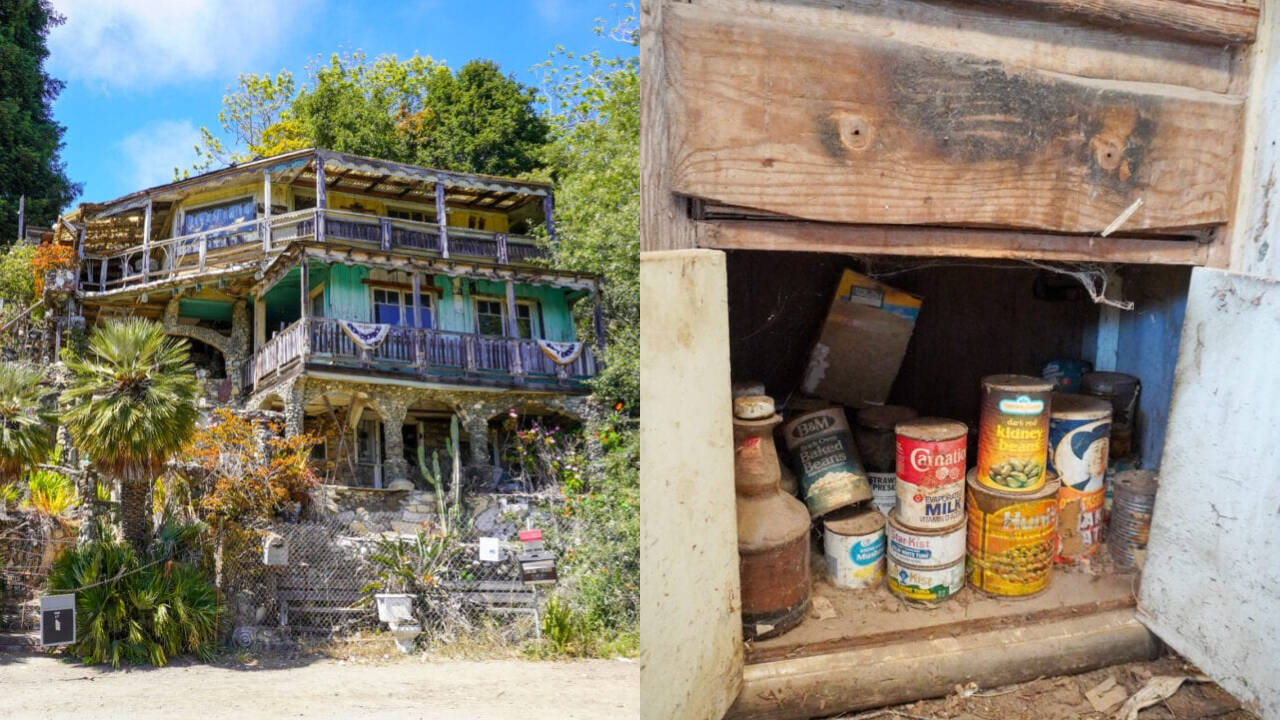
Take the legendary story of the California garbage collector who built a massive hillside home out of sheer junk. It sounds like an urban legend. It isn't. When you actually examine how he pulled it off, you realize it challenges everything we think we know about housing costs, zoning sanity, and modern construction waste.
The Reality Of Building Off The Grid With Castoffs
Building a house costs a fortune today. Permits run thousands. Lumber prices fluctuate wildly. Contractors charge astronomical hourly rates just to show up on site.
This sanitation worker sidestepped the entire system through sheer sweat and municipal scavenging. He didn't have architectural blueprints drawn up by a downtown firm. He had a route, an eye for discarded structural integrity, and decades of exposure to what people discard every single week.
He built his hillside dwelling using scavenged materials collected over years on the job.
- Old highway signs became resilient roofing panels.
- Discarded shipping pallets provided framing core strength.
- Windshield glass from abandoned vehicles turned into custom skylights.
- Insulation came from packing materials destined for local landfills.
People love to romanticize this kind of project as quirky folk art. It's actually a masterclass in structural engineering born from necessity. He didn't just stack garbage. He engineered load-bearing walls out of compressed refuse. He understood weight distribution because he spent his career lifting heavy bins.
Why The Conventional Housing Market Fails Us
The average American spends over thirty percent of their income on housing. We accept this as a law of physics. It is not. It's a choice driven by rigid building codes, real estate gatekeeping, and consumerism.
When a sanitation worker builds a functional, multi-room hillside home out of items people threw away on Tuesday, it exposes a glaring flaw in our standard way of living. We suffer from a severe lack of imagination. We believe safety requires brand-new drywall and factory-certified insulation.
Yet, historical structures and owner-built marvels prove otherwise. You do not need a million-dollar mortgage to stay warm in the winter. You need resourcefulness. You need patience.
Most people couldn't survive building a home this way. They lack the grit. They want convenience. They want Amazon to deliver their studs in two days. This builder spent his evenings hauling timber offcuts and salvaged corrugated iron up a steep incline, piece by painful piece.
The Engineering Behind The Hillside Scavenger Build
Slopes are notoriously difficult to build on. Geotechnical surveys cost thousands. Retaining walls require specialized concrete pours.
How did a trash collector manage a hillside foundation without a civil engineering degree?
He used gravity and ballast. By utilizing heavy, discarded materials like old iron pipes, filled concrete blocks, and dense stone fragments found naturally on the site, he stabilized the slope himself. He terraced the hillside using layers of packed earth and retained it with interlocking scrap metal.
It worked. The structure stood through harsh California winters, high winds, and seismic tremors that cracked foundations in nearby affluent suburbs.
You can't buy that kind of resilience at a home improvement warehouse. It comes from understanding the actual physical limits of materials. When you handle waste every single day, you learn which plastics degrade in the sun and which metals resist rust. You develop an intuitive physics education that no university classroom can replicate.
What You Can Learn From A Dumpster Diver Architect
Nobody is suggesting you quit your job, quit paying your mortgage, and start hauling old couches up a canyon to frame your living room. Zoning laws will stop you pretty fast anyway. Local authorities frown upon unpermitted hillside shacks.
That friction is the real takeaway. Our modern regulatory environment criminalizes self-reliance. Try building a low-impact, zero-cost home out of recycled goods today, and code enforcement will fine you out of existence. We have engineered a society where you are legally forced to buy expensive, mass-produced housing whether you want to or not.
Look around your own garage. Look at the trash bin outside. We waste incredible amounts of functional material daily because it's slightly dirty or out of style.
The garbage collector's hillside home stands as a monument to human capability and a middle finger to consumer conformity. It forces a simple question. If one man can build a fortress out of our collective garbage, what are we really paying for when we buy a suburban tract home?
Next time you throw away something sturdy, remember the hillside home. Stop overcomplicating your projects. Use what is in front of you. Build something that lasts.