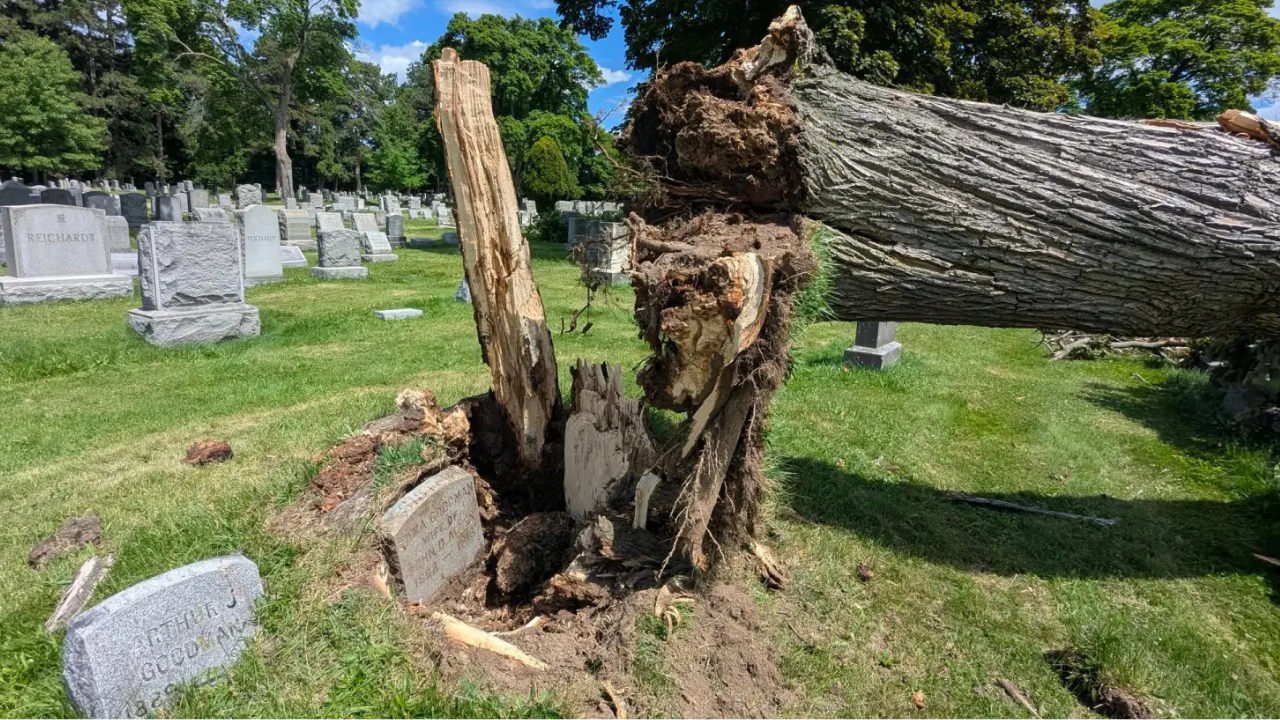
A severe storm hits New York. A centuries-old tree topples over. In the exposed root ball, local onlookers find human remains and a hidden grave. The media goes into an immediate frenzy, spinning a romantic yarn about nature unlocking secrets from a century ago.
It is a neat, comforting story. It is also entirely the wrong way to think about historical preservation. Read more on a connected subject: this related article.
The public has developed a toxic obsession with accidental archaeology. We treat acts of God and random weather events as brilliant historical archivists, celebrating the destruction of natural landscapes because they occasionally spit out a skeleton. This reactive, sensationalist approach to history is not a triumph. It is a failure of systemic preservation, repackaged as a feel-good human interest story.
The Myth of the Romantic Discovery
Mainstream reporting loves the "buried treasure" trope. When a storm unearths a grave, the narrative focuses exclusively on the mystery of the individual. Who were they? Why were they buried there? Additional analysis by Reuters explores related views on this issue.
This hyper-fixation misses the broader context. When an intense storm uproots a massive tree, the violent tearing of the root system completely obliterates the archaeological context of the site. Stratigraphy—the analysis of soil layers that tells us the precise chronological order of events—is wiped out in seconds. Artifacts are displaced. Skeletal remains are fractured and mixed with modern debris.
Celebrating a storm discovery is like celebrating a car crash because a rare coin flew out of the glove box.
I have spent years consulting on cultural resource management projects, watching municipalities scramble only after a disaster occurs. Millions of dollars are wasted on reactive archaeology because cities refuse to fund proactive, non-invasive surveying. We wait for a hurricane or a massive construction blunder to show us what is beneath our feet, and then we act surprised when the resulting data is fragmented and compromised.
The Flawed Premise of "People Also Ask"
Look at the standard questions people search for after these events:
- How do storms uncover old graves?
- What should you do if you find bones under a tree?
- Who owns historical artifacts found on private property?
These questions assume that discovery by disaster is an acceptable status quo. They treat history as a passive lottery.
Instead of asking how a storm uncovered a grave, we should be asking why local historical registries had no record of a burial ground in a high-risk weather zone. Instead of wondering who owns the bones, we should be questioning why local zoning laws allowed major infrastructure or heavy landscaping over undocumented historical sites in the first place.
The premise that we must wait for nature to reveal history is a lie. Ground-penetrating radar (GPR), LiDAR, and magnetometry have existed for decades. We have the technology to map subsurface anomalies without turning a single spade of dirt or waiting for a climate anomaly to do it violently. We choose not to use them because reactive sensationalism is cheaper than proactive stewardship.
The Brutal Truth About Preservation Funding
The uncomfortable reality is that the media circus surrounding "storm discoveries" actively harms serious historical research.
Funding in archaeology and preservation is a zero-sum game. When a high-profile, accidental discovery hits the front pages, public pressure forces local governments to redirect tight budgets toward emergency excavations. These emergency digs are incredibly expensive. They require immediate mobilization, overtime pay for specialists, and rapid conservation labs to prevent the newly exposed remains from decaying in the open air.
Where does that money come from? It is stripped away from systematic, long-term regional surveys.
+-----------------------------------+-----------------------------------+
| Emergency "Storm" Archaeology     | Systematic Survey Archaeology     |
+-----------------------------------+-----------------------------------+
| High media coverage, low context  | Low media coverage, high context  |
| Destructive context retrieval    | Non-destructive preservation      |
| Inflated emergency costs          | Predictable, budgeted allocations |
| Driven by luck and weather        | Driven by data and science        |
+-----------------------------------+-----------------------------------+
By prioritizing the sensational over the systematic, we are trading complete historical narratives for fleeting headlines. We learn everything about one isolated skeleton because it fell out of a tree, while entire historic neighborhoods are paved over quietly because there was no storm to expose them.
Stop Waiting for the Next Hurricane
The contrarian approach to history requires us to abandon the romance of the accidental find. If we actually care about preserving the past, our strategy must shift from damage control to predictive modeling.
First, municipalities need to mandate non-invasive GPR sweeps of any public land containing trees older than 150 years before major storm seasons hit. Old trees are natural anchors for historical sites; their root systems protect the soil from erosion, making them prime locations for early settlements and undocumented burial plots. We know where the old trees are. We do not need to wait for them to fall.
Second, we must accept the downside of proactive preservation: it stops progress. It means halting development pipelines, delaying park renovations, and spending tax dollars on surveys that might turn up absolutely nothing. That is a hard sell for local politicians who prefer the optics of a miraculous, storm-driven discovery over a line-item expense for a boring radar scan.
But the alternative is what we see now. A fragmented history, scattered across a muddy park after a heavy rain, pieced together by underfunded academics working under a tarp.
Nature is a terrible custodian of history. It does not curate; it destroys. Stop applausing the storm for ripping apart the ground, and start demanding that we look beneath it before the wind does the work for us.


