Everyone is arguing about the joke. Nobody is looking at the hangar.
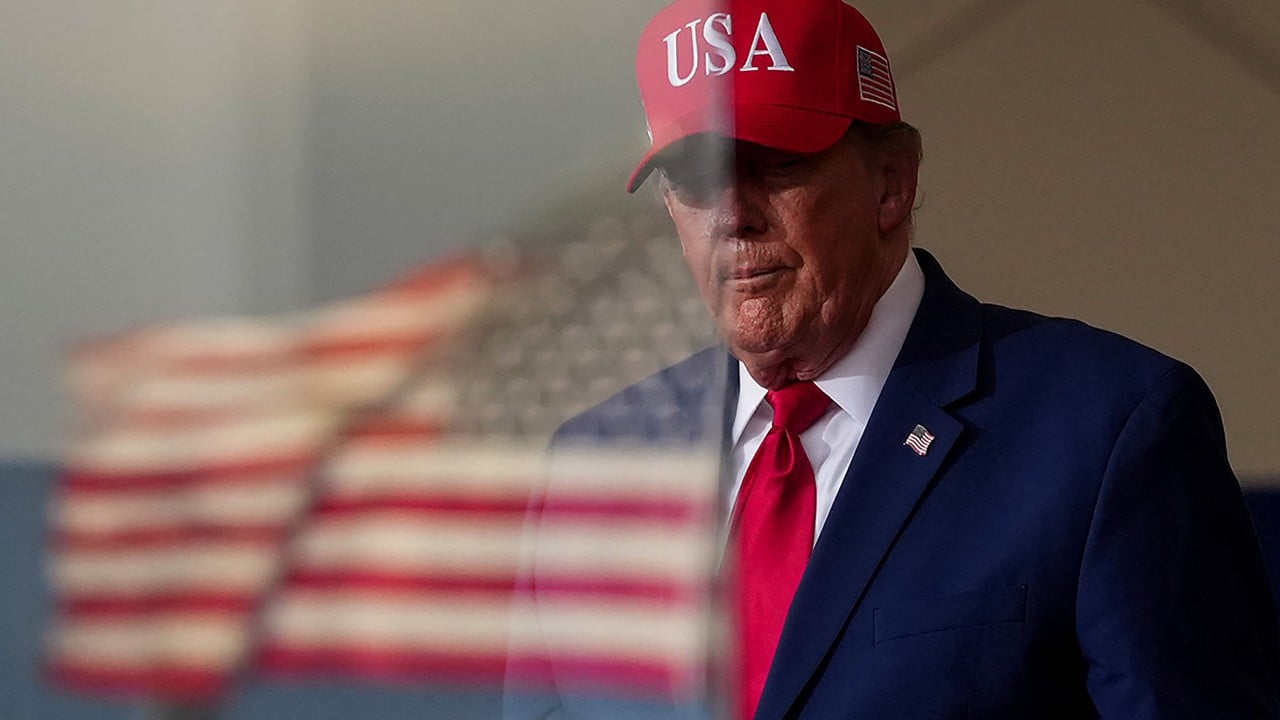
When Donald Trump stood at Dalton Municipal Airport in Georgia on October 16, 2026, he told the crowd that if they are unsure of a Middle Eastern man's name, they should just guess Mohammad because they have about a 65% chance of being right. Then he riffed on Iran's presidency. Standard wire coverage filed the story under predictable headings: Trump mocks a common Muslim name during a campaign speech.
That framing is lazy. It treats a throwaway line about a single name as a deep theological or cultural revelation while ignoring what actually happened in the room.
The Lazy Consensus Around Name Mockery
Conventional punditry treats every provocative remark from a rally stage like a Rosetta Stone of intent. Critics call it bigotry and point to advocacy groups like the Council on American-Islamic Relations warning about rising Islamophobia amid immigration crackdowns and campus protest clashes. Defenders call it harmless banter or crowd work. Both sides stay locked in a moral tug-of-war over the word "Mohammad".
That argument misses the mechanics of the moment.
First, "Mohammad" (and its common spellings like Muhammad or Mohammed) is genuinely one of the most widely used given names in the Muslim world, rooted in reverence for the Prophet Muhammad. Saying that a name is common in the Middle East is not a secret or a novel insight; it is basic onomastics.
Second, the wire reports noted something far more revealing than the joke itself: the Georgia crowd gave the bit a muted response.
When a populist entertainer tests a line in front of his own base ahead of midterm elections and gets a flat reaction, the story is not outrage over the punchline. The story is a misfire in calibration.
Why Name Stereotypes Fail Even on Pure Statistics
Trump tossed out a neat 65% figure as if guessing "Mohammad" for any Middle Eastern man were a coin flip tilted heavily in his favor. In reality, onomastic distribution in the Middle East is far more fragmented than off-the-cuff rally math suggests.
- Religious and sectarian variation matters. While variants of Muhammad are widespread among Sunni and Shia Muslims alike, large segments of Middle Eastern populations are Christian, Druze, Yazidi, Kurdish, or secular, using distinct naming traditions.
- Country-by-country habits diverge. Naming concentration varies sharply across nations, regions, and generations. A blanket percentage applied to an entire region blurs real demographic differences.
- Phonetic and spelling diversity complicates any "guess." Even where the root name is common, it often appears as a middle name, honorific compound, or regional variant rather than the everyday form someone goes by.
Imagine a scenario where a political strategist builds a direct-mail or digital outreach campaign assuming that one common name covers two-thirds of every Middle Eastern voter or donor segment. That campaign would waste budget, misaddress real people, and alienate anyone outside the caricature. Bad data makes bad persuasion.
Experience From the Trenches of Political Messaging
I have watched campaigns and communications teams blow millions of dollars chasing viral outrage clips instead of measuring audience resonance. Early in my career working alongside political media teams and message testers, I saw war rooms celebrate a fiery cable clip on Friday night while focus groups on Monday showed voters tuning out the underlying policy pitch.
Outrage is cheap fuel. Attention spikes for twenty-four hours, donors click a fundraising link, and reporters write the same two-paragraph summary. Meanwhile, the core strategic question—whether the speaker is actually moving undecided voters or losing the room's energy—gets buried under noise.
When you analyze political speech through the lens of salience—how strongly a specific detail stands out compared to the rest of the message—you see why headlines fixate on the name joke. A punchy quote is easy to quote in a headline. A flat crowd reaction to a riff on Iran's leadership takes more context to explain.
People Also Ask The Wrong Questions
Search behavior around moments like this usually loops through the same narrow queries. Each one points at the wrong lever if you want to understand political persuasion.
Is mocking a common name an effective campaign tactic?
Usually not when the audience goes quiet. Crowd reaction is immediate feedback; a muted response tells you the bit did not land as a rallying cry. Base voters show up for strength, grievance relief, or momentum—not a meandering riff that fizzles mid-hangar.
Why do politicians use generalizations about foreign names and leaders?
Because shorthand feels effortless on a long speech. Politicians often use exaggerated percentages or caricatures to compress complex foreign policy—such as tensions with Iran or regional security—into a quick applause line. The risk is that exaggeration makes the speaker sound careless rather than commanding when the humor falls flat.
What do advocacy groups get right, and where do they overreach?
Organizations tracking anti-Muslim bias and civil rights pressures have real empirical concerns when rhetoric intersects with harsher enforcement policies or heightened geopolitical friction. Where analysis can overreach is treating every offhand joke as the primary driver of every attitude shift, ignoring economic strain, media algorithms, and local candidate dynamics.
What Heavy Hitters in Political Science Actually Tell Us
Serious scholars of public opinion and political communication—researchers like Diana Mutz on media and out-group cues, and Shanto Iyengar on affective polarization and partisan framing—have spent decades showing how voters react to identity signals.
Their findings do not support simplistic takes in either direction. Voters do not process every remark identically. Strong partisans often filter harsh or flippant remarks through loyalty, while cross-pressured or swing voters respond more to perceived competence, tone, and economic stakes.
That nuance is what mainstream coverage routinely flattens. A headline frames a speech around mockery of a name, turning a complex political moment into a single static label.
The Honest Downside of Taking a Contrarian Read
Taking a contrarian view on political coverage carries its own traps, and pretending otherwise would be dishonest.
First, downplaying the offensive nature of a joke can look like excusing real harm. Words spoken by a sitting president carry weight, especially for communities already feeling targeted by policy and rhetoric. Dismissing that impact outright is a mistake.
Second, over-indexing on a muted crowd reaction at one rally can overstate a single data point. One lukewarm response in Georgia does not automatically predict a statewide or national shift on its own.
Contrarian analysis works only when it sharpens your sight, not when it blinds you to basic facts.
Unconventional Moves That Actually Work in Message Strategy
If you run campaigns, advise executives, or cover politics and want to stop falling for surface-level outrage cycles, change how you audit speeches and media coverage.
- Score the room before you score the quote. Watch the audience reaction first. A roaring crowd and a quiet crowd mean two completely different things for message discipline.
- Separate caricature from policy signal. Ask what concrete action or posture the speaker is telegraphing behind the joke—such as hardline pressure on Iran—rather than stopping at the wordplay.
- Audit your own assumptions with real demographic data. Never guess cultural or naming patterns from a stage line. Check real population data before targeting any group.
- Track 72-hour retention, not 2-hour outrage. Most viral clips burn out fast. Watch which lines actually stick in voter conversations three days later.
Stop letting lazy headlines do your thinking for you. Watch the crowd, check the numbers, and judge every speech by the leverage it actually creates.